Many Ways to Tell a Story: How Authors Choose a Narrative Voice

One of the things I love about the world of children’s writing is how passionate people are about their opinions and how excited most of us are to engage in lively, thoughtful discussions of craft. One of those conversations got started this week when a blogger at School Library Journal said this:

“While present tense will probably have no bearing on whether a book receives Newbery consideration, it is nevertheless bad writing, and 90% of the writers who use it can’t pull it off.”   ~Jonathan Hunt

He went on to list all the no-good, very-bad things about books written in present tense, especially first person present tense.

Now, if you’re not an English teacher or a writer or a particularly detail oriented reader, you probably don’t think about this when you’re reading. Most of us don’t pause mid-chapter to say, “By golly…this is first person present tense narration!” In fact, if the story is written well, we usually don’t notice at all.  If you’re not the sort of person who pays attention to such things, here’s a quick overview.

First person means a character in the story is telling the story, either in past or present tense.

1st person past: I leaned over to pet the dolphin, and it chomped down on my hand.*
1st person present: I lean over to pet the dolphin, and it chomps down on my hand.
 

Third person means an outside narrator is telling the story. So…

3rd person past: She leaned over to pet the dolphin, and it chomped down on her hand.
3rd person present: She leans over to pet the dolphin, and it chomps down on her hand.
 
photo(181)
*Yes, this happened. It was a lapse in judgement.
 

Anyway… there’s also the question of whether third person narration is omniscient (with a sort of  eye-in-the-sky storyteller, who knows everything and can see inside all the characters’ heads) or limited (where the story is in third person but you still experience it from a particular character’s point of view & don’t know what the others are thinking). And there’s also second person, but those are topics for another day.

Authors have lots of different reasons for choosing the narrative voice for a particular book. One story might work best in third person past tense, with an omniscient narrator, while another might be better told in first person. I tend to agree with Mr. Hunt that first person present tense, done poorly, can be particularly grating to a reader’s sensibilities.  But I also think it can be a powerful narrative voice in the hands of a talented writer. Here are just a few examples, some of which you’ve probably seen on awards and bestseller lists.


I asked Facebook friends to share some thoughts on first person, present tense point of view, and I think their responses offer a great, diverse, and thoughtful perspective on this topic.

When does first person present tense work well, and why might an author choose it? And what are some of your favorite books using this narrative voice?

WINTERGIRLS, I think. Everything is so heightened in that book, everything is about life in that exact moment just as the character perceives it. The character herself is really stripped of perspective, stripped of everything besides her present. I also think it’s simply necessary sometimes, in books so much about growth and change–narration that takes place AFTER the moment of realization and change can create some distance between narrator and subject, giving the narrator wisdom the character does not have, and thus depriving the reader of the chance to really experience that change with the reader. There’s so much artistry in first person present–you can use every aspect of the telling of the story to help convey the energy of the character journey.  

~Anne Ursu, author of BREADCRUMBS and THE REAL BOY


I had written Chained in the past tense at first, & Patricia Lee Gauch said during a critique at Chautauqua, “Something’s telling me you should write this in the present tense.” I tried it and it felt right, so switched it to a present tense novel. I think it offers a feeling of traveling in real time along with the characters.    

~Lynne Kelly Hoenig, author of CHAINED


I often choose first-person because that voice helps me to more effectively make an emotional connection with my reader, and I see that as a vital element of my work.   

~Nikki Grimes, author of PLANET MIDDLE SCHOOL and WORDS WITH WINGS


Liar & Spy by Rebecca Stead. It HAS to be in first person present tense or the whole thing would fall apart. There is the story that Georges is telling us — the story he is telling himself — and then there is the whole truth. The story is of him learning/admitting the truth, and told in the past tense it would lose all of its power. Well, not all of it’s power, because Rebecca Stead is amazing.

~Megan Frazer Blakemore, author of THE WATER CASTLE and THE SPYCATCHERS OF MAPLE HILL


HUNGER GAMES. That trilogy would instantly lose half its intensity if it were written in third person, so we weren’t so immediately in Katniss’s head and experiences, or if it were in past tense, which would mean that the action is over and completed and Katniss survived it all to tell it from a place of safety. First person present can be overused for sure, and used badly, but in it, we do not know what’s going to happen to our viewpoint character because s/he doesn’t know him/herself, and if you’re invested in the character, that is close to the highest-tension place you can be as a reader.

~Cheryl Klein, senior editor at Scholastic


In Jessica Spotswood’s excellent Cahill Witch Chronicles (starting with BORN WICKED), the present-tense narration works especially well to help readers experience the narrator’s relationships with her two sisters. If the books were written in past tense, the narrator would have more time to reflect and reconsider her powerful and not always kind reactions, and we’d lose a lot of the emotional intensity and honesty that forms the heart of the story. Additionally, a lot of tension in the series comes from the fact that we know one of the sisters (perhaps the narrator) is going to die, but neither we nor the narrator know which sister it will be. This tension can really only exist in a story told in the present tense.

~Caroline Carlson, author of THE VERY NEARLY HONORABLE LEAGUE OF PIRATES books


 I’m currently finishing up a middle-grade present tense book. I think it works in particular circumstances (and I’ve definitely used it before). In this case, the protagonist is stuck in an emergency situation for a period of 48 hours, so the present tense is for her present emergency, but during the crisis, she spends a lot of time in flashbacks. The use of present tense vs. past tense I think really anchors the story and differentiates the two layers, while also allowing me to heighten the urgency of the crisis.

~Karen Rivers, author of THE ENCYCLOPEDIA OF ME


WE WERE LIARS by E. Lockhart. This story told from any other POV would not have had as much of an impact on me. Finding out what happens at the same time as Cadence was heart rending. I was an emotional wreck while reading it, and sad for days after.

~Wendy Watts Scalfaro, teacher-writer


 Nora and I just read Lions of Little Rock and The One and Only Ivan. If I recall, both were written in 1st person present. We loved both. We’re not critics of writing ability, but the tense used did not change how we enjoyed the stories. In fact, it wasn’t until I read your post that I even considered what tense the authors used.

~Art Graves, bookseller & dad


It’s often used in verse, and may particularly help explore layers of time when the subject is history. I agree with others re the sense of immediacy, which may be partly why Jacqueline Woodson chose it for brown girl dreaming and Marilyn Nelson for Carver and how i discovered poetry, inviting readers to be part of a particular time, looking back and ahead.

~Jeannine Atkins, author of BORROWED NAMES:POEMS ABOUT LAURA INGALLS WILDER, MADAM C.J. WALKER, MARIE CURIE, AND THEIR DAUGHTERS


 I used it in Trauma Queen, which is about a tween girl’s terror of being mortified, at any given moment, by her performance artist mom. The first person present tense helped me convey a “Oh no–what will she do next?” urgency. I think it helped put the reader in my protagonist’s (often uncomfortable) shoes.

~Barbara Dee, author of TRAUMA QUEEN


I chose first person present tense for THE BALLAD OF JESSIE PEARL because it felt right for this particular book. My novel is set in the 1920’s and about a subject that modern American kids would know little about: tuberculosis. My hope is that by making the choices that I did, it pulls the reader in close and the immediacy erases the nearly one hundred year time gap from 1922 until today.

~Shannon Hitchcock, author of THE BALLAD OF JESSIE PEARL


We used it in the Sugar Plum Ballerina chapter books. I think it gives the books an immediacy that helps hook younger readers. As Barbara Dee said above, it seems to me to increase urgency.

~Deborah Underwood, author of THE QUIET BOOK and HERE COMES THE EASTER CAT


 My first two novels were in first/present and my next ones are in first/past. For my first book, Rules, present tense is just the way the words came. I didn’t even think about it. Kids often say about Rules that they felt like they were there with Catherine experiencing the story, not reading it. Both tenses have pluses and minuses, though. It’s more awkward to deal with the passage of time in present, since everything is “now.” Past can have more of a storytelling feel, but that also adds some distance. Readers do have preferences, but that doesn’t mean other choices aren’t valid. There are many ways to tell a story.

~Cynthia Lord, author of RULES, TOUCH BLUE, and HALF A CHANCE


I’m ending this post with Cindy’s comment because I love her last line.

There are many ways to tell a story.

I am always wary of writing advice presented in black and white terms. Stories are more complicated than that, and writing them requires a spirit of openness and exploration.  Good writers – whether they’re students or professionals – have always made choices about narrative voice thoughtfully, based on story, characters, and craft. No one’s personal preference presented as fact on a blog post should change that.

For more on craft and narrative voice, you should also check out Linda Urban’s brilliant blog post about points of view. It’s another thoughtful exploration of how and why an author makes that decision about voice.

Feel free to continue the conversation in comments – respectful, thoughtful discourse is always welcome here.

Celebrating Read In Week October 6-10

A number of schools have contacted me lately, asking if I can Skype in to read a story for Read-In Week October 6-10.  This seems to be a Canadian sort of holiday, I discovered, but I’m all for reading aloud and would vote to make it a world-wide affair.

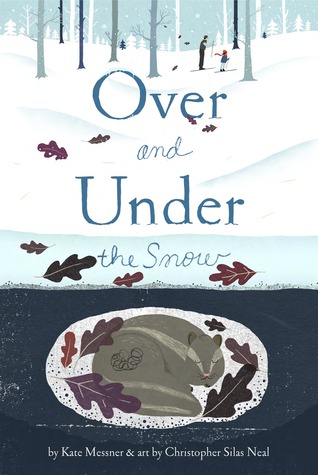
But because I’m working on THREE new books right now (yay!) I can’t add any more days to my Skype visit schedule this fall. I’d love to visit all of your classrooms, though, so I’ve put together a video to celebrate READ-IN Week with everyone. It’s about six and a half minutes long…a quick hello at the beginning, and then I share a few books I’ve been reading lately and finally, wrap up with a read-aloud of OVER AND UNDER THE SNOW. Enjoy!

Seasons of Reading

I spent much of the summer working on book 3 of my Ranger in Time series with Scholastic and another project, so most of my reading was research related – slave narratives and other documents from the mid-19th century. But I did manage to sneak in some other great books, too.

Does anyone else have “reading seasons?” Most of my reading life centers around children’s books, from picture books to middle grade and YA novels and nonfiction. But in the summer months, I tend to drift toward books that were written for adults.  My favorites this summer were THE MAGICIAN’S LAND and EDIBLE.


THE MAGICIAN’S LAND is the third in a trilogy from Lev Grossman. Aside from my passion for all things Harry Potter, I’m not much of a fantasy reader, but these books enchanted me from the beginning. The main character gets whisked off to a university for magicians in the first book (he thought he was interviewing for Princeton, but whatever) and that university, Brakebills, has all of the charm and wonder of Hogwarts mixed with the more jaded world view of those who have just entered adulthood. There’s a magical land as well, along with all the wondrous, frightful creatures one would hope to find there, plenty of heroic quests, and an exploration of the darker side of magic, ambition, and power, too. I loved visiting this world again, and I’m sad that the last book is over. If you’re a grownup fan of Hogwarts or Narnia, don’t miss these books. (Note: they are not for kids, but some older HS readers will love them.)


EDIBLE : AN ADVENTURE INTO THE WORLD OF EATING INSECTS AND THE LAST GREAT HOPE TO SAVE THE PLANET was probably my favorite book of the summer. I was reading it on the deck one day when my son walked by, looked at the cover, and got a terribly concerned look on his face. “Dad…did you see what Mom’s reading?” For days, the family looked more carefully at their dinner plates. Because yes…this really is a book about eating bugs. They’re full of protein and commonly eaten in cultures where it isn’t socially weird to do so, and they’re far more sustainable to raise than cows or pigs. What’s not to love? In friendly, fascinating narration, the author, budding entomophagist Daniella Martin, takes us along on her journey to explore insects as food – from a food truck in San Francisco to an Asian night market to a high-end Scandinavian restaurant. What would it take to get us to accept insects as a food source? I found this to be an intriguing question, and I’ve been looking at the grasshoppers in my garden a little differently ever since.


Now summer is over, and I’m wandering back toward my cooler weather reading habits. These two are up next on my book pile…

What about you?  What were your favorite books of the summer, and what’s on your radar for fall?

Up, Down, Over, and Under – Book news!

Thanks to everyone who bought, shared, and spread the word about our picture book OVER AND UNDER THE SNOW, illustrator Christopher Silas Neal and I are collaborating on two companion books that will be coming out over the next few years.

We’ve been working on the first of those for a while now, and the cover is ready to share today!

UpintheGarden_jacket_mechUpintheGarden_jacket_mechUpintheGarden_jacket_mechUpintheGarden_jacket_mechUpintheGarden_jacket_mechUpintheGarden_jacket_mech

UP IN THE GARDEN AND DOWN IN THE DIRT comes out this spring. It explores the magical, growing world of a garden, from the point of view of a child and grandmother toiling up in the garden, as the earthworms, beetles, and ants do their own work, down in the dirt.

And Chronicle just signed up another companion book that explores the interconnected ecosystem of an Adirondack pond, as a parent and child set out on a morning kayak trip. OVER AND UNDER THE POND is in its early stages, which means lots of research, both the reading kind and the exploring, outdoorsy kind.

One more piece of up/down/over/under news… OVER AND UNDER THE SNOW will be available to even more families soon, since it comes out in paperback next month.

Many, many thanks to everyone who’s been buying this book, signing it out of the library, and sharing it with readers since it first came out three years ago.  I’m so thankful to have the opportunity to research and write with this same sense of wonder, and I’m extra-thrilled to be making two more books with Chronicle and Chris Silas Neal.

Teachers Write 7/7/14: Mini-Lesson Monday: You Come, Too

Welcome to writing camp, everybody!

Teachers Write! is a virtual summer writing camp for teachers and librarians. Click here to sign up if you’d like to join us!  If you’re on Facebook & want to also join our group there,here’s the link. Then click “Join Group.” And please click here to sign up for my email newsletter so that you’ll get updates throughout the year.

A quick note about blogging your Teachers Write experience: There will be daily opportunities for you to share and interact with one another in the comments section of each post. It’s great if you also want to set up a blog where you share all of your writing from this summer. One important request: Our guest authors have given permission for their lessons & prompts to be shared on the Teachers Write blog only. Please do not copy and paste the mini-lessons or writing prompts – publish only your own writing on your blog. If you’d like to reference the ideas shared here, providing a link is the best way to do that. Thanks!

Three quick things before we get started today…

1. Teachers Write is an online summer writing camp with more than two dozen published author-mentors who donate their time to work with us. It’s free. There’s no charge to participate, but we do ask that you buy a few books over the summer as a way to support the authors who are supporting you. Our request: choose one book from each of our three main “all summer long” authors – Kate, Gae, and Jo – and at least one book from one of our daily guest authors. You can read about all of our author mentors and find great books here. If you truly aren’t able to do this financially, we understand that and still want you to write with us. We’d love it if you requested these books at your local libraries & signed them out.

2. Our weekly schedule will look like this:

Monday Mini-lesson, and a Monday Morning Warm-Up on Jo’s blog
Tuesday Quick-Write
Wednesday is Q and A day – authors will be here to answer your questions!
Thursday Quick-Write
Friday Feedback on Gae’s blog, and an occasional Friday feature here, too
Sunday Check-In on Jen Vincent’s blog

3. I’ll be popping in to comment, and I know many of our guest authors will, too, but since this community has grown so much (we’re more than 1400 teacher-writers strong now!) you’ll also need to commit to supporting one another. When someone decides to be brave and share a bit of writing in the comments, or when someone asks for advice or feedback, please know that you are welcome (and encouraged!) to be mentors to one another as well. Watching this writing community grow is one of the best things about being part of Teachers Write.

Today’s Monday Mini-Lesson: You Come, Too

I fall in love with places.

I can’t think about the drenching afternoon rain in Costa Rica or the creaky bridge over the creek behind my childhood house without sighing. And many of my favorite books are my favorites because they transport me so fully to a different place and time. The Revolutionary New York of Laurie Halse Anderson’s CHAINS. The small-town New Hampshire parade of Linda Urban’s THE CENTER OF EVERYTHING. The gritty inner city streets of SCORPIONS by Walter Dean Myers and the Boston landmarks of Erin Dionne’s MOXIE AND THE ART OF RULE BREAKING. As a reader, if I can not only see your setting, but also smell its air and hear its song, I’ll come along with you anywhere.

Writing, in many ways, is an invitation to come along someplace. Robert Frost knew this when he wrote “The Pasture” (from North of Boston, 1914)

I’m going out to clean the pasture spring;
I’ll only stop to rake the leaves away
(And wait to watch the water clear, I may):
I sha’nt be gone long — You come too.
 
I’m going out to fetch the little calf
That’s standing by the mother. It’s so young
It totters when she licks it with her tongue.
I sha’nt be gone long — You come too.

Those tiny details – raking leaves, the mother’s lick of her calf – make good on Frost’s “You come too” invitation by taking us along on the walk. And we can all do this as writers.

Last night, we hosted my son’s graduation party at the house. Maybe my favorite moment was near the end of the afternoon, when all of the teenagers swam out to our raft and the neighbor’s float nearby.

photo(177)

If I wanted to share this moment in a way that brings you into my yard, I might start with a free write:

The kids have left us late this afternoon, for that small, square island of independence seventy yards from shore. The girls are on one raft, stretched out  to soak up Saturday sun. On the other, the boys stand awkwardly until somebody shoves somebody and there is leaping and laughing and splashing and so much teenager joy that I ache from missing it already, before they are even gone.

Now, I kind of like this snippet of writing. But in order to bring you closer, I’ll want to bring in more of the tiny details – those that go beyond the expected sun’s warmth and light shining on the waves. Sometimes, when I’m searching for those unexpected details, I like to isolate senses and write about one at a time. So I might spend a minute or two focusing only on the sounds of that moment. This is easiest if you close your eyes and only listen:

Call from the house: Do we need more ice?
trampoline springs as the kids bounce – sproing – squeak – sproing
Neighbor’s porch door slamming
wind rustling the oak leaves that hang over the deck
scrape of a metal spatula on the grill

Then I might isolate only the sense of touch – scratchy grass under my bare feet, the tickle of a bright green, newly hatched bug that’s landed near my elbow. And smells – hamburger smoke, sunscreen and bug spray, new cedar mulch from the garden we cleaned up just in time for the party, and that lake-smell that is half fresh and half fish. You get the idea…and then I’d go back to rewrite the passage sprinkling in some of those had-to-have-been-there to notice it details to make the piece more alive.

The kids have left us late this afternoon, for a small, square island of independence bobbing in the lake-wind seventy yards from shore. Here at the deck tables, hamburger smoke drifts through the sunscreen-and-bug-spray air of summer. I wiggle my toes in the rough grass under the picnic table and listen to their cold-water squeals over the hush of rustling oak leaves above. The girls are on one raft, breathing in the cedar planks and lake air, half fresh and half fish. They stretch long and tan, soaking up Saturday sun, while on the other float, the boys stand, arms folded over their chests until somebody shoves somebody and there is leaping and laughing and splashing and so much teenager joy that I ache from missing it already, before they are even gone.

This is still rough around the edges, and if it were to be part of something bigger, I’d revise more, trimming words here, adding more there, and playing with the blend of those concrete details and the inner world of emotion as I take it all in. But you get the idea, right?

So here’s your assignment for today:

Take your notebook or laptop and go outside somewhere – your house, the beach, the woods, a city bench…wherever. If it’s raining where you live today, you can sit by a partly open window.

Write a snippet of that moment, just off the top of your head without thinking about the details. Then, underneath that snapshot paragraph, try to isolate the tiny details of each sense with your words.  Take a minute or two to focus only on the details of what you hear…then what you smell…and so on. And then, go back and rewrite your paragraph if you’d like, working in some of those tiny, had-to-be-there details.

In writing, I find that the first details that come to my mind are not the most original. It’s when I really stop and listen to what’s there – rather than what I expect to be there – that I discover the richest details…the ones that invite a reader into the place I’m writing about. You come, too.

If you’d like to share your revised paragraph in the comments today, feel free! If you’re not quite ready yet, that’s okay, too. We’ll be here when you are. 🙂

Want some more inspiration for today? Check out your Monday Morning Warm-Up on Jo’s blog, too!

~Kate

Life doesn’t permit…and other wise words on making time to write

Teachers Write starts in less than a week, and Cynthia Lord has some brilliant words of advice for us all.  Cindy is one of our Teachers Write guest authors; she’s the Newbery Honor writer of RULES, TOUCH BLUE, the HOT ROD HAMSTER series, and her latest, HALF A CHANCE.

Cindy shared something on Facebook this week that was so wise & wonderful, I asked her for permission to share it here as well:

Next Monday, Teachers Write begins. It’s a free online daily workshop with short writing prompts and lessons for teachers (or really, anyone!) to work on their own writing. Not how to write with kids. Your *own* writing.

All you have to do is sign up and you can do the program all five days a week or as life permits. But let me say something about “as life permits,” just so you’re prepared.

Life *doesn’t* permit.

The thing about writing (or other things you do for yourself to fill your own well), it’s always easy to put it last. And then it hardly ever happens. Or maybe it never happens.

So if writing is something you truly want in your life, you can’t always put it last. My first book, Rules was written between 4 and 6 in the morning every morning. I have a son with autism and our days have always been full of his schedule and his needs.

One day when he was about 5, I saw my writing books from college on my bedroom shelf and felt the pang of missing. I had given all that up for my children and to run his home program. I had no regrets about that, but I also knew that our life might never be less full of his needs, and I either had to make time for writing or I had to let it go without regret and find a different way to be creative in the world. Something that didn’t require the alone time that writing does for me.

I am not good at the end of the day. I’m a morning person. In those days, my son got up around 6 am. So I set the alarm for 4 am and thought, “I’ll do this for two weeks.” At the end of that two weeks, I will either give this up and find something else. Or I will make it work.

As of next month, I will have eight published books. At the end of 2016, I will have fourteen. I made it work.

Life doesn’t permit. First you have to make writing matter. Then you make the time for it. Then you make that time a habit. Writing is that still small voice that is easily drowned out by the hundreds of other voices of things you care about or should do.

But when you listen to that little voice and honor it and make regular time for it, it gives something back that’s precious and healing and true. . . it gives you back yourself.

I hope these gentle words from Cynthia Lord inspire you as much as they do me. And I hope that if you want to write, you’ll make time – and join us starting on Monday!

~Kate

Introducing Summer ’14 Teachers Write Guest Authors!

It’s almost time for Teachers Write 2014!  Our free online summer writing camp for teachers & librarians kicks off on Monday, July 7th here on my blog. If you’d like to join us, please sign up, and also click here to register for my email newsletter so you’ll get updates throughout the year. If you’d like to know more about Teachers Write, you can learn all about it here.
Now, (drum roll, please…) I’d like to introduce our guest author mentors for Summer 2014.  These writers are all volunteering their time, so we ask that you support Teachers Write by purchasing guest authors’ books and requesting them for your school and public libraries. Clicking on each author’s name will take you to his or her books page on IndieBound, where you can check out the books and also find an independent bookstore near you to purchase them.

I could go on and on about independent bookstores, how they are the hearts of our communities and how they support the authors who are supporting you in this workshop, but I’ll keep it short and say this. Bookstores – real bricks-and-mortar buildings full of books – do amazing things for communities, teachers, authors, and families. Please support yours. Stop in, buy some books, and introduce yourself as a teacher. You may learn amazing things about how your local bookstore can help with things like book recommendations, book fairs, and author visits. If you don’t have a local indie, consider supporting one of mine – the Bookstore Plus has signed copies of many of my books, and they offer free shipping on orders over $50.

Please spend a little time checking out these writers’ websites and books. Authors are listed in the order in which you’ll meet them, starting next week.

Kate Messner That’s me – I’m your Teachers Write hostess & will kick things off with the first mini-lesson on Monday. I’ll also have lots of things to say throughout the summer. Because I am like that. 🙂 Here’s my newest book & a couple that are available for pre-order, coming out during the school year.

Gae Polisner  Gae hosts Feedback Friday on her blog and is generally the best cheerleader this side of the Mississippi. The best in all the land, in fact. Gae wrote these amazing books.

Jo Knowles  Jo will kick off each week with her Monday Morning Warm Up, a writing prompt to get your fingers moving and writer’s brain thinking. Here are some of Jo’s books. These all made me cry. In a good way.

Guest Authors – These folks will be stopping in to teach Monday Mini-Lessons, offer Tuesday and Thursday Quick Writes, and answer your questions on Q and A Wednesdays.They are all great writers and even better human beings, and I’m so happy to be introducing them to you.

Nora Baskin

Cynthia Lord

Donna Gephart

Lynda Mullaly Hunt

Megan Frazer Blakemore

Jeannine Atkins

Diane Zahler

Kathryn Erskine

Sarah Darer Littman

Donalyn Miller

David Lubar

Jody Feldman

Anne Marie Pace

Varian Johnson

Kat Yeh

Lola Schaefer

Kim Norman

Nikki Grimes

Sarah Albee

Erin Dealey

Erin Dionne

Phil Bildner

 For now…check out the links above. Buy some books. Get to know your guest authors. Follow them on Twitter & find them on Facebook if you like to hang out in those places, too. We’ll be back Monday, July 7th to get us started writing!

Snow, Lakes, & Laser Pointers: An End-of-the-School-Year Update

Between in-person author visits and Skype chats, I visited kids in more than a hundred classrooms all over the country this school year, but now the lake-days are calling. I’ll be taking the next couple of months off from appearances and Skype visits to write, celebrate my son’s graduation, and spend time with family. But I want to say a BIG thank you to all of the schools and libraries that hosted me this year and share some photos from my last two events.

I’d visited Rebecca Buerkett’s students when she worked at Saranac Elementary, so it was a treat to see her again in her new role as librarian of L.P. Quinn Elementary in Tupper Lake, NY.

I love the student art on their bulletin board – the kids used computer graphics to make Over and Under the Lake projects, inspired by my picture book, OVER AND UNDER THE SNOW.

Before my presentations began, I got to have a smaller Q and A session with this second grade class that had read many of my books. They were great readers – and writers, too! They surprised me with a book of description-riddles.

Some of Rebecca’s older students had read my novel THE BRILLIANT FALL OF GIANNA Z. and taken the “What Tree Would You Be” quiz in the back of the book, so they came to my presentation wearing their tree name tags!

My last school visit of the year was an informal trip to Cumberland Head Elementary to see the OVER AND UNDER THE SNOW inspired research projects that Gayle Roy Collin’s third graders made. Here are the kids with their projects (and one photo-bombing author!)

Other news this week…some books arrived in the mail!

I received author copies for MANHUNT, the third book in my Silver Jaguar Society Mysteries with Scholastic and two new versions of OVER AND UNDER THE SNOW from my editor at Chronicle – the paperback, which comes out this fall, and the Korean edition!

I also made it through some of the paper mail on my desk this week, which is always fun, thanks to the letters from kids. I loved one particularly artistic thank you note from a student whose school I visited. It’s great to know that my laser pointer makes such an impression.

Most of my summer blogging will be related to Teachers Write, the online summer writing camp I run for teachers and librarians, but I’ll probably sneak in the occasional Lake Champlain rainbow and Adirondack hiking photos, too. In the mean time, I hope your summer gets off to a wonderful start!

Research & Writing: Chasing Stories Back to the Source

I’m working on a book about insects for Chronicle Books right now. I’m in science-geek heaven, up to my eyeballs in research, and wanted to share a tip that I think might help other writers – both students and adults.

 When you’re doing research and you come across THE BEST STORY EVER, you need to chase that story all the way back to its source.

 Sometimes, you’ll be rewarded with the exact quote you need from a primary source document. And sometimes, you’ll run into a dead end, and you’ll need to let that juicy story go. This can be sad – especially after you’ve put in hours of research – but it’s lot better than perpetuating an often-told but undocumented tall tale in a work of nonfiction.

I experienced both of these research moments with my bug book this week.

BEST STORY EVER #1: Bombardier Beetles

bombardier

Image via Wikimedia Commons, photo by Patrick Coin

In researching the Bombardier beetle, I found numerous references to a story about the naturalist Charles Darwin’s encounter with one of these beetles. The Bombardier beetle has a great defense mechanism; it shoots a hot, smelly, chemical mist out its rear end when it’s threatened, a fact Darwin supposedly learned the hard way, when he was collecting beetles, ran out of hands, and popped one in his mouth for safe keeping. This, I thought, was the BEST STORY EVER. But in order to use it, I had to find out if it was true.

When you’re reading information on websites, the best ones cite sources, most often within the text or in a list of references the bottom of the page. Source leads to source, and eventually, if you’re lucky, you can follow that bread crumb trail back to the person who told the story to begin with – in this case, Charles Darwin himself. I found out that this particular BEST STORY EVER actually came from Darwin’s published autobiography. Here’s the quote:

“I will give proof of my zeal: one day, on tearing off some old bark, I saw two rare beetles, and seized one in each hand; then I saw a third and new kind, which I could not bear to lose, so that I popped the one which I held in my right hand into my mouth. Alas! It ejected some intensely acrid fluid, which burnt my tongue so that I was forced to spit the beetle out, which was lost, as was the third one.”

My favorite thing about this quote is the matter-of-fact way in which Darwin describes popping the beetle into his mouth for storage as if it’s a regular thing. Because that’s what we all do, you know, when we’ve run out of hands for collecting beetles.

Verdict: This BEST STORY EVER can be verified, at least to the degree that Charles Darwin himself tells the story. A side note: I still have no idea if Darwin was telling the truth, since he was alone with the beetles, but I can phrase my storytelling in a way that reflects this. This BEST STORY EVER makes the cut.

(If you want to read more about Bombardier beetles, Sarah Albee, author of BUGGED: HOW INSECTS CHANGED THE WORLD, has a great blog post called “Please Don’t Eat the Beetles” here.)

BEST STORY EVER #2:The Giant Weta

weta

Image courtesy Wikimedia Commons

Another bug I’m featuring in this book is the Little Barrier Island giant weta, which is known as the heaviest insect in the world. It’s also known for its scary appearance; the natives of New Zealand call it wetapunga, which translates to “god of ugly things.” I also read some reports that this insect is pretty indestructible by conventional means. I found half a dozen websites – including some from museums and educational institutions – that reference a story told by Sir Walter Buller, who supposedly tried to kill some wetas for his collection back in 1871 and had little luck. These super-wetas supposedly survived Buller’s attempted drowning and even his brother-in-law’s effort to kill them by plunging them into boiling water.

It’s a great story – but one that I’ve been unable to confirm so far. The closest I’ve come is this 1895 reference in the Transactions and Proceedings of the New Zealand Institute, in which Buller writes about two wetas he found feeding in a tree:

“Dismounting from my horse, I secured the two Wetas in a pocket handkerchief, and hung them up in a tree to await my return a day or two later. On coming back, however, I found that they had eaten their way out and made their escape.”

Side note: Buller apparently didn’t subscribe to the Darwin “pop-it-in-your-mouth” method of insect safe keeping. Or perhaps he did, but giant wetas can be six inches long, so that would have been quite a mouthful.

Anyway, this is a nifty story, but it falls short of providing confirmation for the tale I’d read online. Does that mean the story of the wetas who survived attempted-drowning and being plunged in boiling water isn’t true? No…but it does mean that I haven’t yet found the documentation I need to use it.

Verdict: This BEST STORY EVER doesn’t make the cut unless I manage to turn up a document where Buller tells the story for himself.

One more note on chasing down sources… We teach students (rightfully so) that Wikipedia isn’t a reliable source for research. But it can be a treasure trove of references. The Wikipedia entries that are well done – and many of them are – have a list of references and resources listed at the end of the article, often with links to their original sources in scholarly articles available online.

The End of a Series (and the start of a new one!)

I was at a wonderful writing retreat called Kindling Words when I wrote the last chapter of CAPTURE THE FLAG and thought, “I really, really want to write more books with these three kids!”  As an author, when you’ve had the chance to spend time with three kids from totally different backgrounds whose families are all part of a secret society to protect the world’s artifacts, you’re just not ready to let them go after one book. Happily, Scholastic agreed, and CAPTURE THE FLAG became Book 1 of three Silver Jaguar Society Mysteries. Book 2, HIDE AND SEEK, came out last year.

I’m so thankful to readers of these books — especially the kids who have passed them from hand to hand and the teachers and libraries whose passion and advocacy landed CAPTURE THE FLAG on ten state award lists.

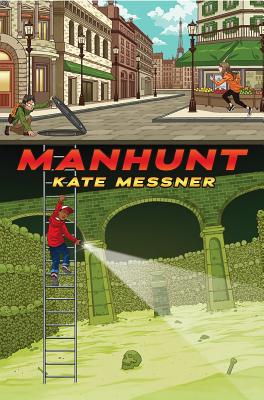
Anna, Henry, and José have one last adventure ahead – MANHUNT comes out in June and sends the kids off on their most dangerous missions yet.

Henry, Anna, and José head from Boston to Paris to solve the mystery of an international art heist! Shortly after they arrive, they learn that a member of the Silver Jaguar Society is working as a double agent, passing information to the criminal gang the Serpentine Princes — but who could it be? When the senior members of the Society go missing, it’s up to Henry, Anna, José, and their smug new comrade, Hem, to mount a rescue while staying hot on the trail of a missing masterpiece. Running around — and below — a foreign city filled with doppelgangers, decoys, and deceit, the three sleuths discover they’re the only hope for the Society’s survival!

I have a few advance reader copies of this book and would like to give one away in a drawing.  To enter, just leave a comment with your email before 9pm EST on Friday, May 30th. If you’re under 13, please have an adult enter on your behalf. Open to residents with US mailing addresses only.

MANHUNT is the last Silver Jaguar Society Mystery for now, but I’m already at work on a brand new adventure series for Scholastic. I want to introduce you to Ranger…

Ranger is a search and rescue dog with some incredible talents. He can find missing people. He has a gift for rescuing friends in trouble. And (with the help of a mysterious First Aid kit he digs up in the garden) he can time travel!

In Ranger’s first adventure, he goes back to the days of the Oregon Trail to travel with a pioneer family struggling with a wandering toddler, rattlesnakes, disease, a treacherous river crossing, and a buffalo stampede on their journey west.

The Ranger in Time books are recommended for readers in Grades 2-5.  Book 1: RANGER IN TIME: RESCUE ON THE OREGON TRAIL comes out in late December 2014, and Book 2, RANGER IN TIME: DANGER IN ANCIENT ROME  (Fire! Lions! Gladiators!) comes out in July 2015. Book 3 doesn’t have a title yet but features a fugitive slave as its hero, and Book 4…well…it’s probably too early to talk about Book 4, but it’s going to have a chilly setting.

So while I’m a little sad to be saying goodbye to my Silver Jaguar Society sleuths, I’m so excited to introduce readers to Ranger and all of the historical kid heroes he meets on his adventures.

Don’t forget – just leave a comment if you’d like to be entered in the MANHUNT ARC drawing!