Teachers Write 7.24.17 Mini-Lesson Monday: Biographical Research with Margaret Powell

Good morning, Teachers Write campers! Your Monday Morning Warm-Up with Jo is here.

Today’s a special day because I get to introduce you to a brilliant debut author who’s also a friend.

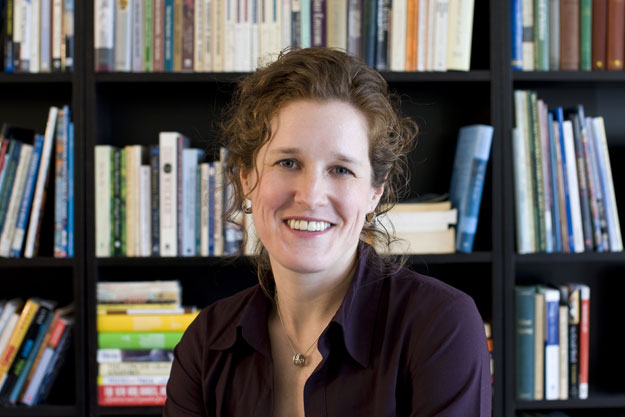
Margaret Powell is a decorative arts historian from Pittsburgh, Pennsylvania. She is the Curatorial Assistant of Decorative Arts and Design at the Carnegie Museum of Art and she writes about fashion history on her website www.hiddenfashionhistory.com. Margaret and I are the co-authors of an upcoming picture book called ONLY THE BEST: THE EXCEPTIONAL LIFE AND FASHION OF ANN LOWE, coming soon from Chronicle Books. (We don’t have a cover to share quite yet, but it’s being illustrated by Erin Robinson, and we’re both so excited!) Margaret’s post this morning is all about biographical research!

Digging into Biographical Research

I started learning about Ann Lowe during an internship in 2011. The chief curator wanted to know more about the designer of a dress in our collection and the existing scholarship available about Ann at that time boiled down to brief profiles in two 1980s books about African American fashion designers and a journal article written in the late 90s for the Alabama Historical Society. Not a lot of info, but they led me to a magazine interview Ann gave in the 1960s. Her story fascinated me, but from source to source, many details about her life were inconsistent.

Working to make sense of those mixed up facts turned into my masters thesis and this was the first biographical research I ever really attempted. To have enough information for my thesis, I needed dresses to study, former clients to interview and hopefully, some family members. Ann’s career spanned sixty years and three states: Alabama, Florida, and New York. I had the budget of a student, so research trips were limited and finding primary sources was a challenge.

A lot of Ann’s dresses are in museums, but the biggest collections nearby were not available for research that summer. The Metropolitan Museum had ten, but they were renovating the Costume Institute. The Smithsonian had a few, but those were caught up in inventory and research for the new National Museum of African American History and Culture. The JFK library held Ann’s most famous work: Jacqueline Kennedy’s wedding dress. That dress was permanently off limits to researchers (especially students!) because of condition issues. With all of those barriers, I wasn’t sure where to start at first, but then I thought about newspapers. Newspapers are a fabulous starting point!

All in all, my strongest research has been a result of interviews (in person and over the phone), but those take time to arrange, so they usually won’t be your first step. At the beginning of biographical research, newspapers and public records can give you the info you need to track down those living people. Genealogybank.com is my favorite website for this, because of their strong regional newspaper offerings, but if you have a membership with Ancestry.com, or one of the other genealogy sites, or even the New York Times, you already have access to some extensive newspaper archives.

What are you looking for? If your subject is well known, there could be interviews, profiles, book and tv reviews. Ann wasn’t well known, but she had a lot of well known clients and she created dresses for one of the most popular annual events in Tampa: the Gasparilla festival. Ann’s dresses show up on the front page of the Tampa Tribune throughout the 1920s and they are also described in detail inside.

Ann is never named here, but when I learned about her Gasparilla work, the rest was easy. The names of her customers led me to living granddaughters of those customers, and one of those ladies even mailed me an Ann Lowe dress to borrow for my research!

Obituaries may be the first link to finding living relatives. Wedding announcements will also help you to keep track of name changes.

The census can be another treasure trove of information and give you countless jumping off points. Google Books and Archive.org often have full scans of directories and trade journals from professional organizations. If your subject was a professional or an artisan, you may be able to find information that way.

Your Assignment: Choose someone you’d like to research. What can you find out about your subject through public records (the census, marriage, military, and death records), newspaper and genealogy websites? Has your subject ever given interviews to magazines or on television?

If you wish to keep going, on your own, create a list of five living people associated with your subject and reach out to them for interviews. Interviews can be in person, over the phone, or in writing (I started with a questionnaire to send out to a dozen of Ann’s former clients. Five of those people replied). These can surprise you. Descendants of Ann Lowe’s business partners, and a few of Ann Lowe’s 1960s bridal customers have been my greatest help! I hope you have fun while you uncover some interesting information about your subject!

As always, feel free to share a bit of your thinking in the comments today to continue the conversation!

Teachers Write 7.21.17 Friday Revision Tips with Erica Perl

It’s a Teachers-Write Friday, and that means it’s Friday Feedback day on Gae’s blog. Head on over to get some feedback on your work in progress and to offer help, too!

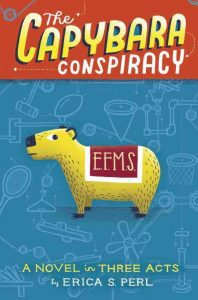
Also, Erica Perl, our guest author here today, has some revision tips to share! Erica is 3 of the 4 following things: 1) the author of picture books including Chicken Butt! and Goatilocks and the Three Bears; 2) the author of middle grade novels, including When Life Gives You O.J. and the forthcoming All Three Stooges; 3) the author of plays including The Capybara Conspiracy; 4) a hilarious public speaker; 5) terrible at math.

Six Reasons to Strip Down to Your Underwear and Read Your Work Aloud

An important piece of the editing process is reading your work out loud in your underwear. Not in front of an audience, mind you. But just to yourself (or, if you’d prefer, to supportive pets and houseplants). I find this to be an invaluable step, whether I am working on a picture book, an early reader, a play, a poem, or a novel.

Here are six reasons why you should do this:

1) Certain words or turns of phrase will trip you up, even though you’re the one who wrote them. This is particularly important in picture books or anything else that’s designed to be read aloud. If you stumble over it, chances are your reader will, too.
2) In a rhyming piece, you’ll also notice – most of the time – if your rhymes or meter are off. I say most of the time because you can actually force both things without intending to, so pieces that are written in rhyme require the additional step of having someone else read them aloud to you (you might want to put on a bathrobe for this). Ideally someone who has not heard you read this particular piece aloud before, so as not to be influenced by your patterns of inflection.
3) Your brain and your mouth will instinctively try to improve your work as you read. So, for example, if you used the word “kind” in a sentence you may find that you replace it aloud with the word “generous” if that’s really what you meant. Take note of this!
4) Your ear will notice which lines of dialog sound like the way people actually speak, and which sound “written” (the kiss of death, unless for some reason that is your intention).
5) You will discover how the rhythm of your piece works. For example, you’ll get a sense of which parts of your piece are too “talky” and need to be pulled back or balanced with more action, visual storytelling (in an illustrated book) or silence.
6) You will notice your bad habits, like specific words and phrases you lean on too hard, and you’ll discover excess words that you can part with. Half the battle of writing, in my opinion, is figuring out which words you don’t need.

With an audience of actual people (fully clothed, please!), you can of course discover many more things, like which of your jokes are actually funny and whether your plot makes any sense. But before you take that step, do your writing a favor: find a quiet place and read it out loud to yourself. And while the in-your-underwear component is optional, since you’re the only one there (except for the pets and houseplants), why not? Summer is the perfect time to shed clothes, and reading aloud is the perfect way to shed whatever’s holding your writing back.

After you do, leave a comment to share the most surprising thing you learned about your writing from trying this exercise!

Teachers Write 7.20.17 Thursday Quick-Write with Mike Jung

It’s Thursday Quick-Write day on Teachers Write, and your guest author is the fabulous Mike Jung. Mike is the author of GEEKS, GIRLS, AND SECRET IDENTITIES, UNIDENTIFIED SUBURBAN OBJECT, and the forthcoming THE BOYS IN THE BACK ROW. He’s also contributed essays to the anthologies DEAR TEEN ME, BREAK THESE RULES, 59 REASONS TO WRITE, and the forthcoming (DON’T) CALL ME CRAZY. Mike is a founding member of We Need Diverse Books™, and lives in the San Francisco Bay Area with his family.

I’ve spent my share of time in waiting rooms, as has anyone with the resources and good fortune to have access to health care, and they’re places with a distinctly complex blend of emotions relating to the past, present, and future all at once. A child waits for her very first dental appointment, knowing that her teeth were just on every previous day, thank you very much, not really liking the animated movie that’s showing on the TV screen up in a corner of the ceiling, and feeling nervous that her immediate future might include some drilling; a couple with matching white gold bands on their fingers sits on the edge of a waiting room couch, feeling the aches in their joints, clutching a bouquet of orchids in a long box and an oversized teddy bear, visibly impatient to meet their new granddaughter; a college student slumps in a hard plastic waiting room chair, staring blankly at his phone, hating his father for refusing to give up the cigarettes that gave him lung cancer, and drowning in guilt for feeling that hatred when his father’s on the verge of death.

Your Assignment: Think up a situation in which a character is waiting in such a room. Are they there for an appointment or an emergency? Are they there alone? If not, did they bring someone there, or are they arriving to see someone who’s already there? What might happen once they leave the waiting room? And here’s the pot of gold: when they sit down in that waiting room and start to wait in earnest, what’s the very first thought that goes through their mind? Spend a little time writing in response to this prompt, and then feel free to share a snippet of your writing for today in the comments if you’d like!

Teachers Write 7.19.17 Q&A Wednesday

Wednesdays are Question and Answer days here at Teachers Write, and each week, we’ll have a different panel of official guest authors here to answer your questions in the comments. Today’s fabulous mentor authors are Ammi-Joan Paquette, Caroline Carson, and Jody Feldman.

Teachers & librarians… If you’d like to ask a question, just post it in the comments. (Don’t forget that if this is your first time posting, your comment won’t appear until it’s moderated, and that may take a little while. Be patient, please, and don’t post more than once!) Joan, Caroline, and Jody will be monitoring comments throughout the day and responding to your questions!

Teachers Write 7.18.17 Tuesday Quick-Write with Loree Griffin Burns

We’re focusing on nonfiction and research again in our Tuesday Quick-Write, and your guest author today is the brilliant Loree Griffin Burns. Loree is a scientist and a writer with a passion for nonfiction storytelling. Her next book, Life on Surtsey, Iceland’s Upstart Island, explodes onto bookshelves November 14. Previous books for young readers include Tracking Trash: Flotsam, Jetsam and the Science of Ocean Motion, Handle with Care: An Unusual Butterfly Journey, and Citizen Scientists: Be a Part of Scientific Discovery from Your Own Backyard. Loree loves to share her work with writers and explorers of all ages, in all venues; visit her on the web at loreeburns.com

Tuesdays are for short writing prompts, and I promise that I’ll give you one … but only after a not-so-short introduction. Because yesterday’s post by my pal Sarah Albee? It got me pretty jazzed up, and I want to share a related idea for electrifying your writing research.

Talking to experts, as Sarah described it yesterday, is one of my favorite things to do. I’ve interviewed fifth grade experts hunting for ladybugs in New York, chemistry experts studying volcanic soils in Iceland, and a whole lot of interesting experts in between. Talking with people who know more about my topic than I do is how I “get the dirt” on my subject while, at the same time, collecting the details that will make my writing sing. A closely-related beyond-the-books research trick, a next step, if you will, to interviewing experts is what I call “getting dirty.”

What’s getting dirty? A field trip. Going somewhere and collecting rich experiences that will enhance your writing.

I know. I know. It sounds like a major way to procrastinate. And trust me, it can be. But all writers draw from the world around them. You can sit at your keyboard and tap your memories for the details you need; there’s nothing wrong with that approach. But for me, getting outside and getting dirty is critical. That’s where I find the tiny details that will help me transport my readers. More often than not, it’s where inspiration grabs me.

Let me give you an example. When I was researching The Hive Detectives: Chronicle of a Honey Bee Catastrophe, I called up an expert beekeeper, Mary Duane, and asked to interview her. (Sarah would approve!) I talked with this expert by phone for a long while, and Mary gave me a lot of dirt: information on honey bees, their lives in managed hives, and even some interesting insights into their sudden and mysterious disappearance, which was the catastrophe in my book’s title. Before we hung up, though, I asked Mary if I could visit her apiary. That’s when the fun really began.

In Mary’s apiary, I watched her climb into a bee suit, and then I climbed into one of my own. That’s how I picked up on the sound Velcro bee suit tabs make when you rip-and-reset the jacket wrists in order to make triple-sure that bees can’t crawl up your sleeves. I saw Mary slide her hive tool under the inner hive cover and use it to muscle that cover off. When she handed me the hive tool, I got to feel for myself the strength of the sticky resin honey bees line their hives with. And when we finally got that hive cover off, I felt for the first time in my life the vibration created by eighty thousand height-of-the-summer working honey bees. I smelled the light scent of warm honey mixed with that of softened beeswax. I heard Mary describe what she was seeing when she whispered, with a mix of awe and glee: “This hive is just boiling with bees!”

Me, Mary Duane, and an open hive of bees. My first visit to an apiary was … nerve-wracking.

I loosened up over time. This image of a honey bee stinging a human arm appears on page 41 of The Hive Detectives. Guess whose arm that is? 

How, pray tell, could I ever write about being in a beehive without having done these things? Without having showed up and gotten my hands dirty? If you read The Hive Detectives, you’ll find the details I’ve described here woven into the narrative. Individually, they’re not stand-out moments. Together, they make a more authentic reading experience.

So, get away from your desk. Intentionally seek out experiences that can help you bring your book alive. It doesn’t matter if you are writing a middle grade photo essay about honey bee scientists or a YA dystopian novel about climate change. Sometimes, your inspiration needs to come from outside your office, outside your head. Remember that list of experts you created after Sarah’s post yesterday? Pull it out and add to it a list of places you could go to get dirty and find inspiration. Then treat yourself to a field trip.

Okay. It’s time for that Quick-Write Prompt. (You know what’s coming, right?)

Your Assignment: Go outside. Get dirty. Write about it. Have an experience, and then bring it to life for someone else by writing about it. The goal is to find the words to describe a sensory experience as fully and completely as is possible.

Do you hear a bird singing in your yard? Describe what you hear. (Is it a liquid trill? A low-pitched hoot?) Your reader is not there with you, so write a paragraph that so accurately describes what you are hearing that your reader would now recognize this sound if they heard it in their own yard.

Are you at the grocery store? Buy four different kinds of apple, bring them out to your car, and sample them, one at a time. Describe what you taste. (A tangy bite? A subtle sweetness overwhelmed by a mealy textured pulp?) Find the words that will make your reader’s taste buds squirt, that will wake their own personal apple memories.

No time for this today? Rather get in your run? Fine. Run. But when you get home, take off your shoes and socks and give them a sniff. Take a few minutes and tell me in words about that smell.

Be creative. Choose some sensory experience already in your book or article, or that should be in your book or article, and give it your undivided attention today. Choose something that has nothing to do with your work-in-progress. Whatever. It’s your choice. Just get a little dirty … and then write about it. Have fun! And as always, feel free to share a bit of what you wrote in the comments.

Teachers Write 7.17.17 Mini-Lesson Monday: Electrifying Research with Sarah Albee

Good morning, and happy Monday!  Jo’s Monday Morning Warm-Up is here

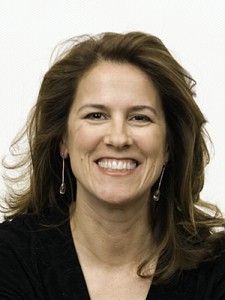
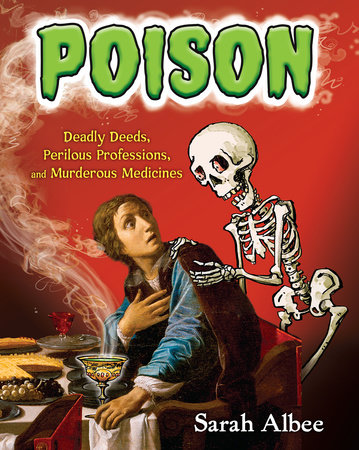
And our guest author today is the amazing Sarah Albee. Sarah writes nonfiction books for kids in grades K-9. Forthcoming titles include POISON: Deadly Deeds, Perilous Professions, and Murderous Medicines (September 5, 2017) and George Washington, First President (December, 2017). Other recent nonfiction titles include Why’d They Wear That?, Bugged: How Insects Changed History, and Poop Happened: A History of the World from the Bottom Up. She loves visiting schools and presenting to kids of all ages. Note: Sarah is off doing research in Europe right now, so her replies to comments may be delayed a day.

Electrifying Research

If you were to play a word association game with your students, chances are “ELECTRIFYING FUN” is not a phrase you’d hear them pair with the word “RESEARCH.”

But I’m here to tell you, Teacher-Writers, that research can be electrifying fun. And not just for those of us who write science and history. Every professional fiction writer I know does some research in order to add depth, realism, and nuanced details to her writing. Many do a lot of research. For instance, I know for a fact that my friend Kate Messner is a research geek.

And while starting with a Google search is generally the way most students (and let’s face it, most of us) start exploring a new topic, there’s so much more to research than internet searches.

Today I’m going to talk about one of my favorite aspects of research. I broadly call it “talking to experts.”

What kids may not realize—what adult writers may not realize—is that an expert can be anyone with knowledge about your topic. While an expert can be an esteemed professor at a fancy university, it can also be an older member of your family. It can be a person who hails from the place you’re writing about. It can be an elderly person in a nursing home, or someone who maintains your school building. Don’t be shy about approaching these people, because people love to tell their stories.

When researching my Poison book, I interviewed many people, but I want to tell you about two “talking to experts” experiences I had in particular.

I discovered that Cornell University has a poisonous plant garden. Who knew? The garden is at the veterinary school, and was created as a living reference collection of “natural toxicants.”

After a quick internet search, I contacted a professor there, Mary Smith, who agreed to meet with me. I drove up to Cornell on a sparkling September day. The poisonous plants were in full bloom—the garden was having a fantastic hair day. She showed me around and pointed out plants I’d been reading about in books—deadly nightshade and jimsonweed and poison hemlock and aconite and nicotine and lots of others. She spent several hours with me—we shared an enthusiasm for toxic plants. Here’s Dr. Smith showing me a castor plant…

I had a disquieting moment when she placed two castor plant seeds into my ungloved hand as I was standing in an open field, far from any emergency shower station. I knew that the plant, Ricinus communis, contains the potent cytotoxin called ricin, one of the most poisonous naturally occurring substances on earth—one milligram can kill an adult. In 1978, a shadowy assassin used ricin to kill Georgi Markov, a Bulgarian journalist living in London. Markov was shot in the thigh with a ricin pellet fired from a tricked-out umbrella.

But Dr. Smith reassured me that the tough seed coat would protect me from the ricin. “Might want to wash your hands before you eat lunch, though,” she said casually over her shoulder as she marched off toward the next specimen.

Also in my Poison book is a section about the dark chapter in our twentieth century history when watch-dial-painting factories sprang up and employed young women to paint glow-in-the-dark numerals on wristwatches, using …radium based paint. These so-called “radium girls” were hired for their keen eyesight and nimble fingers.

Above: Radium girls at work

They were taught to lick the end of their paintbrushes to get a nice pointy tip. At the time, no one knew radium was poisonous. But soon these young women began falling sick with devastating illnesses. As I was researching this chapter, I stumbled across a reference to a watch-dial-painting factory in Waterbury, Connecticut, four miles from where I live. I’d had no idea there had been a factory here. After scanning some old newspapers at my library’s database and making a few phone calls, I found myself interviewing two grown children of two different radium girls. They were both in their 80s and still living in Waterbury. Our conversations were powerful and emotional, and both shared poignant stories about their mothers’ illnesses. I’ll never forget these conversations.

So here’s your assignment, dear Teacher-Writer-Researchers: Brainstorm five people you know, or know of, or know slightly, that might help deepen your understanding of the topic you’re writing about. If you don’t yet have a work in progress, then just pick a person, any old person, and ask her to tell you something about her life. Ask a lot of open-ended questions, and then listen. You’ll be amazed. Because everyone, everyone has a story to tell. Note: tomorrow my good friend, Loree Griffin Burns, is going to carry on with a related post about electrifying your research!

As always, feel free to share a little about your experience and continue the conversation in the comments!

Teachers Write 7.14.17 Friday Revision Notes with Gwenda Bond

Good morning! Fridays on Teachers Write are feedback days, so feel free to hop on over to Gae’s blog for her Friday Feedback feature. Be brave!

Most Fridays, we’ll be focusing on revision here. Many of our Wednesday Q&A session questions were on that topic, so I hope you’ll find this helpful. Beyond Teachers Write, those who have a novel draft – or pieces of a novel written – and want to take the next step when it comes to revision may want to spend some time with Linda Urban and me on Lake Champlain in the fall. We host an annual weekend revision retreat called Time to Write, with craft talks, workshop and critique sessions, and quiet revision time. It’s held at the Valcour Inn on Lake Champlain, which is pretty much the loveliest place on earth to write and learn. I just got back from a retreat there…

Here’s more info about the Time to Write Revision Retreat for those who might be up for a road trip in November. Back to Teachers Write now…

Today’s guest author is Gwenda Bond, whose work includes the Lois Lane series and the Cirque American series, about daredevil heroines who discover magic and mystery lurking under the big top. She also co-write the the Supernormal Sleuthing Service with her husband, author Christopher Rowe; book one, The Lost Legacy is out now. Gwenda has also written for Publishers Weekly, Locus, and the Los Angeles Times, among others. She’s joining us today to share some favorite revision strategies!

I’m one of those writers who loves revision. For me, first drafts are usually at least a little painful (and sometimes tragically awfully so). I fight every draft, usually because I’m so eager to get to the revising part. But sometimes it’s possible to be too eager, for me anyway, and I try to revise before it’s time to revise and just end up–in the words of writer friend Justine Larbalestier, who might have been borrowing them from someone else–”moving around deck chairs on the Titanic.”

So these days my watchword for revision is distance.

A couple of years ago, I realized that my best revisions have all been done at a very specific emotional and psychic distance (bear with me, sometimes it’s impossible not to talk about writing with terms that sound vaguely magical…because so much of the time when it’s going well it feels that way…even if that is a deceptive side effect of hard work). The best way I can describe it is that arm’s length feeling, where I don’t feel like I’m clutching the story to my heart anymore, it’s far enough away that I can see it more clearly–but not so far away that my heart and head don’t feel a strong pull to it. It’s when the story starts to feel flexible. Like I won’t just be breaking it or bashing against it, but see how to mold it–finally!–where I want it to go to make it better. (I also try to get into this frame of mind for outlining, sometimes easier than others.) In a perfect world, time would always or usually do this on its own. But, alas, in the world of deadlines and reality, sometimes you have to speed your brain along as best you can.

Since I had this realization, I’ve worked on perfecting getting into that mindset and have developed a few different strategies to do so. These work in combination or on their own, so try mixing and matching if you’re struggling to wrap your head around a revision. These are all things I do when I’m stuck on a draft too.

1) Work on something else. Especially if I’m expecting notes back quickly or will have to don the revision gloves and slice back into a project right away, one of the most effective things for me is to write something, anything else, as long as it’s fiction. A short story, a fragment, jumping to another novel, whichever. Immersing myself in another project–as long as it’s fiction–decouples my brain from the one I just finished drafting. At least a little.

2) Give myself a reading vacation. Sometimes I’ll give myself a week or two off from writing and just inhale as many good books as I can find. Sometimes they’re in my genre, sometimes they’re as far from it as possible, sometimes a mix, but reading fiction is a great way to let your story brain both work out and relax at the same time. I almost always come out of these stretches ready to work again.

3) Get feedback. Often seeing a story through someone else’s eyes is the best way to get perspective on it and distance from it. Notice your reactions, what resonates and doesn’t, what makes you excited to get back to work and what makes you feel hopeless. Take the helpful stuff and get back to work. Leave the rest on the table.

4) Trust your gut. Let your subconscious work on it. The longer I write, the more intuitive about the process I become. One of my favorite screenwriters is Ernest Lehman, who famously struggled to put the script of North By Northwest together, because he was largely stitching ideas for scenes and moments from himself and Alfred Hitchcock into a story. I’ll just share this anecdote in his own words:

(blockquote)
“So I kept pressing forward, and Hitch, confident that I now knew what the hell I was doing, moved over to MGM from his home base at Universal, and started storyboarding the script with his art director, and casting the roles. And all the time, I’m sitting there in my office sweating the fact that I have no idea whatsoever why the hell they’re all going to Mount Rushmore! Why were these people heading to South Dakota? I had no idea! So, the last act of the script was blank. Actual blank pages! Then Cary Grant came on the picture with some astronomical salary, and I was still sitting there in my office with nothing but a partially-completed script. So I called up Hitch, and I told him we were in big trouble. He came rushing over to my office, sat across from me, and the two of us stared at each other. Finally, he suggested that we call in some mystery novelist to help us kick around ideas, but I didn’t like the idea. After all, I was getting paid by MGM to write the thing, and I felt that it would make me look pretty foolish. I kept saying, “God, what’ll they say about me upstairs?” and Hitch would say, “Don’t worry, I’ll tell them it’s all my fault. I’ll tell them I should’ve been able to help you, but I couldn’t — or something like that.”

“Then we went to his office — it was about six o’clock in the evening — and we kept talking about his idea, even discussing which mystery writer we should get, and, all the time, the right side of my brain was working, and suddenly, as I was listening to him — not really ignoring him — I said, “She takes a gun out of her purse and shoots him.” So where the hell did that come from? It just popped into my head. That’s the way it works sometimes: you’ve got a problem and, no matter what else is going on around you, the right side of your brain keeps working on it and then, suddenly, it pops out of nowhere. And Hitch took it right in stride. Even though I’d completely changed the subject and suddenly blurted out, “She takes a gun out of her purse and shoots him,” he didn’t miss a beat and responded, “Yes, the Polish Underground sometimes killed their own members, just to prove they weren’t in the Underground.” And I said, “Yes, but these are fake bullets. That’ll convince Vandamm that he has to take her away with him. Now that she’s a fugitive, he’ll decide to take her on the plane.” And, instantly, I had the whole last act.”
(end blockquote)

Now this was a drafting problem, but it’s the same kind of question that happens in revision and can make it hard to approach. Particularly if you’re too close to the story still. It’s the “but I don’t know how to fix it” problem. The “I don’t know what happens” problem. Your subconscious will work on it while you’re doing other things, and sometimes you just have to let that happen. Sometimes you have to walk away from your desk that day and say, “I may just have to abandon this. I have no idea how to fix it.” And voila, the answer usually presents itself as soon as you give yourself permission to walk away or give up. (Tricking our brains into cooperating is so much of the writer’s job.) Long walks are one of my favorite things to abandon desk and do to tackle story problems.

5) Talk it out. I’m a big believer in describing stories and story problems out loud, especially if I’m trying to figure out a revision. First off, you have the distance of being away from the page. Second, there’s something about articulating a problem out loud that often leads you to the solution. I use my husband for this most often, but a dog or cat will work. Because you don’t even need another person to be listening (although it’s a bonus; hit up your writer friends). Just forcing yourself to say the issue out loud can reveal solutions and give you new perspective; it helps create that ideal distance to be at for fixing a story.

I hope some of these are helpful for you — happy revising!

Teachers Write 7.13.17 Thursday Quick-Write with Hena Khan

Good morning, writers! Today’s guest author for your Thursday Quick-Write is the brilliant Hena Khan.  Hena is the author of GOLDEN DOMES AND SILVER LANTERNS; IT’S RAMADAN, CURIOUS GEORGE; and AMINA’S VOICE.

The Name Game

A friend and I recently overheard a conversation in which a little girl was asking her mother, “but HOW did you KNOW my name BEFORE I WAS BORN?” As we laughed about how cute she was I was reminded that even though a name is something we don’t pick ourselves, it defines us in so many ways.

When I was growing up, my best friend changed her name when we were in elementary school. It left me feeling like I lost a piece of my friend, and that she was deciding to become someone else. I wondered if my own uncommon name was less worthy than I thought it was. And I feared that part of what my friend was choosing to discard, along with her old name, was our relationship.

Maybe because of that experience, the idea of our names and how they shape our identity is something I still think about often. As a kid I often imagined how my life might differ if my name was Melissa, or if I had a really cool nickname (I didn’t). I never changed my name, and kept my last name after marriage. I randomly ask my kids if they like their names, or if they wish they were called something else. And I explore the theme in my newest book, Amina’s Voice, when Amina’s best friend Soojin considers taking a new name, much like my friend did.

Today’s Assignment: Imagine that could go back in time and name yourself before you were born. What name would you choose?

Take a few notes about why you picked that name. Does it have a special meaning? Does it evoke a certain emotion? Can you describe the way it makes you feel—powerful, beautiful, distinguished, quirky, brave, something else? Do you think you would be a different person if you had grown up with that name? Who would you be?

Now, write yourself a short 4-5 line bio—the fun and lighthearted kind that highlights your personality and personal achievements, not a professional bio—using your imagined name. If you think you’d be exactly the same person you are today no matter what your name was, that’s great too! And I’d love to read your name choices and bios in the comments section below.

Happy writing!

Teachers Write 7.12.17 Q&A Wednesday

Got questions about writing?  Wednesday is Q and A Day at Teachers Write Virtual Summer Writing Camp, and we’ll have some great guest authors answering. Today’s official author guests are Christina Diaz Gonzalez, Megan Frazer Blakemore, and Nanci Turner Steveson.

Teachers & librarians – Feel free to ask your questions in the comments.  It’s fine to ask a general question or to direct one directly to a specific guest author. Our published author guests have volunteered to drop in and respond when they can.

Guest authors – Even if today isn’t a day you specifically signed up to help out, feel free to answer any questions you’d like to talk about.  Just reply directly to the comment.

Note from Kate: I’ll try to be here for Q and A most Wednesdays, too. Please be patient with me if you’re a first-time commenter – it may take a little while for me to approve your comment so it appears.

Got questions? Fire away!

Teachers Write 7.11.17 Tuesday Quick-Write with Phil Bildner

Good morning, writer friends! Tuesday and Thursday are Quick-Write days at Teachers Write, so our guest authors will be coming by with some writing prompts to try out. Do as much or as little as you’d like with each mini-assignment, and feel free to bookmark those you’d like to use with students later on. Teachers Write posts don’t go anywhere after the summer ends. They’re always here for you to use and share with student writers.

Today’s guest is Phil Bildner, the author of numerous children’s picture books including Martina & ChrissieMarvelous Cornelius, ​and ​Twenty-One Elephants​.​ He’s also the author of A Whole New Ballgame, Rookie of the Year, and Tournament of Champions, the first three books in the middle grade Rip & Red series. A former middle school teacher in the New York City public schools, Phil spends much of the year visiting schools around the country conducting writing workshops and talking process with students. He lives in Newburgh, New York with his husband and dog.

Coming and Going

Today’s Quick Write isn’t an entirely original one. I’ve seen variations of this prompt a number of times. The one I’m sharing is a technique I use more and more to help jump start and layer my own writing.
 
Watch people come and go. When you’re at the coffee shop, the supermarket, the cleaners, the gas station, the gym, the doctor’s office, or wherever, watch the people as they enter and exit. But don’t only focus on their appearance — what they look like and what they’re wearing. Think about the how. How are they coming and going? And think about the why. Why are they coming and going, Think of their story. Think of their purpose. 
Today’s assignment: Whenever you’re in a public place today – the grocery store or coffee shop or picking up kids from camp – spend a few minutes writing about who comes and goes, and how. Choose someone and imagine their story, and spend a little time exploring that in words. As always, feel free to share a bit of your writing from today’s prompt in the comments!