Back to School & Back to Work

Confession: Even though I’ve been writing full time for a couple years, it still feels a little strange not going back to school on the first day. Instead of smelling new pencils and seeing nervous middle school faces now, the start of school means a return to longer writing days for me. That’s most welcome after a summer that was full of busy days and wonder. Here’s a sampling of the July & August memories I’m bringing back to my quiet writing room…

Magical glass

 We spent a day in Montreal and checked out this amazing Dale Chihuly exhibit at the Montreal Museum of Fine Arts.

If you live near Montreal or visiting any time soon, don’t miss it – it’s there through October 20th.

Secret stone houses

Camping on Lake Champlain’s Valcour Island was on my daughter’s summer wish list, and we’re so glad we found the perfect weekend for it. This island saw a pivotal Revolutionary War naval battle in 1776  and was the site of a short-lived utopian community in the late 1880s. These days, its bays are full of Canadian sailboats, but the island itself is riddle with hiking trails that still hold some surprises, including this abandoned stone house that we came upon in a clearing.

Ambitious snakes

Just as we were gathering our camping supplies on the rocky beach, getting ready to return to the mainland, we spotted this garter snake, struggling to eat a toad that was many times the size of its head.

Nature is pretty amazing sometimes.

Ancient Rome

This was the view from my home-office-away-from-home for a week in  August…

That’s the Roman Colosseum you see in the distance, the Flavian Amphitheater as it was known at the time, and it’s an important site in one of my upcoming books. It’s too early to say much more about the new project, other than that I have many pages of notes and many, many photos for inspiration now that I’m home writing again. More to come soon…

So happy back to school, everyone! If you’re a teacher or school library media specialist or student, I hope you’re having a great start to your new school year!

Behind the Scenes with Bossy Fish: Interview with Editor Melissa Manlove

As an author, it’s always magical for me to see a finished picture book after months and months of back and forth emails with my editor over everything from text revisions to illustration sketches. SEA MONSTER AND THE BOSSY FISH, editor Melissa Manlove was instrumental in making this latest Sea Monster adventure a book that teachers, kids, and families will all appreciate, so I asked her if she’d take a little time out from editing to visit my blog today and talk about the process behind the picture book.

Hi, Melissa!  First of all, thanks for stopping by to talk about Sea Monster. As you (and a lot of my blog readers) know, this is Ernest the Sea Monster’s second adventure. Signing up a sequel or companion book must be a big decision for an editor. What made you feel like Ernest the Sea Monster should have another story?

Sea Monster’s First Day went out in strong numbers–that’s always part of it. Publishers are also always on the lookout for characters that can build a line of books, and we have a soft spot for Ernest’s brand of silly sweetness.

As an editor, how do you approach a new manuscript that arrives in your in-box? Obviously, because we worked together on SEA MONSTER’S FIRST DAY, Ernest was no stranger to you, but I’m curious what your process looks like from the moment that file arrives. Do you start thinking about suggestions right away or read through a few times and let the thoughts marinate for a while?

It varies from book to book. Usually I need some time to think/process, if only to be sure I’m in touch with what the book’s heart is and what feedback is going to help the book become the truest version of itself.

One of things I most appreciate about your editing is the way you prompt changes by asking thoughtful questions. Here are a couple highlights from the first feedback I received from you on BOSSY FISH:

Could there be more fishy humor in the first half of the manuscript? Sea Monster’s first day was wall-to-wall fish jokes–something funny on each spread– as well as having a heart. Your humor is just right, too–accessible to these young kids, and still tickling to the parent-aged, readers-aloud-type people like me and you.

Could there be a little more set-up at the beginning? I worry you’re assuming your reader knows Ernest already from the previous book, but many people will discover this Sea Monster book first and then backtrack to First Day. We need a sense at the start of the story of who Ernest is and that he is the main character.

Could there be a touch more in the way of character arc? Ernest is not as hard-hit by these developments as he was in First Day; I’d like to see more clearly how and why he is emotionally invested in finding this resolution. A bit more of a black moment? However (!) I love that you didn’t go the clichéd route of making Ernest an immediate target for the bully. How can we keep that and still develop just a bit more of a crisis for Ernest?

So often, your feedback comes in the form of questions. Why do you feel like that’s the best way to prompt revision? (I have my own feelings on this as an author, but I’m curious about your thoughts from an editor’s perspective!)

I think that questions are among the editor’s most powerful tools–the use of questions emphasizes that the editor is open to discussion and disagreement. The questions I ask most often in the process of feedback are ‘Does that make sense?’ and ‘What do you think?’ because I am trying to help the writer achieve THEIR vision and reach THEIR audience. I want to make sure the author knows I don’t come to the editing process in a dictatorial frame of mind–I am here to assist in creation, but I am not one of the creators of the book. When an author communicates to me that I have really helped them to make their book into the book they wanted it to be–that’s when I am happiest in my job and proudest of my work.

What advice would you give others who want to help a writer to grow? I’m thinking of both teachers and writers in critique groups. What are your best tips for helping an author of any age to reconsider and improve his or her work?

Critique is useless when it is vague. I want to pinch people in critique groups when I hear ‘this is so cute’. Critique is also useless if it is entirely positive OR entirely negative. Neither kind will help a writer move forward and improve their work. Critique should always begin with specific, positive feedback. This is important for several reasons. I’m attaching the sheet I wrote for our interns about giving editorial feedback:

How to write an editorial letter

1. Start with the best. Identify the strengths of the book, the things to which the book’s audience will most connect. All of them. Be specific.

            a. Because these qualities will be your pole star as you guide the book through the publishing process. Books change as they are developed. Having iterated to yourself at the beginning what the point and value of the book is will help you ask yourself whether each change along the way serves the true nature of the book.

            b. Because when you iterate those things to the author, you gain the author’s trust. Authors are absolutely right to distrust anyone who does not see why the book is valuable, yet who wants to suggest changes. And authors are facing the difficult and sometimes painful process of revision. The admiration and excitement of a knowledgeable stranger—you—gives them fortitude and faith in the face of that process.

            c. Because if you don’t iterate those things to the author, the author might change them during revision. Never assume the author sees the brilliance of their book, no matter how obvious it is to you. This is no criticism of authors—it is their job to see the trees. It is our job to see the forest.

2. Remind the author to argue with you. Remind the author that you want to hear her point of view, and to help her make this the book she wants it to be. This also builds trust, because it communicates that the author is in this process with a respectful partner—not with a general who will command or with a surgeon who will cut. Neither war nor medicine is a creative process. And this openness to disagreement builds trust because it communicates that you are not in this to make it the book you want it to be, but simply the best book it can be. There is no ownership in editing.

3. Ask questions. Editorial confidence opens pathways and facilitates decision-making, but editorial inflexibility is the enemy of creativity.

4. Point out problems, and explain specifically why you believe they are problems. But suggest solutions as questions. A suggested solution can help the author to understand better how you perceive the problem. But remember that the best solutions usually come from the author. Specifically communicate that if the author has different ideas for how to approach each issue, they are very welcome.

5. Think of each book as a thing of its own, with a soul and identity apart from any of the people involved in it. What does the book want to be?

6. Be grateful. We are each of us absurdly lucky to be working in this field.

I love this so much – thanks for sharing it, Melissa!  One last question…  Readers may not realize this, but editing a picture book involves working with so many people — the author, the illustrator, the design team… Could you talk a little about how you balance that as an editor and how your role helps the process along?

In terms of communication, the editor is the center of a wheel of people–the author is one spoke of the wheel. The illustrator, the designer, the production manager, the publisher, the managing editorial team (copyeditor, proofreader, factchecker), the publicist and marketing manager are all other spokes. Except for communication between the designer and artist, which is often direct, the editor receives, filters, and shares communication between all of these people. What we call the ‘make team’ are the people who have the most impact on the book itself–author, artist, editor, designer, production manager. But all the others have important roles to play, too, and we could not effectively make books without their contributions.

All the same, Melissa, I’m happy to have you at the spoke of our wheel. Thanks for this interview, and more than that, thanks for all of your work on SEA MONSTER AND THE BOSSY FISH!

Teachers Write 8/7/13 It’s Q and A Wednesday!

Good morning, team! I’m traveling again this week & won’t be around to comment until late, but we have some great guest authors for Q and A Wednesday today, including Joanne Levy, Danette Haworth, and Erin Dealey!

Got a question you’d like to ask one of these friendly writers?

Teachers & librarians – Feel free to ask your questions in the comments.  It’s fine to ask a general question or to direct one directly to a specific guest author. Our published author guests have volunteered to drop in and respond when they can.

Guest authors – Even if today isn’t a day you specifically signed up to help out, feel free to answer any questions you’d like to talk about.  Just reply directly to the comment.

Thank you, Idaho Association of School Administrators!

I spent the first part of this week talking books & writing in Idaho – at this year’s Idaho Association of School Administrators Conference in Boise. What a fantastic, dedicated group of people – and what a great city, too! Confession: Because my talk wasn’t until late afternoon, I managed to sneak out and do a little biking on the Boise River Greenbelt first thing in the morning. I loved this bike path with all of its magical views!

I also had a chance to see some of the areas outside of Boise, thanks to my amazing Scholastic Book Fairs friend Jennifer Gravel.  She took me out to see Three Island Crossing, which is the setting of an important scene in one of my upcoming books. I’ve read SO many Oregon Trail diaries that talk about this place, so it was incredible to see it with my own eyes this week.

Idaho people, it turns out, are just as warm and wonderful as their weather. I couldn’t have asked for a nicer welcome – so many, many thanks to everyone who attended my talk, and especially the Scholastic Book Fairs people who made it happen. Here I am with Wade, Jennifer, and Shawn…

Here are some resources for folks who were at the conference and would like links to the websites I talked about:

Here’s the home page for Teachers Write, my online summer writing camp for teachers, librarians, and (now…just for you) administrators.  Here’s what it’s all about…   And here’s the sign-up page. We hope you’ll join us!

REAL REVISION: AUTHORS’ STRATEGIES TO SHARE WITH STUDENT WRITERS from Stenhouse (link includes an online preview)

“Revolution for the Tested” – The poem I shared on the real reasons to read & write

Kid-Sourcing.com – Great opportunities for kids to be engaged in real-world problem solving

Authors Who Skype with Classes & Book Clubs – My list of 100+ authors & illustrators who offer free 20-minute Q and A sessions with groups that have read one of their books.

“Met Any Good Authors Lately?” and “An Author in Every Classroom” are my SLJ features on Skype virtual author visits and how they can be used to provide students with published authors as mentors for their own writing after reading an author’s books.

“Pleased to Tweet You” is my SLJ feature on educators using Twitter as a teaching tool to connect students with authors and promote literacy.

“Real Authors Don’t Plan…Or Do They? An Open Letter to Tyler” Blog post that shows planning/outlining/idea-webbing  process for CAPTURE THE FLAG. (Real authors do plan…and revise…and revise some more…)

Thanks again, Idaho Association of School Administrators, for a great day of talking books, writing, and “Letting Kids Lead!”

Teachers Write 7/22/13 Mini-Lesson Monday with David Lubar

Good morning! Guest author David Lubar is here with your Monday morning mini-lesson. David is the author of about twenty book s for young readers as well as a game designer. You can read lots more about him on his website, but for now, he’s joining us with today’s mini-lesson.

Double Duty by David Lubar

         There’s a scene in My Rotten Life where the main character accidentally ruins dinner. In the first draft, this moment is followed with:

            Dad grabbed the phone and ordered a pizza.

            That’s a perfectly fine line. It lets the reader know what happened, and shows that the father isn’t annoyed. But during one of my revision passes, I realized I could do a lot more with that line. I changed it to:

            “I’ll order a pizza,” Dad said, hitting number 2 on the speed dial.

            There are several things to notice, here. First, I preserved all the information from the original version. Dad is ordering a pizza. He’s not visibly upset. But I also used the line as an opportunity to reveal information about the family. Obviously, they order pizza a lot. Going even deeper, some readers will catch the joke that not only is the pizzeria on speed dial, it is in the crucial #2 spot, usually reserved for friends or family.

            The thrust of this essay is that you, as a writer, should always look for opportunities to get extra work out of what you write. But, as a side note, I want to point out that “number 2 on the speed dial” is a great example of the reason why it is often better to show than tell. By giving the reader something to think about, I have inspired him or her to solve a problem, draw a conclusion, and experience a small “aha!” moment. Essentially, I’ve tossed out a small puzzle. The reader has interacted with my story. The reader has moved from passive to active. This is one way to get your reader immersed in your story. Immersion is good.

            But, back to the topic at hand, always look for ways that you can get extra mileage out of your prose. Let’s start, right off the top, with titles. It’s great when a title has more than one meaning, or when it foreshadows something about the story (without giving away enough to spoil any surprises). Since I write a lot of short stories, I have the pleasure of inventing titles a lot more often than novelists. (Not counting those novelists who write a book a week.) In the next Weenies collection (a series of short-story collections currently comprising seven books), I have a story about a boy trapped in a butcher shop. The meat in the case pulls together to form a monster. The working title was “The Butcher Shop.” In the end, I called it “Dead Meat.” Deliciously, this title carries a variety of meanings.

            In Extremities: Stories of Death, Murder, and Revenge (I feel compelled to point out that I’m a much nicer guy than my writing might indicate), the story about a boy who is deciding which city to run away to is called “Split Decision.” There’s an added irony to this word choice that I hope resonates with the reader once the full meaning of the ending sinks in. (Given that most author essays on any topic contain some degree of book promotion, I guess I can’t claim it’s a coincidence that I arranged things so this essay appeared the same week Extremities launched.)

            Another great place to look for economy and utility is in dialogue. I will often mingle action and dialogue. This keeps the story moving, and conserves words. For example, consider a scene like this (which I’m writing at this very moment as an example, so it will probably not be deathless prose):

            I got in the passenger side of Jake’s Mustang. He slipped behind the wheel and fired up the engine. We pulled away from the curb and took a left on Baker St.

            “Do you think Angie will be at the party?” I asked.

            “Sure,” he said. “She loves costume parties.”

            “I hope I don’t look stupid,” I said. “I think Robin Hood might have been a bad choice. I’ll have to carry this ridiculous bow all night.”

            “You always look stupid,” Jake said. “You should concentrate on not looking stupider. That would be a win.”

            Okay. That’s not a bad scene. But we can compress it and make it flow by letting the action take over for some of the uses of “said.” (Though “said” is invisible, and nearly always fine to use.) I’ll take a shot at it. Again, I’m doing this in real time, on the fly, so you can see revision in action.

 (1)      I got in the passenger side of Jake’s Mustang. “Do you think Angie will be there?”

            “Sure. She loves costume parties.” He got in and pulled away from the curb.

(2)       “I hope I don’t look stupid,” I said as I went through the contortions necessary to stash the longbow in the back seat. “Maybe Robin Hood was a bad choice.”

“You always look stupid,” Jake said. He turned onto Baker St. “You should concentrate on not looking stupider. That would be a victory.”

            The purest example of what I’m talking about is in #1. Dialogue and action are combined, with no use of “said.” I also eliminated some of Jake’s actions that didn’t need to be stated. (Again, they don’t have to be removed, but if they stay, they should be there for a reason.) Two side notes. I changed “be at the party” to “be there” to avoid the repetion of “party” with “parties.” It also adds a tiny bit of suspense as the reader wonders where “there” is. (Capote fans will know it’s not in Kansas.) Also, “He got in and pulled away…” is awkward. I’d change in on the next revision. I might need to add a sentence, since there are several actions being covered. (Getting in the car, starting it up, pulling away from the curb. Any or all of these might not need to be stated. But we don’t want the reader to think Jake is still on the outside, and then be jolted when he starts driving. Sadly, it’s often possible to make things worse when trying to make them better.)

            In #2, I left in the “said,” to show that this is always an option, and blended it with an action, but I also did something more important. I not only combined the action with the dialogue in the paragraph, but found an opportunity to reveal a bit about the main character, who doesn’t think about stashing the bow until he is in the car. (In the next pass, I’ll have to do research to see whether Mustangs have a back seat. Often, our additions lead to a need to change something else. And I’ll have to decide whether Jake has to duck during the bow stashing.)

            In #3, I used “said,” and then a separate action. There are infinite ways to handle these things. The trick (or art) is to find the version that is most pleasing to your own ear, but to also develop an appreciation for prose that serves more than one function. The other trick is to only do this when it improves the passage.

            Take a careful look at any descriptive passages in your work. These are often great candidates for compression since we tend to describe things as they play out in our linear thoughts. Backstory and other passages communicating essentail information can also be enlisted to carry extra loads. Look for ways to use them to reveal character or solidify setting. Merge them with action when it makes sense. Combine minor characters, too, if you can.

            One final word. I approach all of this as an enjoyable mental task, an art, and a challenging puzzle. How can I do more with this sentence? It’s fun. It’s rewarding. And your readers will appreciate it almost as much as you do. Happy writing. And happy reading. I understand there are some wonderful books hitting the shelves this week.

Note from Kate: Thanks, David! In the comments today, feel free to share a snippet from your work-in-progress that you think illustrates this – or simply reflect/ask questions about today’s lesson. Happy writing!

Teachers Write 7/11/13 Thursday Quick-Write with Megan Miranda

Good morning! Your Thursday Quick-Write today is courtesy of guest author Megan Miranda. My favorite thing about Megan’s YA novels is the way they’re infused with science — total reading candy for geeks like me.

Megan is the author of the young adult novels Fracture and Hysteria, both published by Bloomsbury/Walker Books for Young Readers. She has a degree in Biology from MIT and spent her post-college years working in biotech and, later, teaching high school science. She currently lives near Charlotte, North Carolina with her husband and two young children. Megan is represented by Sarah Davies at The Greenhouse Literary Agency. Today, she’s visiting to talk about point of view.

What We See vs. How We See

On a recent vacation, I found myself at a desk with a view of the ocean—which was coincidentally the perfect backdrop for me to write a very relevant scene of my work in progress. My main character was about to take the plunge—quite literally—into the ocean.

I started writing what I saw: the light catching off the moving water as the sun set on the horizon; the way I could see beneath the surface to a deeper shade of blue; how the world felt suddenly limitless, stretching out before me.

All of which was there and true, but also not at all how my main character would see these details. Because that character about to take the plunge into the water? She can’t swim. This same setting, filtering through me in a calm and peaceful way, would be terrifying for her. Those same details represent uncertainty for her. She’s full of anxiety. That setting sun is a ticking clock, the premonition of darkness coming. The water that seems to turn a deeper shade of blue beneath the surface is bottomless, disorienting, and something to be feared.

Setting the scene is not just what we see, but how we see it.

When describing a scene, ask yourself: What’s my narrator’s perspective?

The details our characters see are important, but how they see them gives the reader an even greater understanding.

Ask yourself:

*Who is setting the scene for us?

*What’s their mood? What are they feeling?

*Why are they there?

This is a picture I took on that vacation. It’s a beach that’s only accessible by water. But this setting can be described in countless different ways depending on who’s behind the camera, what they’re feeling, and why they’ve landed there:

*What is he or she feeling? Is she lonely? Content? Exhausted? Excited?

*Why is he or she there? Did he seek the spot for solitude? Is he hiding from someone? Is he exploring? Is he lost?


Feel free to use your own story setting, your current view out the window, or this picture, if you’d like.

But whatever you choose to describe, think about the perspective of the narrator. What’s his or her mood? Why is he or she there?

And let your narrator tell us how he or she sees the scene.

Feel free to share in the comments if you’d like!


Teachers Write 7/10/13 Q and A Wednesday

It’s time for this week’s Q and A Wednesday – a chance to ask your questions about writing to an all-star cast of author volunteers.  This week’s guests are Donna Gephart, Cynthia Lord, and David Lubar!

Teachers & librarians – Feel free to ask your questions in the comments.  It’s fine to ask a general question or to direct one directly to a specific guest author. Our published author guests have volunteered to drop in and respond when they can.

Guest authors – Even if today isn’t a day you specifically signed up to help out, feel free to answer any questions you’d like to talk about.  Just reply directly to the comment.

Got questions? Fire away!

Sea Monster is Back!

I’m thrilled to share the news that someone has a birthday today. It’s Ernest the Sea Monster!

SEA MONSTER AND THE BOSSY FISH is out today, a follow-up to my picture book SEA MONSTER’S FIRST DAY with Chronicle Books. I’m super-excited about this book because:

1) Like the first book, it’s illustrated by the talented and hilarious Andy Rash.

2) I really love Ernest. I want him to live in my lake.

3) I’ve already heard from quite a few teachers and librarians that this book will be kicking off their school years when the subject of bullying and inclusion come up. In SEA MONSTER AND THE BOSSY FISH, there’s a new fish in town, and he hasn’t learned how to be a good friend…yet. The book takes a constructive look at bullying and will get kids thinking and talking about their own responses and responsibilities when it comes to bullying and exclusion in the schoolyard.

4) Along those lines, the fantastic Chronicle Kids team has created a “Friend Fish Pledge” handout and poster that you can display in your classroom and pass out to students during the first week of school. I think it’s a great reminder of what good citizenship looks like, for sea monsters and kids alike. You can download the pdf file here.

SEA MONSTER AND THE BOSSY FISH is available from your favorite bookseller. I support independent bookstores and hope you will, too.

Teachers Write 7/9/13 Tuesday Quick-Write with Amy Ludwig VanDerwater

It’s time for your Tuesday Quick-Write, and guest author Amy Ludwig VanDerwater joins us with a little writing of gratitude today…

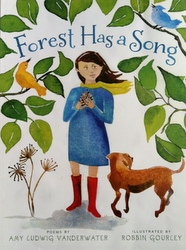
Amy is the author of two poetry books for children: FOREST HAS A SONG (Clarion, 2013) and READING TIME (WordSong, date TBA).  She is also co-author (with Lucy Calkins and Stephanie Parsons) of POETRY: BIG THOUGHTS IN SMALL PACKAGES (Heinemann, 2013).  You can find Amy at her blogs, The Poem Farm, a site full of hundreds of poems and mini lessons and Sharing Our Notebooks, a site celebrating notebooks of all kinds.


TUESDAY QUICK-WRITE: THANK A STRANGER

Look around.  Wherever you are, strangers have touched your life: pioneers cleared the land, a faraway soul designed those shoes, someone unknown to you raised your puppy during his first weeks.  Invisibly, strangers bump against and through our lives.  Today stop to thank one.  Write a letter.

The style of your letter does not matter.  You may write a formal letter or you may simply write notes.  You may write a poem or a story or a list.  You may share or never share.  But thank.  And begin with a stranger.  It will not be hard to find one. Just look around.

This is a snip from a letter I recently wrote to a stranger.  Glancing atop my desk, I saw two dolls sewn by our daughters.

Two Friend Dolls

One quick glance reminded me of my own long-ago doll:

Dear Stranger,

When I was six years old, you sewed something for me.  You did not know me or my family or what would land me in the hospital (tonsils), but still, you sewed.  You sewed a doll by hand, a doll about seven inches long, her head the size of a silver dollar.  My doll had yellow yarn hair and a full-skirted kelly green and white checkered dress.  She was a post-surgery gift, given to me by a nurse. 

In the 1970’s, you were a hospital gift-sewer, a hidden volunteer, my doll’s mother.  You created this doll with simple peach hands and bits of lace on her collar and sleeves.  You made her bright green satin legs.  And I never said, “Thank you,” because I never knew who you were…

We are touched daily by those we will never know.  As Margaret Tsuda writes in her poem Commitment in a City, “If we should pass again/within the hour,/I would not know it./Yet –/I am committed to/love you.”  In his poem Candles, Carl Dennis encourages us, “But today, for a change, why not a candle/For the man whose name is unknown to you?”  Why not?  And as we sit in candlelight, why not write a few lines of gratitude too?

 Note from Kate: Thanks, Amy!  Campers, as always, feel free to share a few lines of what you wrote today in the comments!

We’ll be giving away a copy of Amy’s FOREST HAS A SONG to one commenter, drawn at random.

Take the Friend Fish Pledge with Sea Monster!

My latest picture book SEA MONSTER AND THE BOSSY FISH takes on the issue of bullying, and the  terrific folks at Chronicle Books have put together a poster and classroom pledge for your students. It’ll be available at ALA, and you can also download to print copies for your students!

Download to print copies for your classroom:  SeaMonsterBossyFish_FriendPledge_8.5×11

You can read more about SEA MONSTER AND THE BOSSY FISH here. It comes out July 9th and is available for pre-order from your favorite bookseller now.