Hi there! Happy Summer! And welcome to writing camp!
Teachers Write is a free virtual summer writing camp for teachers and librarians. Please click here to sign up if you’d like to join us and haven’t already registered. If you’re on Facebook & want to also join our group there – here’s the link. Then click “Join Group.”
A quick note about blogging your Teachers Write experience: There will be daily opportunities for you to share and interact with one another in the comments section of each post. Often, our guest authors will stop by to be part of the conversation, too (though not always – some will be on deadline or traveling for book tours or research). In addition to commenting, it’s great if you also want to set up a blog where you share all of your writing from this summer. One important request: Our guest authors have given permission for their lessons & prompts to be shared on the Teachers Write blog only. Please do not copy and paste any mini-lessons or writing prompts – publish only your own writing on your blog. If you’d like to reference the ideas shared here, providing a link is the best way to do that. Thanks!
Four quick things before we get started…
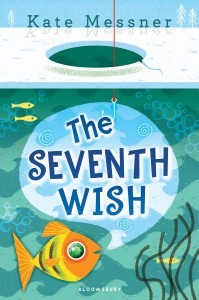
1. Teachers Write is an online summer writing camp with published author-mentors who donate their time to work with us. It’s free. There’s no charge to participate, but we do have a request. Kate, Jo, and Gae all have new books out or coming out this summer. Much of the time we’d normally spend on book promotion is going into Teachers Write instead, so we’d love it if you’d order or pre-order these: Kate’s THE SEVENTH WISH, Gae’s THE MEMORY OF THINGS, and Jo’s STILL A WORK IN PROGRESS.

That’ll run you about $45 total – which is the cheapest professional development around (and you get to keep the books!) We also ask that everyone try to buy at least one book written by one of our daily guest authors. We don’t check on this – it’s all honor system – but if you can, we’d truly appreciate it if you’d support our books in this way. If you truly can’t swing the expense right now, we’d still love for you to participate and would ask that you support our books in other ways – by requesting them at your local library, borrowing them, and writing online reviews. Thanks!
2. Our weekly schedule will look like this:
Monday Mini-lesson, and a Monday Morning Warm-Up on Jo’s blog
Tuesday Quick-Write
Wednesday is Q and A day – authors will be here to answer your questions! We’ll have some other Wednesday features, too.
Thursday Quick-Write
Friday Feedback on Gae’s blog, and some great Friday features here, too.
Weekend free-for-all – Saturday & Sunday will feature great essays, writing prompts, and reflections from guest authors. They may or may not have an assignment attached, but you won’t want to miss them!
Sunday Check-In on Jen Vincent’s blog – a chance to check in with everyone, reflect on the week, and share encouragement.
3. I’ll be popping in to comment, and I know many of our guest authors will, too, but since this community has grown so much (we’re more than 2500 teacher-writers strong now!) you’ll also need to commit to supporting one another. When someone decides to be brave and share a bit of writing in the comments, or when someone asks for advice or feedback, please know that you are welcome (and encouraged!) to be mentors to one another as well. Watching this writing community grow is one of the best things about being part of Teachers Write.
4. The first time you comment, I will have to “approve” your comment before it appears. This is to prevent us all from being besieged by unpleasant rogue comments. So when you comment, it will not show up right away – sometimes, it may be later in the day when your comment appears. THIS IS OKAY. Please don’t post more than once. I’ll be on book tour or traveling for research much of June & July but promise to check in whenever I get wherever I’m going each night. Be patient with me, okay? 🙂
Now…let’s get started!
What’s in Your Notebook?
We talk a lot about writer’s notebooks with students, but sometimes, we don’t know quite what to tell them. What is a writer’s notebook anyway? What are you supposed to put in there? Sometimes, when kids struggle with this question, our first impulse is to give directions – assignments, even. And while it’s fine to provide “starter ideas,” a truly writer’s notebook should be more organic than that.
Writer’s notebooks are as unique as the people who own them, and there’s no one right way to use one. This can be an uncomfortable notion for writers of all ages who like to get things right. But with a little encouragement, a writer’s notebook really can become a great tool for experimenting, finding voice, collecting ideas, reflecting on one’s work, and a million other things.
I have two notebooks with me as I write this blog post at Starbucks. Let’s take a look inside…
Here’s a page where I scribbled when I was out to dinner with a bunch of teachers & librarians in Dublin, Ohio and someone showed me a photo of a party her kid sent from college. Someone had blown up a large inflatable pool in the dorm room and filled it with water. I have no idea if I’ll ever use this in a book in any way, but I loved it and wanted to save it.
I often take research notes in my writer’s notebooks and then use other pages to organize. Here’s a timeline I made to help me organize historical details for RANGER IN TIME: ESCAPE FROM THE GREAT EARTHQUAKE, which comes out in June ’17.
Sometimes I write questions at the top of a page in my notebook, so I can go back and scribble answers when I have the chance to interview an expert. Here’s one of those pages…
I keep a running list of ideas for future Ranger in Time books.
Antarctic exploration is somewhere on that list, and that was the spark for the newest Ranger in Time book, RACE TO THE SOUTH POLE, which is about a Maori-Chinese boy who stows away on Captain Robert Falcon Scott’s ship, the Terra Nova, as the crew tries to be the first to reach the South Pole. It comes out tomorrow!! (6/28)
Sometimes, I don’t know quite why I’m adding something to my notebook, but it simply seems worth exploring. One day, I was checking on a historical quote that I wanted to use, only to find that it was misattributed to that person who supposedly said it. This happens a lot, and it got me wondering who else’s famous quotes aren’t real quotes. So I made a list. I think this relates to a character in my novel in progress, but I’m not sure yet…
I wrote this on an airplane while I was talking with my friend Linda Urban about my work-in-progress. We were brainstorming this one character, and I was lamenting how overwhelming and big this novel felt. Linda said, “It is big, but you will find all the footholds.” I knew I’d need to remember that later, so I wrote it down along with my other notes.
Want to see what some other writers do in their notebooks?
From Erin Dionne: “A research list of the strongest natural, man-made, and imaginary metals. (The 15/30 was keeping track of how many days in a row I was working on preparing for this manuscript)”
From Deborah Underwood: “Page where I quickly captured an idea for the upcoming HERE COMES TEACHER CAT. (Most of my notebooks are filled with illegible scribbles and idea snippets; this is uncommonly readable!)”
From Donalyn Miller: “Notes on our family reading autobiographies.”
From Katie Carroll: “A very messy list of events that need to occur in my WIP and brainstorming some other things (generally bad stuff) that could happen along the way.”
From Stacy McAnulty: “Using my journal/notebook to work out plot revisions on a rough draft of a MG novel.”
From Jo Knowles: “From a pop-up workshop I attended this winter. My notebook is filled with these sorts of exercises, as well as notes from workshops I attend. I also use it to jot down notes and ideas for a WIP, or ideas for new stories.”
From Kara LaReau: “Diagram of train compartments copied from Murder on the Orient Express, with my characters’ names penciled in.”
From Kimberly Pauley: “This page is a character sketch.”
From Kari Anne Holt: “This is a very, very first draft of a poem from HOUSE ARREST. I wrote a lot of it longhand in spiral notebooks, because it felt easier (and more satisfying) to revise this way.”
From Melanie Conklin: “This is a page from inside the notebook for Counting Thyme. I make a mess, but you can pick out lines that are still in the book here.”
And finally, from Madelyn Rosenberg: “I tend to let my writing notebooks double as scrapbooks. Here’s a page from a notebook from the 1990s, when the eyebrows fell off of my Winnie-the-Pooh.”
You get the idea, right? You understand the writer’s notebook rules now? There are none.
Sometimes that can be scary, especially for those of us who like to know which hoops we’re supposed to jump through to do things the right way. But try to embrace the idea of your notebook as a place to play this summer. A place to explore ideas and collect things. Remember when you were a kid and you came home with a pocket full of rocks and twigs and crickets? Treat it like that.
Your Assignment: Finish this beginning. “This summer in my notebook, I want to…”
Or don’t. You can write something else instead, if you’d like. Because that’s how notebooks work.
In the comments today, feel free to share a snippet of what you wrote, but please also write a few lines introducing yourself. Let’s get to know one another – we’re going to be writing together for six weeks, starting right now!














 Before we start today’s quick-write, I’m going to toss around a little virtual confetti because today is release day for