 Happy Friday, everyone! As always, Gae is hosting Friday Feedback, but we also have a special guest here to talk about critique groups.. Natalie Dias Lorenzi is a teacher, librarian, and author of the middle grade novel Flying the Dragon. She lives outside of Washington, DC during the school year and eats gelato in Trieste, Italy during the summers. Visit her at www.nataliediaslorenzi.com <http://www.nataliediaslorenzi.com>
The Care and Feeding of a Writers’ Critique Group
by Natalie Dias Lorenzi
First of all, let me just say that I agree with Kate who posted this to you all: “So many of you have come here nervous to write and terrified to share, and you’ve taken deep breaths and done just that.”
When we put our thoughts and feelings on paper, it is scary sometimes. But sharing those thoughts and feelings? With strangers?? Now that’s terrifying.
There are some authors who don’t share their writing at all; no one sees their manuscripts except for their editors. And this works well for them. But me? I can’t imagine bringing a story into this world without feedback from my critique group.
Back in 2005, I was a few chapters into a manuscript which would later (seven years later, to be exact) become my first middle grade novel, Flying the Dragon. I had joined SCBWI and perused the message boards trying to learn all I could about the craft of writing. One day I came across a message from another writer, Kip Wilson Rechea, who was looking to fill an open spot in her critique group. I emailed her with my first chapter, as requested, and waited. Would she hate my writing? Would she chortle at my beginner’s prose? Luckily for me, she did neither; instead, she invited me to join her critique group.
During that first year, members came and went, but eventually our group settled into four writers: Kip, Julie Phillipps, and Joan Paquette. A few years ago, we even came up with a name for our group: The Lit Wits. 🙂 Every Wednesday for the past seven years (give or take a Wednesday or two), one of us submits pages to the group via email. The others leave comments within the text itself as well as a paragraph of their overall thoughts and impressions.
Other writers have asked me how we’ve kept our group together for so many years. If any of you are interested in forming a critique group, this is what I’d recommend:
1. Get to know other writers.
There are several forums out there for kid lit writers: Verla Kay’s message boards and SCBWI (these messages boards will actually be merging in the near future). Although I hadn’t met Kip before responding to her call for a new critique group member, I did get to know Joan through an online writing course before she joined the group. You just might find a critique partner or two here at Teachers Write!
2. Join writers who are at a similar stage of writing.
When my group started out, we were at the beginning of our writing careers. Over the last seven years, our writing has been published in magazines and anthologies, and we have picture books, middle grade and young adult books now out on the shelves. This isn’t to say that a beginning writer and a published writer can’t be in the same group. In larger, in-person critique groups, there’s often a greater mix of writers that swap manuscripts or snippets of stories. But in general, I recommend finding a group with at least one other member who is at a similar point along the writing path as you are.
3. Decide on a method that works for your group.
For us, we sub no more than ten pages per week. We had one critique partner who is such a prolific writer that she left the group because she needed someone for full manuscript-swaps, not 10-page submissions every month or so. She spends a lot of time outlining first, but when she’s ready to write, she cranks out at least 1,000 words a day and finishes a first draft in a few months. Neither method is wrong; just decide which one works for you, and find others who feel the same way.
4. Give constructive feedback.
This seems obvious, but isn’t always easy to do. We tell each other what works, what’s funny, what touched us, and what didn’t make any sense whatsoever. If you were to look at our critiques, you’d see comments like these:
? I stumbled over this line–maybe reword?
? 🙂
? Huh???
? This doesn’t sound like her—would she really say that?
? Lovely!
We had one critique group member years ago who only said positive things about our writing. She is a lovely person, but she wasn’t helping anyone grow as a writer. She ended up amicably parting ways with the group, which was a good thing in the end. If I want to hear all good things about my writing, I’ll share it with my mom. 😉 If you want to grow as a writer, you’ll need to hear what works and what doesn’t work from your readers.
Being a part of the Lit Wits has definitely informed my teaching. When it’s time for one of my students to share his or her writing, I understand—really understand—how intimidating that experience can be. As a writer, I also understand what kinds of comments help me to become a better writer. We need to hear what we do well, and we need to hear, in a constructive and supportive way, what isn’t working.
If you flip to the acknowledgements page in any children’s novel, you’ll almost always read the names of those who have helped shape a manuscript into a story. Joan (who writes as A.J. Paquette) sums it up perfectly in the end pages of her just-released middle grade novel RULES FOR GHOSTING, when she says:
“… to the many others who have had a hand in critiquing, guiding, shaping, idea-brainstorming, and otherwise helping make this story what it is, I couldn’t have done it without you.”
Joan goes on to name the members of the Lit Wits and other critique partners, including Kate Messner.
Best of luck to you all in finding whatever type of feedback works best for you. I look forward to one day peeking at the acknowledgements section of your books!
I’ll be around today to answer any questions you may have about critique groups. We’re in Italy for the summer, which is six hours ahead of EST in the US, so any questions I miss after bedtime here I’ll answer in the wee hours tomorrow morning.
Happy Writing!



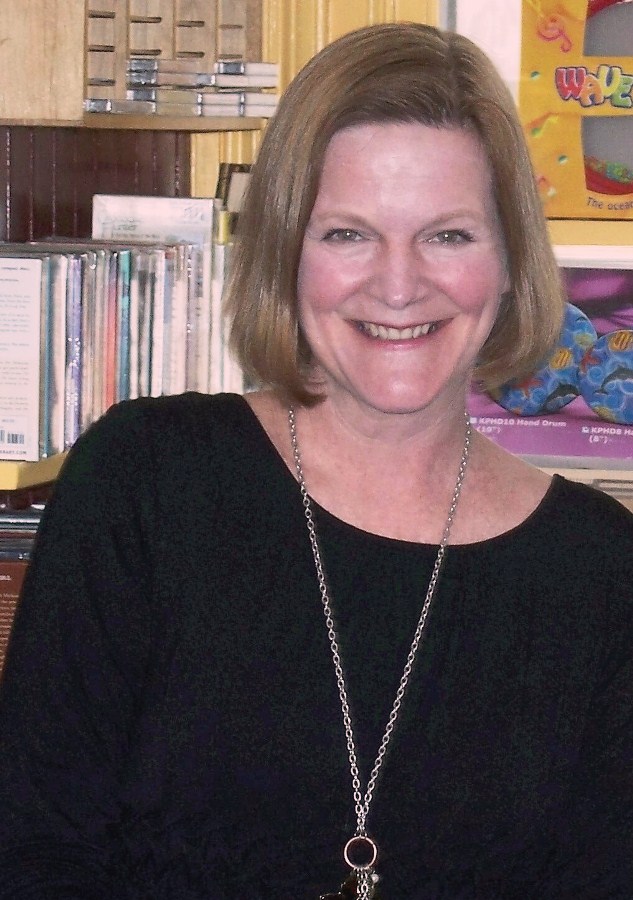


 Today’s guest author is Joanne Levy, whose funny and sweet book for tweens, SMALL MEDIUM AT LARGE, was released from Bloomsbury in 2012. A survivor of the corporate world, Joanne is also a virtual assistant, providing admin services to busy authors via
  Happy Friday, everyone! As always,
 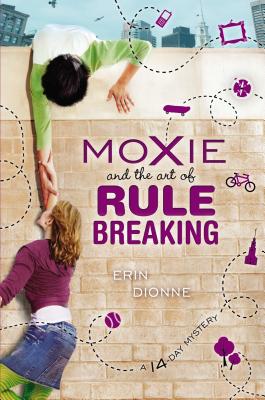 Your Thursday Quick-Write today is courtesy of my friend & fellow mystery lover,


 Happy Monday, everyone! Our guest author for today’s mini-lesson is the inimitable Linda Urban, whose new book THE CENTER OF EVERYTHING made me laugh and cry both. And on top of that, it made me crave donuts, too. You can read my not-quite-a-review of the book over at the Nerdy Book Club, but for now, Linda’s visiting us to talk about something that’s a part of all of our writing lives — time.
 Good morning! Your Thursday Quick-Write today is courtesy of


 Donna’s humorous middle grade novels from Random House include: As If Being 12-3/4 Isn’t Bad Enough, My Mother Is Running for President!, How to Survive Middle School and Olivia Bean, Trivia Queen. Her new novel, Death by Toilet Paper, comes out August 2014. Many resources for student and adult writers are available at: