Real Revision: An Interview with Laurel Snyder

If you’re a regular reader of this blog, you know that my first book for teachers, REAL REVISION: AUTHORS’ STRATEGIES TO SHARE WITH STUDENT WRITERS, was released from Stenhouse this past summer. I’ve been celebrating with a series of author interviews on the topic of real revision…the nitty gritty, make-the-book-better strategies that some of my favorite authors use when they’re revising a project.
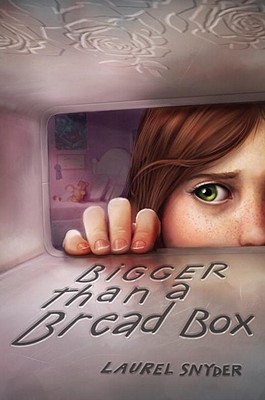
Laurel Snyder is the author of ANY WHICH WALL, PENNY DREADFUL, and her latest, BIGGER THAN A BREADBOX (my favorite Laurel Snyder book yet!). Heartbreaking, hopeful, and full of magic, BIGGER THAN A BREADBOX is the story of a girl whose life changes when the lights go out and her parents have one last argument before her mother loads the kids into the car and drives out of the state. When they land at her grandmother’s house in Georgia, Rebecca has to deal not only with her parents’ separation but also the angst of a sudden move, switching schools, and then…a magical breadbox that backfires? My heart ached for Rebecca, trying to navigate the stormy waters of a newly broken family while taking care of her little brother and dealing with questions of her own about who she wants to be at her new school. BIGGER THAN A BREADBOX is hard to explain – yes, it’s about a magic breadbox and divorce and seagulls and Bruce Springsteen and friends – but it’s one of those books that is somehow greater than the sum of its parts. Middle grade readers – especially those who have been through a parental separation – are going to read this one, love it, and hold it close for a good long time.

Laurel’s visiting today to talk revision, especially as it relates to this book.

Welcome, Laurel! How do you tackle the revision process? A little at a time as you write? Or all at once after you’ve finished a draft?

Both.  I’m always wishing I could be one of those people who just sprints blindly through the first draft, and then goes back to read the book and start over again, with their revision hat on.  But I can’t do that. I’m a tweaker. From the very beginning, I fiddle with each line.  I think this is because underneath it all I’m still really just  a poet-pretending-to-write-novels. My favorite part of writing isn’t plotting or world-building, it’s sculpting phrases, sentences, lines.  When I don’t allow myself that pleasure, it’s not as much fun to write.

That said, as I get further into the book, and the plot takes over, I tend to move faster and get sloppier.  So my first drafts are always imbalanced. The first half of each feels pretty clean, and the second half of each has GLARING issues, big sections of mess that need to be fixed.  The first chapter of the first draft can take me a month to write. The last chapter can take me a day.

But then comes the joy of a second draft. Of tinkering.

Do you have a favorite revision strategy that helps with any particular part of the process?

I have no idea if other people do this, but I keep a BIG list.  As I proceed into my first draft, I keep a list of “issues.”  It’s a separate document, because if I had to see it each time I worked, I’d never move forward.   On it you’ll find notes to myself about certain moments, sections of dialogue I need to work in, reminders to myself about themes that need to be developed through the book, or research I need to do for a specific scene, as well as logic problems and chunks od text I’ve edited out already. This list just grows and grows, and then, when I finally have a draft, I’ve got about ten pages of editorial notes to myself.  Then I print the list out, and chop it up into scraps of paper, so that as I read the draft, I can paperclip them into the places they need to be handled.

Like, on my list for the book I’m writing right now, I have a note that says, “The girls need to use a photoboth at some point? Woolworths?”  This is because later in the book, a picture needs to surface, as a plot point.  But I only figured that out late in the game. So rather than stop in the middle of the book, go back, write in a photobooth, I make a note. Then, when I’m done with the draft, I’ll snip that from the list, and then as I’m reading on my first pass, I’ll be hunting for a place to stick it into the draft.

It’s very concrete, this process. Like a puzzle. Totally removed from the actual “writing” of the book, and that’s satisfying to me.

How do you revise to make sure your pacing works for the story you’re telling? Were there any parts of your original manuscript for this book that ended up being cut?

Oh, gosh. Pacing is my weak spot, because I like to read slow books myself, and I tend to write slow books, so I really rely on outside readers to help me with this.  But yes, because of that, VAST sections and key characters often get cut.

The big thing that was slashed from Bigger than a Bread Box to assist with pacing was a character, a guy named Japheth.   In the original draft, Rebecca moved to Atlanta, and made friends with her next-door neighbor, a Caymanian kid named Japheth.  His father still lived far away, in the islands, and his family had real financial issues. He was going to be a chance for Rebecca to see that as hard as her life was, she had a lot to be grateful for. He was also just a really sweet character, and kind of mild love interest, in a non-sexy way.  It killed me to cut him from the book, but in the end I felt like Rebecca’s loneliness was its own character, and taking Japheth out moved the story along much faster.

I still miss him.

(Maybe he can make an appearance in another book?) Anyway, let’s talk characters. What strategies do you use when you’re revising to make them feel real & believable?

Oh, that’s so hard, because in each book my process of writing characters has changed.  With Rebecca, it’s easier, in some ways, because she’s basically ME. So I just have to feel for the moments when *I* wouldn’t do something, or *I* wouldn’t react a certain way.    But that’s not usually how it works.

Often for me, the first step to character revision is about making sure that in trying to make a character consistent, I haven’t made them into a stereotype of themselves.  I think a lot of books today make characters BIG by giving them “noticeable characteristics.”  Like, a girl who always tosses her hair, or a boy who cries at everything, or a woman who says “Zoinks!”  This works in sitcoms, I guess, but I’ve never read a truly incredible book where this worked, unless it was a satire or a parody or something.

So one thing I do is “search” my manuscript to see how often certain words or phrases get used. Like, Emma, in Any Which Wall, was perpetually, “staring at someone, not knowing quite what to say,” and she did a lot of “blinking” or “looking like she wanted to ask a question.”  You can get away with doing something a few times, but that’s not actually building a character.  The character comes from inside. If you strip about the gimmicks, and the character doesn’t stand up to the process, you don’t have a character, you have a paper doll.  You can always layer these moments back in, but an important part of revision for me is making sure I’m not relying on them.  Make sense?

Absolutely! I think sometimes when we see the shiny finished book, it’s easy to forget how challenging the work of revision  can  be. What was the biggest revision job for this particular book? (timeline changes, new chapters, rearranging scenes, etc?)

Well, I already told you about the thing with Japheth.  I guess the other really big thing has to do with the climax of the book. I don’t want to spoil the ending of the story, but I had a hard time figuring out how BIG to make the drama of that scene.  This is less about plot, I think, and more about tone, which is sometimes a hard thing to discuss, because it’s so slippery.

But basically, the climax of Bigger than a Bread Box is a sort of “adventure book climax” and the book, though magical, is really a “coming of age” book.  Initially, Rebecca ran away from home for this scene, crossed state lines, etc.  But it was just TOO MUCH. I found myself afraid that the drama of all that would overshadow the real climax of the book, which needed to be inside the characters.  I almost went even further. I almost chopped that scene WAY back. But I felt like the book needed a big moment, a wake-up moment. And in real life, kids DO have intense dramatic things happen, so I ended up with a compromise.  But I struggled with that scene a lot.

Did this book keep its original title, or did it change along the way?

Original title. I’ve actually never changed a title, ever. Isn’t that funny?  I almost always know the title before I know the plot.  The book I’m writing now, Seven Stories Up (a prequel to Bigger than a Bread Box) feels like it might change. I keep waffling on it.

(If you weren’t such a lovely person, Laurel, I’d hate you for this. I think EVERY  one of my titles has changed!)  So where did the title BIGGER THAN A BREADBOX come from?

The idea for the book came from a car ride. My husband and I were driving to Iowa, with the kids in the car, and I said to him, “What if, in a book, a kid had a box that gave them whatever they wanted, but then they found out where the things were COMING FROM?”  Because we were trapped in the car for the next 20 hours, I had nothing to do but think about that. I kept whipping out my laptop, typing on my knees, making notes, as we drove along.  By the time we got to Iowa, it had become a bread box.  And the title just seemed completely obvious after that.

I’m a big believer that boredom and silence are required for generating ideas.  There’s not enough silence in the world today. Silence is KEY to revision too.

Anything else you’d like to say about revising this book?

Hmmm.  I do have something else, which is that I wrote THIS book about real memories. My parents divorced when I was eight years old, and my mom moved me from my childhood home in the seventh grade.  I’d be lying if I pretended this book wasn’t basically about my emotions during those two chapters of my life.  But part of revision, when you’re writing from memories, is about getting out of your own way.  Rebecca is a shadow of me, but that doesn’t mean I didn’t have to respect the character and the book enough to set my own emotions aside when revising.  That turned out to be hard for me.  I’d never had that experience before.  When I got to the end of the book, and realized that the end was different than I’d planned–that was hard, and weird. In the end, the single greatest rule of revision is that you have to LISTEN to the book, get out of the way of your own intent, write the book that wants to be written. When you’re navigating your own emotions, that’s even harder. I was shocked at how amateur I felt. I wanted to make Annie and jim (Rebecca’s parents) love each other.  But that wasn’t for the book, that was for me.

Thanks for joining us Laurel!

And everybody else…you need to read this book if you haven’t already. Ask your library for it, or get it from your local indie bookseller.
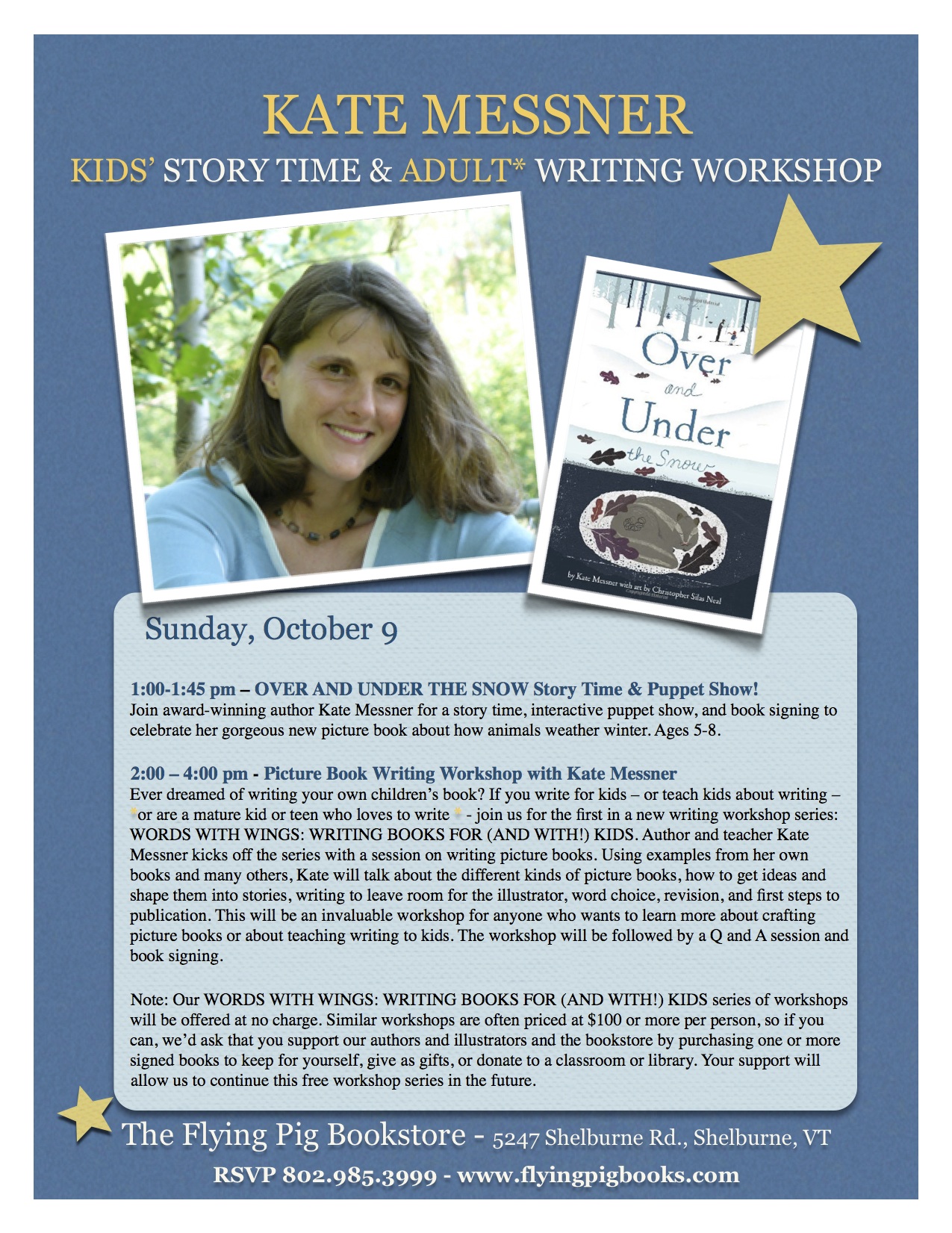
Snow, Puppets, & a FREE Writing Workshop this Sunday in Vermont!

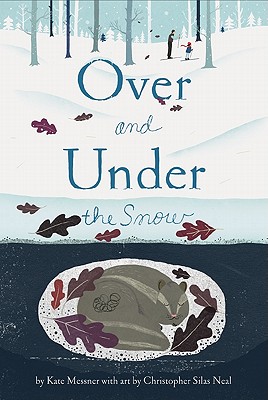
It’s been a pretty exciting week for my upcoming picture book, OVER AND UNDER THE SNOW.  I woke up Saturday to an email from my editor at Chronicle, letting me know about this glowing review in Publishers Weekly – my first-ever starred review!  I’m obviously delighted, not just for myself, but also for debut picture book illustrator Chris Silas Neal, who worked so hard on the illustrations for this book to make them match the mood so perfectly.

And this Sunday (10/9), I have an event that I’ve been looking forward to for weeks – kind of a double feature at Flying Pig Books in Shelburne, VT. I’ll be doing a story time and puppets activity for kids & families from 1-1:45, followed by a FREE picture book writing workshop from 2-4 for anyone who loves writing — adult or older kids.  There’s no charge, but space is limited, so please RSVP to Flying Pig at 802-985-3999 if you’d like to attend. Bring your notebook – the workshop will include plenty of quick try-it-now writing strategies.  Please bring a smile and sense of humor, too – we’re going to have fun!

Almost-October News: Snow, Skype, Running & Reading

How did it get to be almost October?

October is one of my favorite months because it means pumpkins and cool apples and hayrides. It means first fires in the fireplace and leaf-colored hikes. And this year, it means that OVER AND UNDER THE SNOW will be a real live book in bookstores.  Some very nice people have been saying very nice things about it lately…like the folks at “Kiss the Book,” a blog for K-12 librarians, and “A Year of Reading,” which said:

This is the story of a father and daughter who are skiing across the snow. But as the ski over the snow, they are aware of all the things going on under the snow.  Honestly, I had no idea about this “subnivean zone” until I read about it in this book. But Kate does a great job of making the idea accessible to children by showing us what happens over the snow at the same time so much is happening under the snow. The author’s notes at the end provide a great deal more information on the subnivean zone as well as the many animals in the story.  The art is gorgeous and almost makes me wish for winter!   I can’t wait to share this one with students–closer to winter time, I think!

And this from Kirkus Reviews:

The lyrical descriptions of the text and the gray/brown/ice-blue palette of the illustrations leave readers with a retro feel that harkens back to earlier days of children’s books and bygone times when life seemed simpler. Utterly charming, and informative, to boot; readers brought up on a diet of rhymes, bright colors and adorable fluffy animals will find its simple beauty a balm.

If you’d like a signed copy of OVER AND UNDER THE SNOW but can’t make one of my upcoming events, just call The Bookstore Plus at 518-523-2950 to order a personalized signed copy. They’ll get it in the mail to you right after my signing there on October 22nd.

So where has September gone?  I’ve been Skyping with lots and lots of amazing readers, of all different ages, like these second graders, whose teacher, Mrs. Phillips, blogged about our virtual author visit.

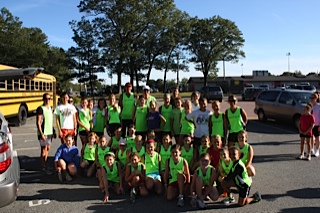
I also Skyped with this terrific group of girls…

…who are not only great readers but great runners, too!  They’re part of Natick Fit Girls, an organization that works with fifth grade girls as they train for a 5K race…and read a book together! They chose THE BRILLIANT FALL OF GIANNA Z. since Gianna is a fellow runner.  Here they are getting ready for their 5K.

I also enjoyed a lovely day at the Burlington Book Festival on Saturday, and I took some great photos, I’m sure. However, I suspect that the cord that connects my camera to my computer is buried under a ragged mountain of papers, books, and (thanks to my daughter’s school project) cut-up cereal boxes.  Photos will be forthcoming…just as soon as I unearth that cord. For now, you can go see some at Cynthia Lord’s blog. She was there, too, and apparently has a neater desk.

Turn Off the Spell-Check

It happens every year.  The first time I take my 7th graders to the computer lab to start work on a writing project, they log into their computers, open up Word, start typing…and STOP.  They might only be a sentence or two into what promises to be a brilliantly funny narrative or a sharply persuasive letter. But they stop, mid-thought…to run a spell check, because Word has drawn a squiggly red or green line under something they typed. It might be an incorrectly spelled word, or a sentence fragment, or it might just be someone’s last name that Word didn’t happen to know.

And all too often, the squiggly line means the end of productive, flowing writing for a while.  The world of the story screeches to a halt while the student stops to select the correct spelling for a word or puzzle over why this software doesn’t recognize a really great stylistic fragment when it sees one.

As soon as I remember this STOP-SPELL-CHECK phenomenon, we take a break to talk about when computer tools are — and are not — useful.  For many of us, having those squiggly red and green lines show up is like trying to write while sitting next to someone who leans over every couple minutes, gets way too close to your face,  and whines, “You spelled that wrong.  And that. And that, too.”  Who wants to write with that guy breathing down your neck?

So one of our first lessons in the computer lab is on how to turn off “that guy.”  Here’s a quick how-to guide for silencing the whining spell-check forever (or at least until your draft is finished and you’ve had a chance to make the meaningful, big-picture revisions).

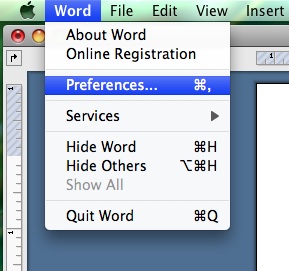
At the top of your screen, click on WORD and select PREFERENCES from the pull-down menu.

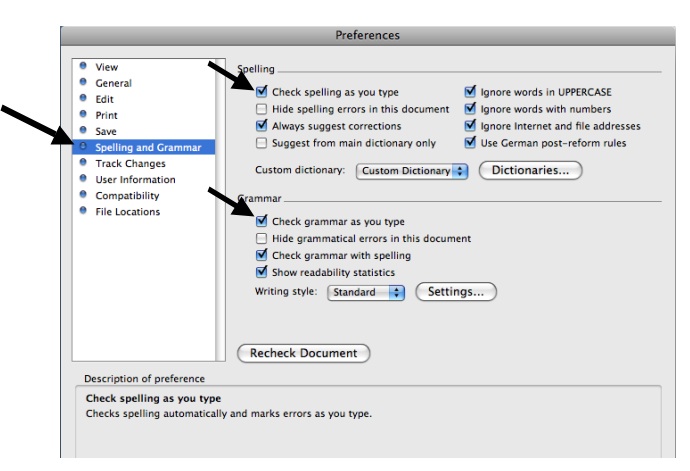
Click on SPELLING AND GRAMMAR in the column on the left, and then find the two boxes that say CHECK SPELLING AS YOU TYPE and CHECK GRAMMAR AS YOU TYPE.

Click in those boxes so the check mark goes away.  Then click OKAY.

The squiggly lines will vanish, and you (or your students) can breathe a sigh of relief and get back to the real work of drafting.

When we make books, proofreading is the last step for a good reason. Who wants to spend time and energy fixing mistakes in a sentence that may never see the light of day in the final draft?

Later on, it will be important to make sure the spelling, grammar, and punctuation are in good shape, but in a first draft, those issues can really interfere with good writing — getting vivid, unique ideas down on the page using just the right words.  Let that come first, I tell my students. Let the story come first…and once it’s there, on the page, we can make it shine.

This Sunday…Burlington Book Festival Kids’ Day!

Confession: I am slightly addicted to book festivals. There is something about all those authors and illustrators, all those readers and all those pages in one place that gets my book-loving-heart beating. If you’re a kindred spirit, you’ll want to know about this weekend in Burlington, VT.  The annual Burlington Book Festival runs all weekend, with a special kids’ day called Youthapalooza on Sunday.

More than a dozen authors are coming from all over the Northeast and beyond, and we’ll be sharing stories, speaking on panels,  answering questions, and talking books and writing with readers of all ages.  It all takes place at Main St. Landing Performing Arts Center and there are events for all ages – toddlers through adults who love kids’ books!

I’m speaking on the “Reading in the Middle” panel with other authors who write for kids in grades 3-8.  Two of us have titles on this year’s DCF list!

The “Reading in the Middle” panel happens from 12-1 in the Great Room at Main Street Landing Performing Arts Center.

A little later, I’ll be reading OVER AND UNDER THE SNOW at 2:15 at the Main Street Landing Black Box, in a special story time with friends Linda Urban (MOUSE WAS MAD) and Ammi-Joan Paquette (THE TIPTOE GUIDE TO TRACKING FAIRIES)

Truly, I think the whole day is going to be wonderful…an event you won’t want to miss if you’re a parent, teacher, librarian, or writer.

Here’s what to expect if you come:

Picture Book Readings & Author Chats all day in the Black Box (Great for kids of all ages, families, K-5 teachers and librarians, & writers)

11-11:30         Cynthia Lord & Erica Perl

11:45-12:15    Jeannine Atkins & Tanya Lee Stone

12:30-1:00    Elizabeth Bluemle & Kara Lareau

1:15-2:00      David Macauley

2:15-2:45      Kate Messner, Ammi-Joan Paquette, & Linda Urban

Authors will be signing their books at the festival bookstore immediately after each presentation.

Author Panels All Day in the Great Room (Great for kids aged 7 and older, families, teachers, librarians, & writers)

12:00-1:00   Reading in the Middle: A panel discussion featuring  Sarah AlbeeSarah AronsonCynthia LordKate MessnerAmmi-Joan PaquetteErica S. PerlLinda Urban

1:15-2:15       Teen Time: A panel discussion featuring Jeannine Atkins, Jo Knowles, and Tanya Lee Stone

3:00-4:00    Writing for Kids & Teens “SuperPanel” – A panel discussion featuring Sarah Albee, Sarah Aronson, Jeannine Atkins, Elizabeth Bluemle, Jo Knowles, Kara LaReau, Cynthia Lord, Kate Messner, Ammi-Joan Paquette, Tanya Lee Stone, and Linda Urban. A great opportunity for teachers, librarians, writers, and readers of all ages to talk with the authors and ask questions!

Authors will be signing their books at the festival bookstore immediately after each presentation.

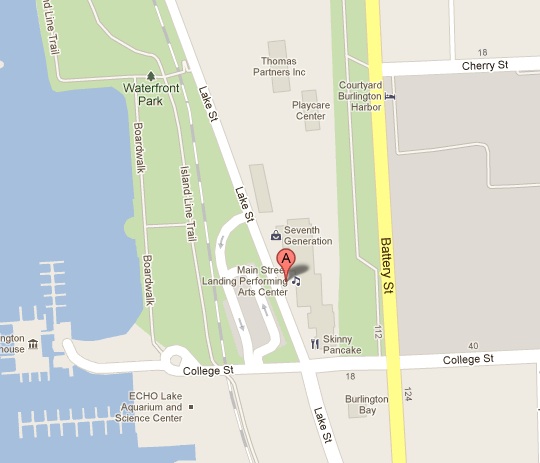
Remember, it all happens at the Main St. Landing Performing Arts Center in Burlington.  Ironically, this is not actually on Main St. It’s on Lake St. between College and Cherry. See?


Hope to see you in Burlington on Sunday!

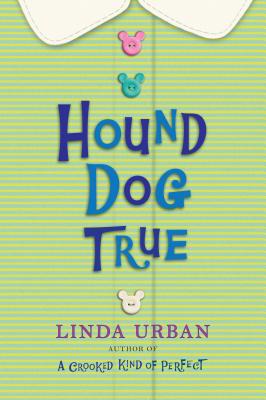
Real Revision: An Interview with Linda Urban, author of HOUND DOG TRUE

If you’re a regular reader of this blog, you know that my first book for teachers, REAL REVISION: AUTHORS’ STRATEGIES TO SHARE WITH STUDENT WRITERS, was released from Stenhouse this summer. I’ve been celebrating with a series of author interviews on the topic of real revision…the nitty gritty, make-the-book-better strategies that some of my favorite authors use when they’re revising a project. HOUND DOG TRUE (which comes out this week!!) is among my favorite novels of 2011, so I asked author Linda Urban if she’d stop by the blog to chat.  Here’s our conversation about revision, especially as it relates to voice.

Hi, Linda! The voice in your middle grade novels always feels so perfect and effortless…but I know that most things that feel effortless to readers are the result of hard work on the part of writers.  Could you talk a little about how you revise when it comes to voice in your books?

Aw, thanks.

Here’s the thing about voice:  It often presents itself without me having to sweat it.

The first few lines, the first few pages – it just spills.  Beginnings are like that for me.  I’m letting myself know the character or narrator, who she is, how she moves, the way she expresses herself.  If she’s self assured, she’ll use energetic declarative sentences.  If she is shy, that might show up in her speech.  She might backtrack a bit.  Her words might get twist-tangled around one another.  Her level of education, the place where she lives, her general outlook on the world will come through in the language, tempo, and rhythm of her speech.  And dang, if that isn’t the fun part for me!

But after that, maybe page 20 or 40 or even 60, I realize that a novel is not just about voice.  There has to be story.  Things need to happen.  Then it becomes work.  And sometimes when I’m making things happen, my effort is apparent on the page.  It is clumsy and forced.   That is when I need to work on voice.  I look at a sentence: Then the bridge fell down. Okay.  Fine.  That’s what happened.

But what happened is so much different than what that happening means.  Voice tells you what it means to the story, to the character.

So I back up. The bridge fell down. Did it snap?  Did it collapse?  Did it fail?  Did it give up the ghost?  The right word or phrase is the one that tells what happened and what that happening means.  Likewise, voice has a rhythm.  If the voice of the narration or character is a lilting, lovely descriptive one, and I tell about the bridge in lilting, lovely descriptive terms, then it won’t stand out as being particularly meaningful to the narrator/main character, or in the reader’s mind.  If I break the voice pattern, though, and let the bridge collapse happen in short, terse terms, Whammo!  It stands out.  It means something entirely different.

That’s what I look for when I begin to revise.  It is interesting to note how a book that feels like it doesn’t have enough emotional depth, or is too overwrought, might not really require a new set of plot elements.  It might just require an adjustment in the way voice is used.

Do you read aloud when you’re revising?

I do read my work aloud.  I do it at all stages, but it seems particularly important at the polishing stage.  I try to read the whole thing aloud in one sitting, highlighting any words or phrases that stick out.  Then I go back and fiddle with them, asking what other descriptions might be more consistent with the character/narrator I’ve created or the circumstances described.   It can take a long time, but I it’s worth it.

Was there a character in this book (Mattie, her mom, Uncle Potluck, Quincy with her “plunking” tone  of voice) that went through more revision work than the rest?

Mattie’s mom was the hardest for me.  I tend to see the book through my main character’s eyes and for most of the book, Mattie’s perception of her mother is pretty one-dimensional.  She is defined by a single sort of action (decisive and abrupt pulling-up-stakes and moving to a new job/town/home) and a single characteristic (which Mattie interprets as “strength”).  While I understood at a conscious level that Mattie’s mom acted out of fear and a lack of confidence, as I wrote, I always adopted Mattie’s POV and the depth of Mama failed to make it to the manuscript page.

One thing that helped was to rewrite a couple of key scenes from Mama’s point of view.  This writing was never going to be in the final manuscript, of course, but it helped me to understand better all the things that Mama was seeing and feeling.  Once I understood this, I went back to all the scenes in which Mama appeared and looked for opportunities to give a small indication of her underlying self.  When I could, I put a small gesture or word choice in – something that Mattie might notice.  Mattie might misinterpret it, but it is possible that the reader would see things differently – if not in the moment, then in retrospect, once Mattie’s understanding of her mother grew.

What’s your favorite revision tool, tip, or strategy these days?

When a scene isn’t working right, I often write it from a different point of view, like I described above.  Sometimes I use another character who is important to the scene.  Sometimes I use a bystander (it can be really cool to have someone relate action without being able to hear dialogue – you get a really interesting perspective on the events of the scene – and you also learn if your characters are standing around talking too much).  One of my favorite ways to do this is to let the scene be described by an inanimate object.  That locket on your main character’s neck.  That gun in that boy’s jacket pocket.  That shredded love letter.  That last piece of pie.  They let you see things differently and can unlock a lot of mysteries.

Thanks, Linda, for your insight and for coming to visit!

For more on HOUND DOG TRUE, you can check out Linda’s website, or read my more detailed recommendation here. And of course, you can order your very own copy from an indie bookstore near you.


Hound Dog True by Linda Urban

I have been waiting SO patiently to talk about this book.

And now it’s coming out! Next week!  (On the 19th, to be exact, but if you look, you might even find it before then.)  In the interest of full disclosure, I’ll start by saying that HOUND DOG TRUE author Linda Urban is a friend. I adore Linda.  But I’d be gushing about this one even if I didn’t know her from Adam.

This is a book with true heart. Linda Urban has a gift for capturing the small things about a kid’s life that matter. She understands that little things can mean everything…those tiny moments that the grown-ups shrug off can be something a ten-year-old carries around for years…and maybe forever.

HOUND DOG TRUE features Mattie Breen, a painfully shy girl who moves to a new town with her mom and apprentices herself to her Uncle Potluck, the school custodian, in the hopes that her studies of janitorial arts will allow her to avoid talking to her new classmates when school starts. But of course it doesn’t work out that way. Mattie has a new neighbor, Quincy, who’s older and cooler and…could she be a friend? This is a warm, wonderful book about letting people into your world, finding your place in that world, and finding your voice, too.

Like A CROOKED KIND OF PERFECT, this book has a voice that’s unique, touching, and funny – just wonderful. I highly, highly recommend HOUND DOG TRUE…especially for sharing as a read-aloud. Available at your favorite indie bookseller on Monday! (And stay tuned for a “Real Revision” interview with Linda on revising this book, capturing that pitch-perfect voice, and more!)

Psst… Want an early copy of OVER AND UNDER THE SNOW?

I’ll be signing books at the Rhinebeck, NY farmers market this Sunday from 12-2 with Oblong Books and Music.  And guess what book is sneaking out a little early to be part of the event…

Even though OVER AND UNDER THE SNOW doesn’t officially come out until October, it’s been released from the warehouse ahead of time and will be there for this weekend’s event.

If you don’t live in the Hudson Valley but you’d like a signed copy of OVER AND UNDER THE SNOW…or of any of my other books – MARTY MCGUIRE, SUGAR AND ICE, SEA MONSTER’S FIRST DAY, or THE BRILLIANT FALL OF GIANNA Z. – just contact Oblong Books & Music at (845) 876-0500 to order.

The Feller that My Mother Thinks I Am (and the teacher, too!)

At the end of every school year, I ask my 7th graders to sit in their 7th grade chairs one last time to write letters… to the people who will be sitting in those chairs come September.  This past June was no exception.  My kids wrote pages and pages of advice, warnings, and words of wisdom.  “Tell next year’s kids what to expect,” I told them.

And so they did…right down to the coolest field trip (National Poetry Month flash mob at the mall!) and what not to try and get away with (texting during class, not reading).   They talked a little about what this year’s students should expect from their new teachers, too. I compile all the letters into one big letter that I’ll share with this year’s 7th graders tomorrow, on their first day of school.

But I have to confess…I pulled one of those June letters from the pile, highlighted a paragraph, and tucked into my desk drawer.  It said this:

Mrs. Messner never gets mad.  She is really just always all about books and joy.

Back in June, that letter made me cry…because I don’t always feel like that teacher.

Like most people, I get frustrated once in a while… when kids don’t do homework or when parents aren’t supportive…or when state regulations on standardized testing make me want to scream. But I’d really like to be that teacher that Savannah described in her letter.  All about the books and the joy.

Finding that letter was such a good reminder today, as I came out of a meeting with guidance and the 6th grade teachers about all the challenges that will be presented with this year’s crew. But not just challenges… opportunities, too

It all reminded me of that old poem…I couldn’t even find the author online, but it’s called “The Feller’ that your Mother Thinks You Are.”

THE FELLER THAT YOUR MOTHER THINKS YOU ARE

While walking down a crowded street one day,
I heard a little urchin to his comrade turn and say:
“Say, Jimmie, let me tell you, I’d be happy as a clam
If I only was the feller that my mother thinks I am.”

“She thinks I am a wonder and she knows her little lad
Would never mix with nothing that is ugly, mean or bad.
Oh, lots of times I sit and think how nice ‘twould be,
gee whiz,
If a feller was the feller that his mother thinks he is.

My friends, be yours a life of pain, or undiluted joy,
You still my learn a lesson from this small unlettered boy.
Don’t try to be an earthly saint with eyes fixed on a star;
Just try to be the feller that your mother thinks you are.

I’m not always that perfectly patient, serene teacher that my student remembered on the last day of school.  But I’d like to be.

I don’t need a polished apple or a shining silver star
I’d rather be remembered for asking how you are.
You may strive to be a teacher whose kids ace each state exam.
I’ll just try to be the teacher that Savannah thinks I am.

Lemonade, Strawberry Ladybugs, and Libraries in Need

First of all…a HUGE thank you to everyone who has donated to the flood-ravaged Wells Memorial Library and everyone who has helped to spread the word. I spoke with library board chairperson Marie-Ann Azar Ward this afternoon, and she says donations are pouring in, to the point where the library director burst into tears with her arms full of mail today. The good kind of tears.

For those who wanted to send new book donations but were asked to wait, there’s good news. The library has had an offer of safe, dry storage space at the community theater. So book donations can be sent any time. Boxes of beautiful new books have already started showing up.

Marie-Ann also said this: “I hope the other flooded libraries are getting this kind of help.”

I hope so, too.  Let’s make sure, okay?

Grace Greene sent me a link to the Vermont Department of Libraries website, where they’re asking folks to hold off on sending book donations for now, and instead consider writing a check for a fund to help with recovery for all the Vermont libraries affected by Irene. Here’s the address:

Vermont Public Library Foundation
c/o State Librarian
Vermont Department of Libraries
109 State Street
Montpelier, VT 05609


There’s also an indie bookseller partnership set up for the heavily damaged West Hartford, VT Library. You can call The Norwich Bookstore at 802-649-1114 or visit their website to donate to a gift card for the library.

I got word from Jen Groff that The New York Library Association created a Disaster Relief fund several years ago (the last time there was major flooding) to collect donations from the library community and beyond to assist libraries damaged by floods and other natural disasters… NYLA can serve as collection point for donations and then distribute proceeds to affected libraries. To make a donation to NYLA’s Disaster Relief Fund visit the link below:
http://nyla-omc.org/Scripts/4Disapi.dll/4DCGI/donate/form.html

Checks for the flooded Schoharie Free Library can be sent here:

Schoharie Free Library
c/o Treasurer Margaret Carballeira
103 Knower Ave.
Schoharie, NY  12157-0519


Checks for Middleburgh Library can be sent here:

The Middleburgh Library
323 Main St.
P.O. Box670
Middleburgh, NY 12122


Schenectady independent bookseller The Open Door Bookstore is also collecting donations for gift cards for these two libraries. Call (518) 346-2719 or visit the bookstore’s website to donate.

And to help Wells Memorial Library, send checks here:

Wells Memorial Library
P.O. Box 57
Upper Jay, NY 12987
OR
Contact local independent bookseller The Bookstore Plus at 518-523-2950 to purchase books and/or contribute to a library gift card. Authors & Illustrators may also donate signed books & original art for an October fundraiser. Click here for details.


And finally…a little inspiration for those looking for ideas about how to help.

I got an email today that made me smile all afternoon.  It was from a Colorado mom who shared photos of the lemonade stand her daughter and friends set up to raise money for Wells Memorial, the flooded library on the other side of the nation.  They couldn’t imagine not having kids’ books to check out of their library, so they set up a stand to sell lemonade, iced tea, cookies, shaved ice, strawberry ladybugs, and flower bouquets.

Tomorrow, they’re sending this letter to Upper Jay, NY…along with a check for $55.

Thank you SO much, Eva, Adam, Emma, Carter, Reese, Greer, Isabella, and Anna. You rock.

And thanks to everyone who’s helping these libraries get cleaned up, rebuilt, and re-stocked with books. You are making a world of difference to families in these areas that were hit so hard.