Well, hi there! It’s good to see you…and good to see my living room again, too. August has been a busy month so far, full of travel and terrific people. Here are some highlights.
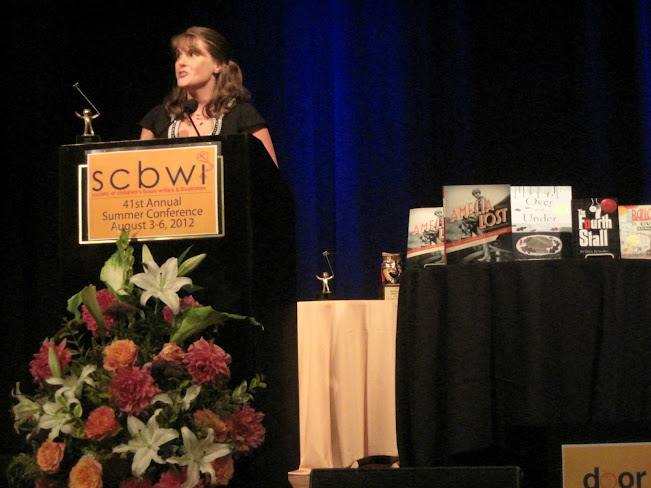
At the beginning of the month, I flew out to Los Angeles for the annual SCBWI Conference (that’s the Society of Children’s Book Writers & Illustrators, for the uninitiated) because OVER AND UNDER THE SNOW won the Golden Kite Award for Best Picture Book Text, which was…well…amazing. This award comes from fellow authors, so it means so, so much. Here’s a photo of me speaking to 1200+ people at the awards luncheon. (I love still photos because they don’t show shaking hands.)

I was also part of the faculty for this conference, giving a presentation called “Picture Books: The Magical Unexpected.” I talked about lots of picture books that I love and how they all incorporate different kinds of “unexpecteds.” You can see the list of books I talked about here.
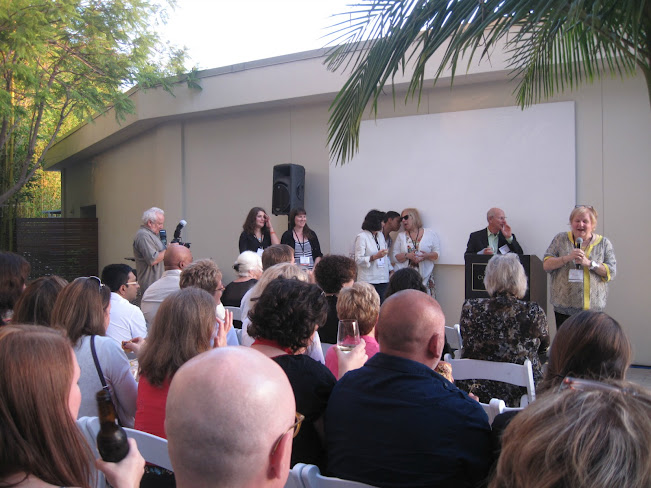
The most amazing thing about this conference was getting to spend time with other children’s writers and illustrators. Lin Oliver, executive director of SCBWI, likes to refer to the big mob of creativity as “the tribe,” and it’s such a great description because coming to a conference like this really feels like coming home. Here’s a photo of Lin welcoming the group.
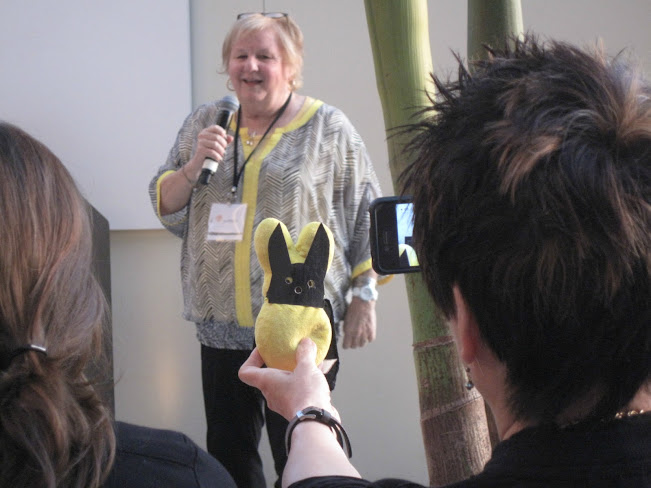
And here’s a photo of a children’s author snapping a photo of her stuffed Peep with Lin.
Can you identify the mystery author with the mystery Peep? (If you give up, you can click here to find out.)
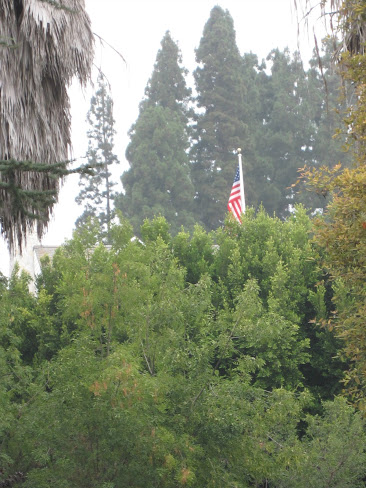
My family came with me on this trip, and we also managed to sneak in some classic California fun like this tour of Hollywood and Beverly Hills. Do you recognize this famous landmark?
We didn’t either. But it is apparently Tom Cruise’s flag. “And if you look carefully,” our driver said, pointing, “you can kind of see his chimney, too.”
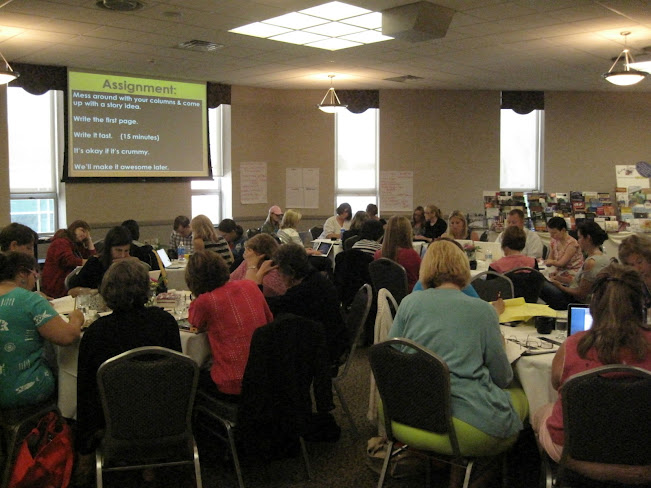
From L.A., I flew straight to Pennsylvania, where I spoke at the PA Writing Institute at Millersville University. This is a five-day institute full of incredible teacher-writers who dedicate their week to practicing what they preach.
They were an amazingly kind, smart, and creative group, and I wish I could have spent a full week writing with them!
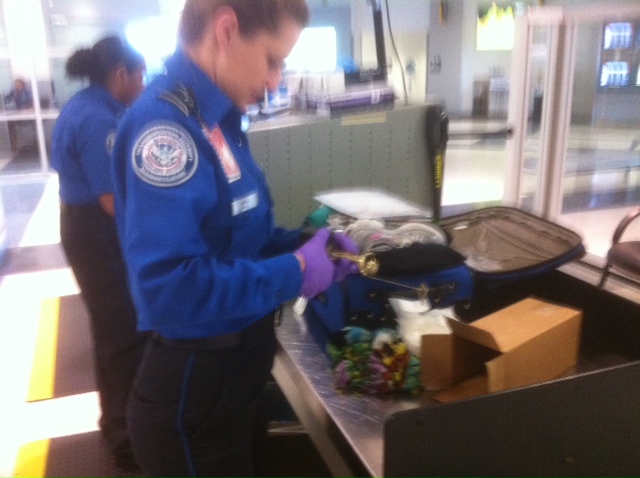
I ran into a little snafu with the TSA on my flight home from LA and Pennsylvania. The agents pulled my suitcase aside for searching, and they asked if there was “something sharp” in there.
“Well,” I said, “I won this award, and it has a kite that’s maybe a little pointy.”
They unpacked it and studied it and frowned at it for a little while.
Finally, one agent said, “What’s Over and Under the Snow?”
“It’s a…picture book.”
“Did you write it?”
“Yes. I did.”
(More frowning & studying.)
“We’re going to run this through the machine once more.”
They did. And then they swiped it to check for explosives but found none, I gather, since I was allowed to take it home.
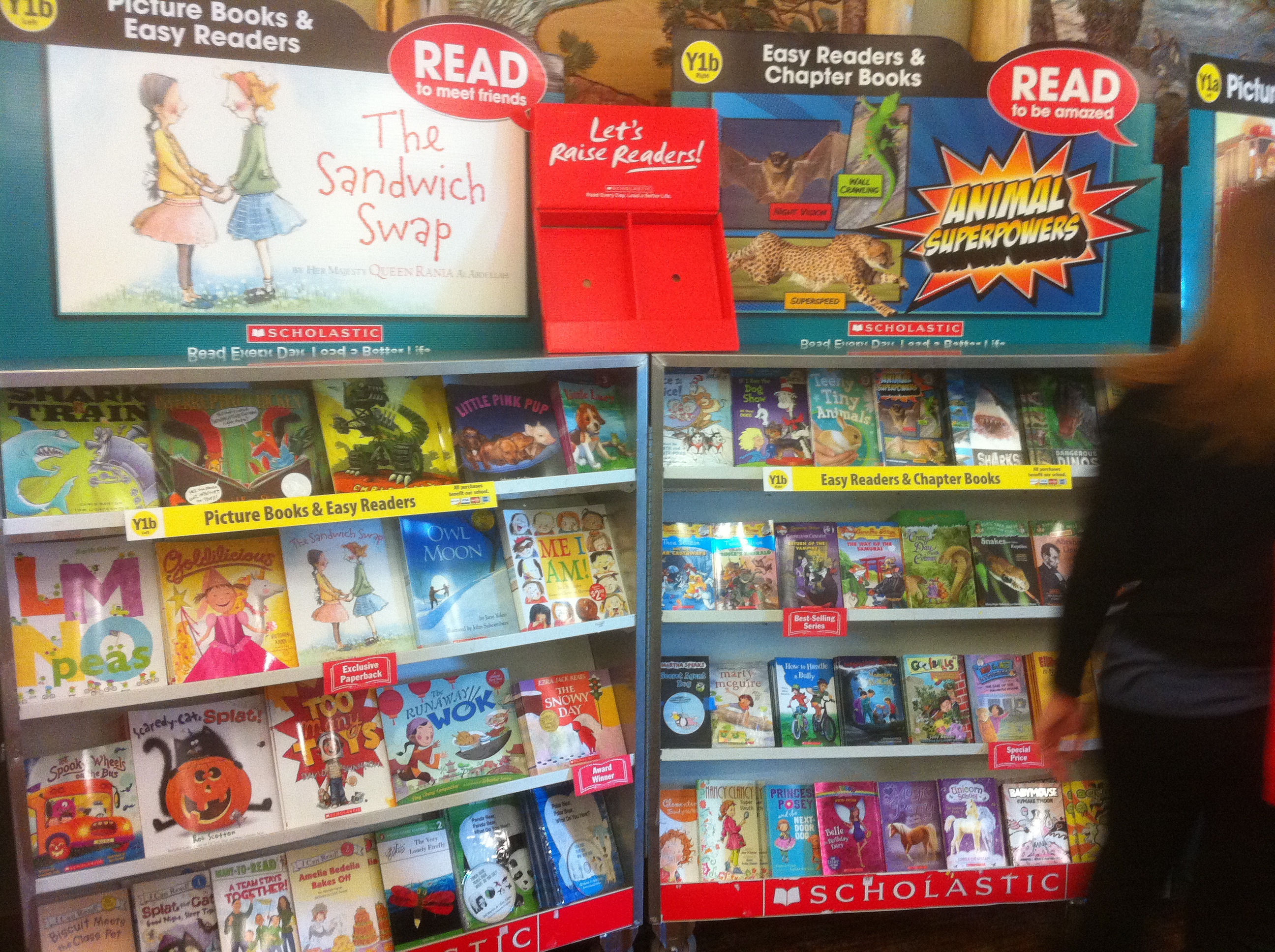
After a day’s break, I flew to St. Louis to be the guest author at the Scholastic Book Fairs seasonal kick-off meeting for that region. When I was a kid and the Scholastic Book Club orders arrived, I was always under the impression that something magic must have happened overnight in my classroom. Book Fairs came along later on and work that same magic now, in so many communities like mine that don’t have their own bookstores. It was so much fun to meet the people (the wizards!) who make this happen for kids and classrooms.
Here I am with my fantastic (and fun!) Scholastic Book Fairs hosts, Kerri Mills and Rose Schovanec. (Photo from Kerri’s FB page – thanks, Kerri!)
I’ll be visiting another Scholastic Book Fairs kick-off meeting in Charlotte later this week, then taking a research trip for book #3 in the Silver Jaguar Society mystery series, and then – home to finish summer deadlines and get the kids ready for a new school year. Hope your August has been full of sunshine and magic, too!