


Protected: Telling It True Virtual Author Visit with Kate Messner & Christina Soontornvat
Virtual Author Visit Read-Alouds for World Read Aloud Day 2021!
Are you ready for World Read Aloud Day 2021? We’ve put together a special video to share with readers this week, with a dozen award-winning authors sharing read-alouds from their new and soon-to-be-released books! We hope you’ll add these great titles to your classroom and home libraries!
Want to keep reading? Here’s where you can order (or pre-order) your own copies of the books!
History Smashers: Pearl Harbor (and the other History Smashers books!) by Kate Messner
Signed copies available now
Ways to Grow Love by Renee Watson
Available for pre-order – out 4/27
The Troubled Girls of Dragomir Academy by Anne Ursu
Available for pre-order – out 10/12
Merci Suárez Can’t Dance by Meg Medina
Available for pre-order – out 4/6
Almost There and Almost Not by Linda Urban
Available for pre-order – out 4/6
Amina’s Song by Hena Khan
Available for pre-order – out 3/9
It Doesn’t Take a Genius by Olugbemisola Rhuday-Perkovich
Available for pre-order – out 4/13
Finding Junie Kim by Ellen Oh
Available for pre-order – out 5/4
Just be Cool, Jenna Sakai by Debbo Michiko Florence
Signed copies available for pre-order – out 8/3
Red, White, and Whole by Rajani LaRocca – Signed copies available now
Much Ado About Baseball by Rajani LaRocca – Available for pre-order
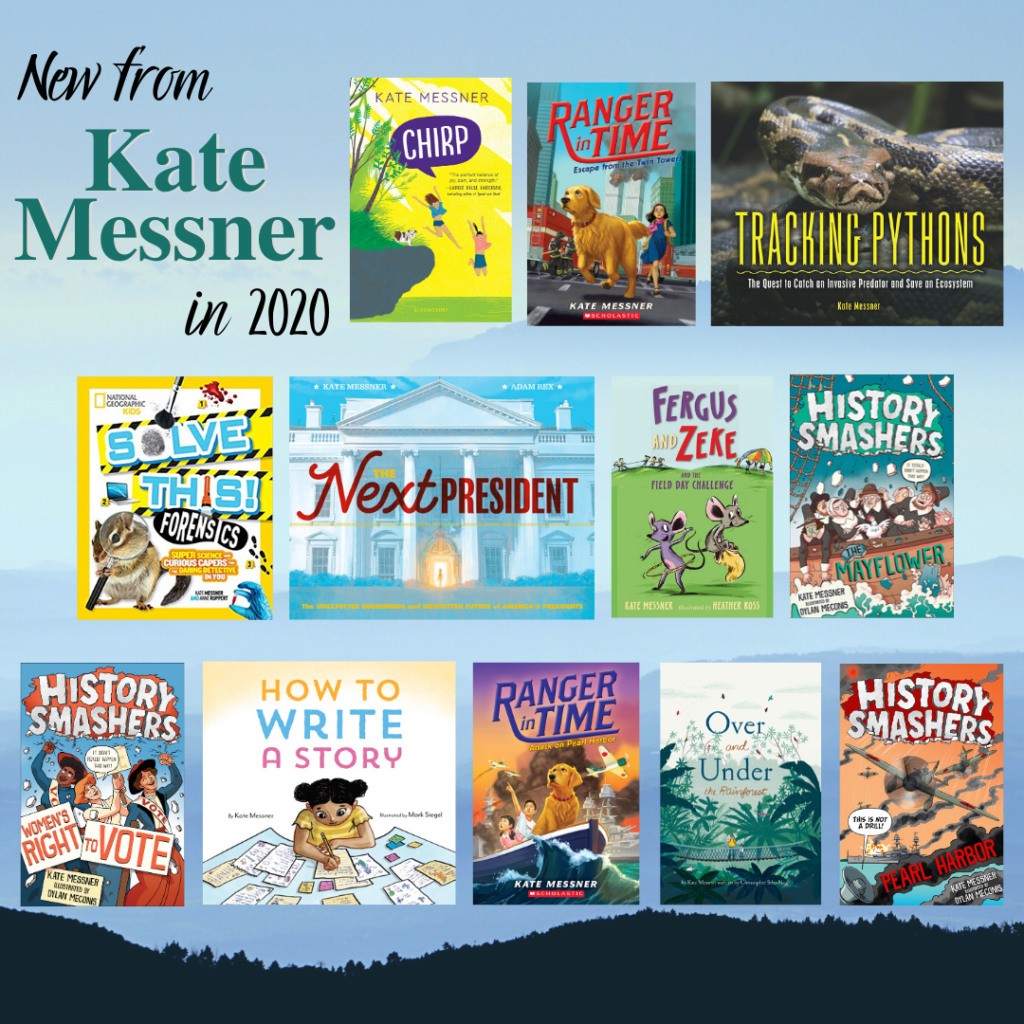
Below is information about the World Read Aloud Day author volunteer list for 2021! If you’re new to this page, I’m Kate Messner, author of more than forty books for kids, including these recent & upcoming releases.
I’m also a former middle school teacher and a forever reader. For the past few years, I’ve helped out with LitWorld’s World Read Aloud Day by pulling together a list of author volunteers who would like to spend part of the day doing quick virtual read-aloud visits with classrooms around the world to share the joy of stories.
Before we get to the list, I want to share one other fun WRAD surprise. This is a busy time for many authors, and while we wish we could visit every one of your classrooms live, that’s just not possible. So this year, I’ll be posting a special World Read Aloud Day video here, with a dozen of your readers’ favorite authors, reading aloud from brand new books (most won’t even be out yet!).
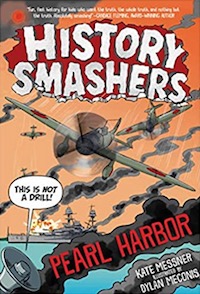
I’ll be reading from HISTORY SMASHERS: PEARL HARBOR, the third book in my illustrated nonfiction series aimed at unraveling the myths we learn about history. (It’s out January 5th & is available for pre-order now!)
I’ll be joined by Tracey Baptiste, Debbi Michiko Florence, Hena Khan, Meg Medina, Ellen Oh, Dawn Quigley, Rajanni LaRocca, Olugbemisola Rhuday-Perkovich, Linda Urban, Anne Ursu, and Renee Watson. We’ll each read a five-minute sneak-preview from an upcoming book for readers in grades 3-7. The whole video will run just about an hour, and I’ll aim to have it posted at least a day early so teachers can embed into Google classrooms, use in lessons, and share the link with families celebrating WRAD remotely.
So bookmark this page and check back on February 3, and you’ll be the very first to hear read-alouds from some amazing upcoming books!
Okay…on to this year’s read-aloud volunteer list!
WORLD READ ALOUD DAY IS FEBRUARY 3, 2021!
The authors listed have volunteered their time to read aloud to classrooms and libraries all over the world. These aren’t long, fancy presentations; a typical one might go like this:
- 1-2 minutes: Author introduces himself or herself and talks a little about his or her books.
- 3-5 minutes: Author reads aloud a short picture book, or a short excerpt from a chapter book/novel
- 5-10 minutes: Author answers a few questions from students about reading/writing
- 1-2 minutes: Author book-talks a couple books he or she loves (but didn’t write!) as recommendations for the kids
If you’re a teacher or librarian and you’d like to have an author Zoom or Skype with your classroom or library on World Read Aloud Day, here’s how to do it:
- Check out this list of volunteering authors and illustrators, and visit their websites to see which ones might be a good fit for your students.
- Contact the author directly by using the email provided or clicking on the link to his or her website and finding the contact form. Please be sure to provide the following information in your request:
- Your name and what grade(s) you work with
- Your city and time zone (this is important for scheduling!)
- Possible times to connect on February 3rd. Please note authors’ availability and time zones. Adjust accordingly if yours is different!
- Your preferred platform (Zoom, Skype, Google Meet, etc.)
- A phone number where you can be reached on that day in case of technical issues
- Please understand that authors are people, too, and have schedules and personal lives, just like you, so not all authors will be available at all times. It may take a few tries before you find someone whose books and schedule fit with yours!
If you’re a traditionally published author or illustrator who would like to be added to the list, you can fill out this form to sign up. Once your schedule is full, please send an email via my website contact form, and I’ll remove your name from the list. Please note that due to deadlines and other obligations, it may take up to a week for me to update.
Getting Ready for World Read Aloud Day 2/3/21 – A Call for Author & Illustrator Volunteers!
LitWorld’s magical World Read Aloud Day is February 3, 2021 – and one of the fun traditions of this day of sharing stories is for authors and illustrators around the world to Zoom or Skype into classrooms & libraries for short read-alouds. For a while now, I’ve helped out by compiling a list of author and illustrator volunteers so teachers & librarians can connect with them to schedule virtual read-aloud sessions on that day.
Teachers & librarians: Please hold tight for right now… the list will be coming soon! Sign up for my email newsletter if you’d like to get the link in your in-box when it’s ready!
Authors & Illustrators: Are you a traditionally published* author or illustrator who would like to be listed as a WRAD virtual read-aloud volunteer? Please read the information & follow the directions below…
WRAD VISITS AREN’T LONG OR FANCY PRESENTATIONS. USUALLY, THEY LAST 10-15 MINUTES AND GO SOMETHING LIKE THIS:
- 1-2 minutes: Author gives a quick introduction & talks a little about their books.
- 3-5 minutes: Author reads aloud a short picture book, or a short excerpt from a chapter book/novel
- 5-10 minutes: Author answers a few questions from students about reading/writing
- 1-2 minutes: Author book-talks a couple books they love (but didn’t write!) as recommendations for the kids
Interested in volunteering? If you’re a traditionally published author or illustrator, just fill out this form to sign up.
*Why traditionally published? Honestly, it’s to limit the size and scope of this list because I’m one person with limited time. However, if someone else would like to compile and share a list of self-published and ebook author/illustrator volunteers, I think that would be absolutely great, and I’ll happily link to it here. Just let me know!
An Inch of Sunrise – Outdoor Poetry by Kate Messner
As kids head back to the classroom, either in person or remotely, one of the best things they can do this fall is spend some time outdoors with a writer’s notebook. If they have phones or other cameras available, challenge them to take a photograph and write a poem about it. Here’s a short poem I wrote in a drizzle of rain on my dock this morning that can be shared as a mentor text.
An Inch of Sunrise
by Kate Messner
There was only an inch of sunrise today.
The murky purple sky turned pink,
And a thin ribbon of gold stretched over the mountains.
It lasted two minutes, maybe three,
Before the sun set backwards into the clouds.
By then it was raining, fat drops falling on my knees
But I stayed until the pink faded again to grey.
I took a photo
Because you never know when you’ll need a sunrise
And even an inch is enough to light a day.
© Kate Messner, 2020

Teachers Write 7/27/20 – the “Pope in the Pool” Trick, Making Choices in Nonfiction, and a Revisiony Writing Prompt
Good morning, and welcome back to Teachers Write! Today, we’re going to talk about dialogue — and how to make it more interesting.
Have you ever written a scene where two characters need to have a long (and important!) conversation, but it goes on so long that it feels boring? This week’s revision tip comes from a book for screenwriters, called SAVE THE CAT, whose author Blake Snyder called it the “Pope in the Pool” technique. That name comes from a script called THE PLOT TO KILL THE POPE, and in it, the writers needed to get a bunch of important information to the reader. It was too much to just dump on the page, so instead, they had people have a conversation that included all those important details while the Pope was swimming laps in the pool. We don’t think of the Pope as a normal guy who would swim laps, so that made the scene fascinating,
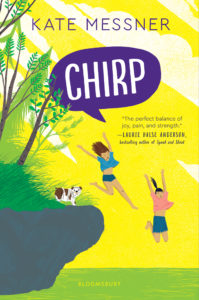
In my cricket-farm mystery CHIRP, there were several scenes where characters needed to have important conversations that went on for a while. To keep those scenes interesting, I made sure the characters were in action while they were talking – baking cricket-flour cookies together, or playing on a playground while they wait for fireworks to start. And the truth is, dialogue with some action happening around it is almost always more interesting than two people standing still, talking.And you don’t always need dialogue tags in a conversation, once it’s clear who’s talking. Sometimes they can be replaced with action.
Instead of:
“Is that a mouse that just ran under the sofa?” George asked.“Looks like it,” Isabelle said.
Try:
“Is that a mouse that just ran under the sofa?” George leaped onto the easy chair. Isabel squatted down and lifted the slipcover. “Looks like it.”
Here’s an example of a conversation that could use some action. Where might you put these two characters, and what could they be doing while they talk? Maybe they’re working out at a skating rink or building a treehouse or trying to babysit for a little kid who keeps running away. Try rewriting this scene using the “Pope-in-the-pool” trick to make it more interesting!
“I’ve been thinking about last week,” said Prima.
“Yeah, me too,” said Avery.
“The thing is, she didn’t mean to tell everybody your secret,” Prima said.
“But she did,” said Avery.
“I know, but…it was complicated. You know she’s only been here three weeks, right? She couldn’t have known all that stuff about your dad or what happened with the race or — ”
“So?” Avery said. “She knew it was a secret.”
This Week’s Revision Tip: Making Choices in Nonfiction
This week’s revision tip is from guest author Christina Soontornvat, whose amazing book ALL THIRTEEN, about the Thai soccer team’s cave rescue comes out this fall!
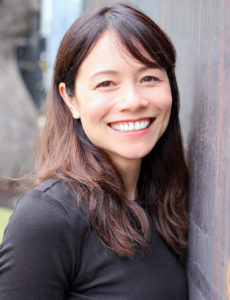
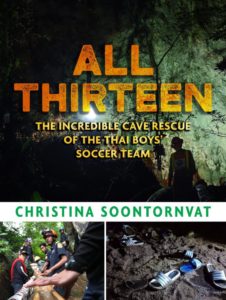
One pitfall of mine when I’m writing nonfiction is that I think every single detail is interesting. Of course I do – this is my subject matter! But I have to remember that my job as a nonfiction writer isn’t just to produce a list of facts that I find fascinating. My job is to take a subject that is very specific, sometimes obscure, and tell a true story that is universally relatable. It’s that universally relatable part that makes the story interesting and makes readers care. So I often find myself in the revision process with way more material than I am going to be able to include in the actual book!
One of the filters I use to decide what to keep and what to throw out is whether the material connects to my larger themes and whether it helps reinforce the universal relatability of the story. For example, there were 10,000 people who worked or volunteered during the Thai Cave Rescue. I could have included so much more information about the volunteer efforts than I ended up with – and the book would weigh 800 pounds! In the end, I decided to shine a spotlight on the volunteers working to control the flooding on the top of the mountain who had to carry out Herculean feats with little support and inadequate supplies. Their story tied into a larger theme in my book about resourcefulness and mental fortitude.
So as you revise, look at how each piece that you include supports the bigger picture. How do the facts work together to tell a universal human story? Are you missing something that could help connect the dots and make readers care? If so, then that’s the area where you can focus your research.
This Week’s Writing Prompt from Kate
If your work-in-progress could talk back to you, what would it say?
Read through your draft; then spend five minutes writing in response to this prompt. Have some fun, and write in the voice of your personified draft. You can make it nurturing or cranky or snooty — whatever you like! This sounds kind of silly, but it’s actually a good way to distance yourself a little from your writing in order to see it more clearly. And it’s a great prompt to use in the classroom, too. I taught middle school English for fifteen years, and my students always discovered ways to improve their writing through this one (even as they laughed about writing things like “Help! I need a thesis statement!” in the voices of their essays!)
Is it the end of July already? I can’t believe our four weeks together have gone by so quickly! I’m so, so glad that you chose to spend part of your summer writing and learning with me. I hope you’ll share some of these lessons & prompts with your students this year, along with my books. I know there’s a lot of uncertainty as we head into a new school year, but I also know that with your courage and creativity and commitment to your students, you’ll keep loving them and sharing stories and make it all work somehow. Thanks, as always, for the amazing work that you do.
Jen Vincent will be hosting one last check-in on Sunday. Enjoy your writing this week, and take some time to celebrate the work you’ve done!
Teachers Write 7/20/20 – What to Put in a Notebook, Story Revision Tips, and a Place-Based Writing Prompt
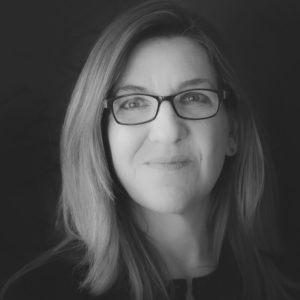
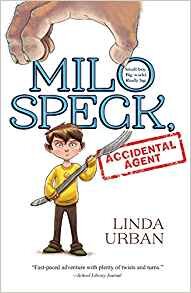
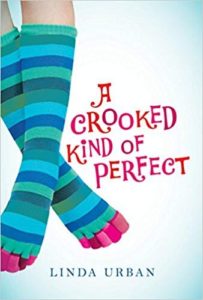
Good morning, and welcome back to Teachers Write! This week’s mini-lesson is from guest author Linda Urban, who writes picture books, chapter books, and novels for kids!
Keeping a Notebook
Are you keeping a notebook this summer?
You might notice I didn’t ask if you were keeping a writer’s notebook. That’s because, when I started writing, the idea of a Writer’s Notebook felt intimidating. Presumptuous. Maybe a little too precious. Every mark I put on the page would have felt to me like it should be, if not perfect, Important.
Who can write with all those expectations?
Which is why, when I finally did start the practice of keeping a notebook, it was a blessed jumble of all parts of my life – from recipes to odd things my kids said, to doodles (mine and those of my kids), to the bits of dialogue, fragments of poetry, brainstorms and mindmaps and what-ifs that might, eventually, turn into writing projects that I wanted to pursue in earnest.
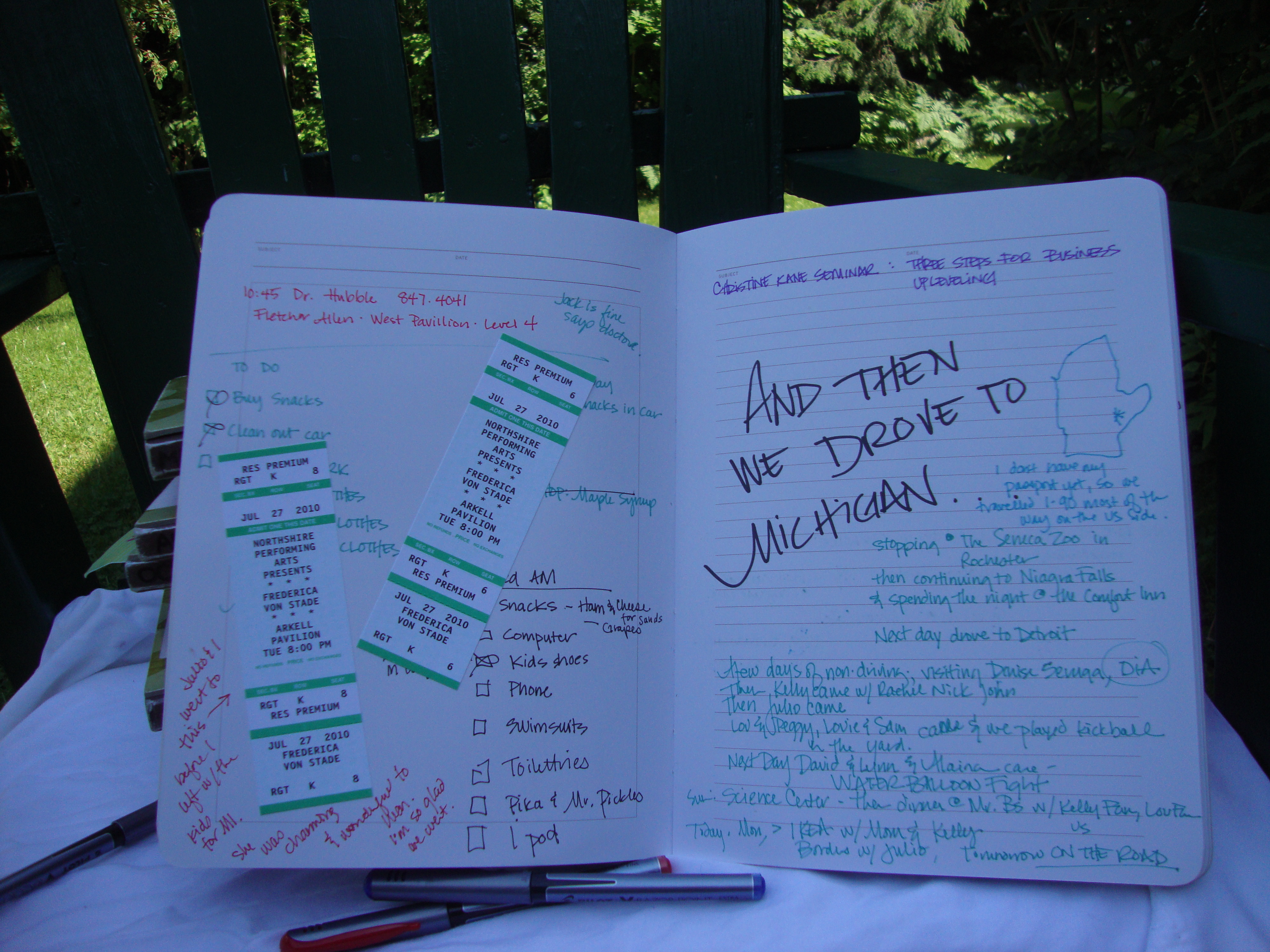
Here is an example. My first connection to the book that would eventually become The Center of Everything is in one of those jumble notebooks. I took this notebook to a weeklong workshop in Portland, Oregon where I was on faculty. On the same page that I had made a note to myself about the shoes that fellow faculty-member Marla Frazee was wearing (Fluevog pumps, in case you are wondering) I also wrote my own response to a prompt I had given my students. In it, I recalled the last exchange my dad and I had before he died, and how I wished I had said something different. The rest of that notebook is the usual scribble and blot.
A year later, in a similarly jumbled notebook, I wrote down some thoughts about the Montpelier Independence Day parade I had just attended. Among them was a question: Why did the kids lining the streets get so excited? It was the same parade as last year. And the year before. What could they be hoping would happen?
Which led me, a day later, to ponder about one specific kid – a kid I was only beginning to imagine – and what she might be waiting for and why it mattered so much.
Which led to more questions. And thoughts about parades. And some list making about the kinds of things one finds at a parade. And a bit of freewriting . . . a narrator’s voice was starting to emerge. There are several pages like this, interspersed with the recipes and to-do lists and doodles.
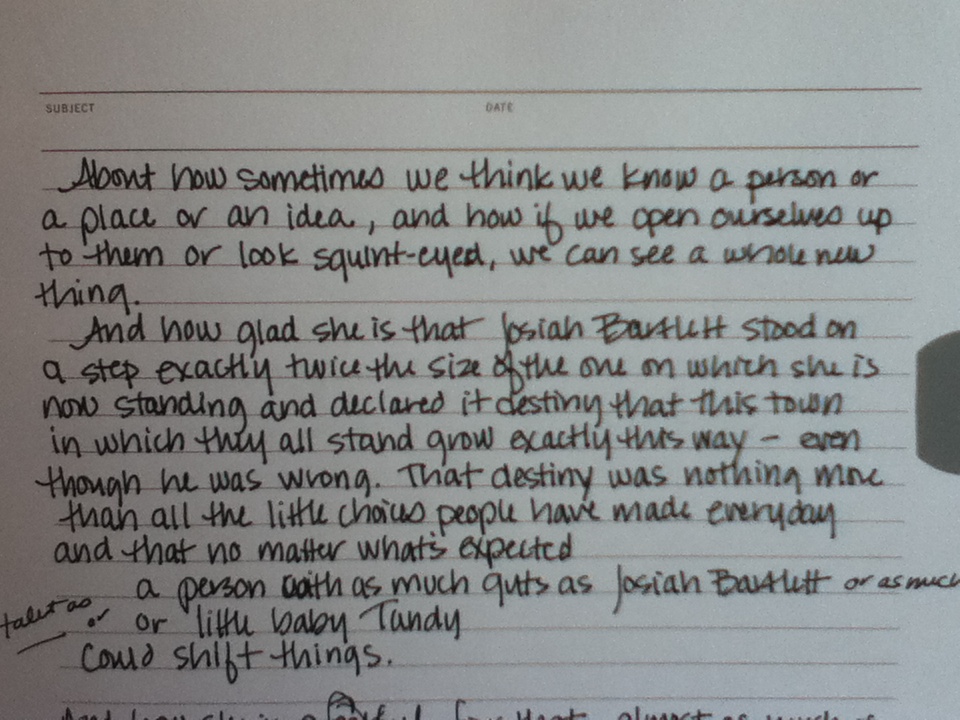
After a while, these pages started to feel more like a real project. Like they had some heft. And then my writing about this girl and her longing and this particular parade moved to my keyboard, and my notebook primarily returned to its happy jumble – though on occasion you can find thoughts and freewrites and scribbles of things that needed analog expression to find their way to me.
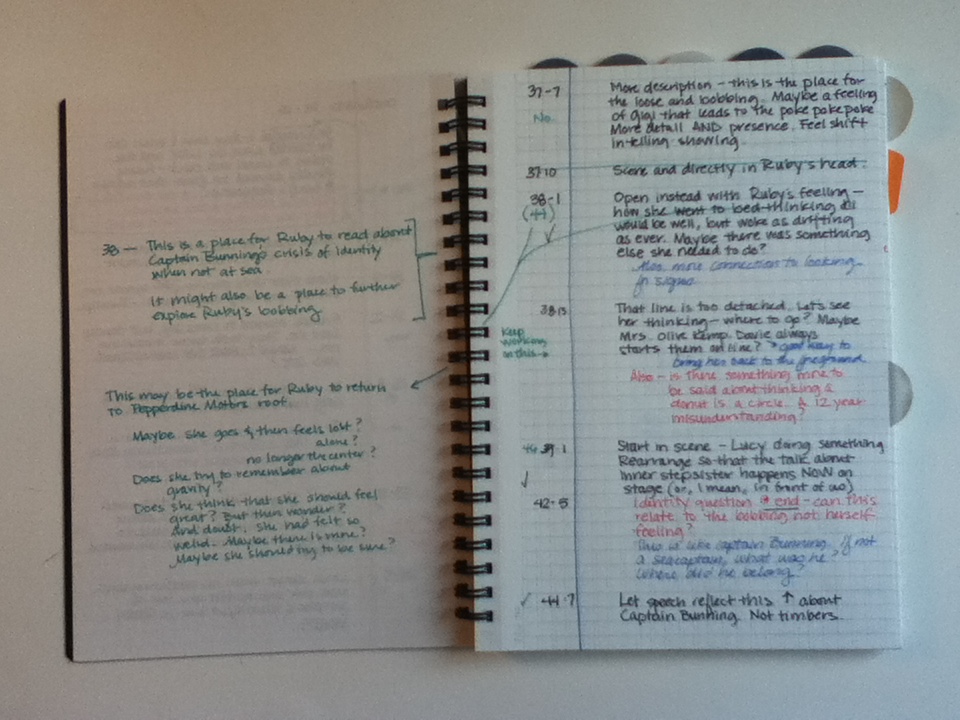
Once a draft was complete, it was time for another notebook – this time, no jumble. This time, my notebook was dedicated to a single project. And, because the project was now at the revision stage, it no longer felt like each word in my project notebook had to be Important. In fact, it was the opposite. In my project notebooks, I am able to de-important (hm… word choice?) what was already in the manuscript. At this stage, the manuscript and all the hard work that went into it can feel a little precious, but in my notebook I could scribble and dissect and analyze. I could keep track of what I wanted to change and what wasn’t working and play around with alternate phrasing and scenes and chapters in a free play space that was different than the space of writing, different than the space where the ultimate, final, hopefully publishable draft would be created.
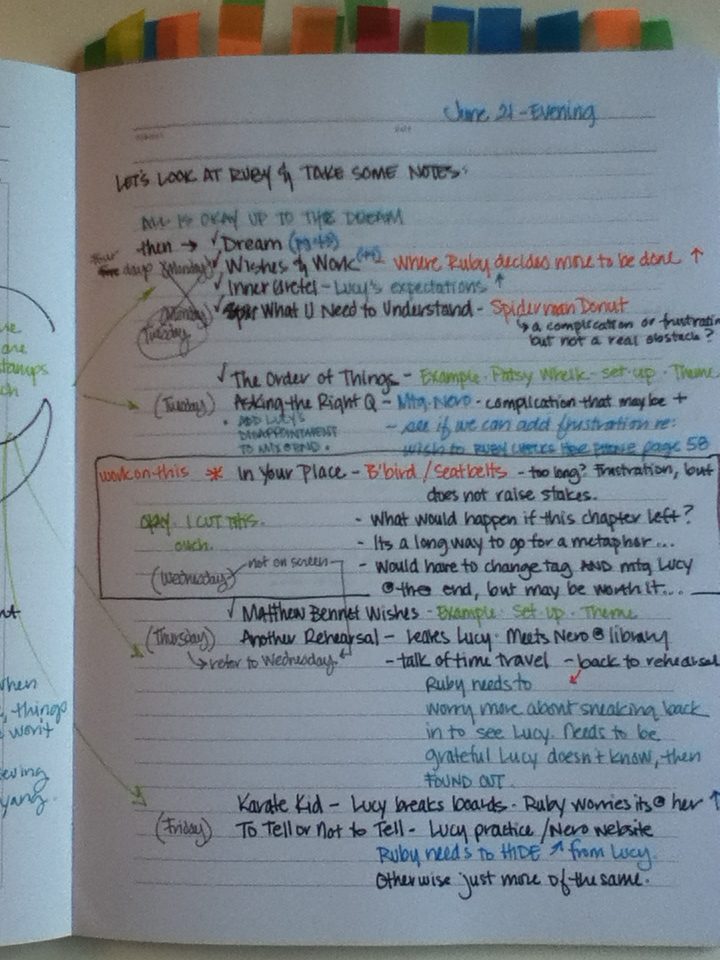
Yeah, there are some mind games at work. But mind games are part of what the writer’s practice is. We tell ourselves stories about what can work for us and then we believe those stories enough to put in the hours and the words. My notebooks are part of the story I tell myself about my writing process – and the story works for me. Maybe it will work for you, too?
This Week’s Revision Tip
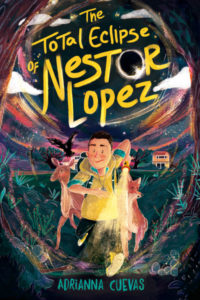
This week’s revision tip comes from author Adrianna Cuevas, whose debut MG novel, THE TOTAL ECLIPSE OF NESTOR LOPEZ comes out tomorrow!
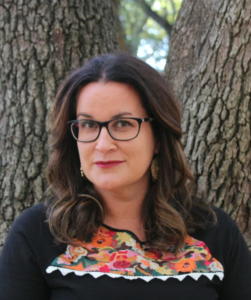
You’ve heard experts tell you to ‘kill your darlings’ when revising. I had to slaughter mine, completely rewriting two-thirds of my debut from scratch on the advice of my agent. I cut beloved characters, carefully plotted scenes, and meticulously crafted sentences. But in the end, those elements didn’t come together to form an engaging story young readers would love, so they had to go.
If the goal of a writer is to create a story readers will respond to, we have to disconnect ourselves from our writing and look at it objectively. Keeping the following questions in mind when reviewing your scenes will help you decide what needs to be cut and what still serves your story.
-
Does this scene advance the plot or reveal something essential about a character?
-
Does this character serve to help my main character, work against them to create tension, or provide information about the world I’ve created? Or are they just taking up space?
-
Is this sentence as active as possible? Have I taken out filler words and put my reader right in the action or am I using unnecessarily flowery language?
So be ruthless. Be ready to sacrifice your words for the sake of a better story. Yes, you should love your writing, but you always need to keep your ultimate audience in mind. And as the author of books for twelve-year-olds, I can tell you that throwing in a fart joke or two never hurts either.
This Week’s Writing Prompt from Kate
Describe a place that you love. Write a quick two-minute description. Then go back and spend one minute adding sounds to your description. Do the same thing with smells. And with the sense of touch.
When your paragraph is done, see if you can rewrite it as a poem. Think about line breaks, figurative language, and cutting all the words that aren’t working hard.
(This is a great activity to do with kids when you’re teaching about revision!)
Ready to get writing? Have a great week, and see if you can carve out fifteen minutes to write at least a few times. Remember that Jen Vincent will hosts your Teachers Write check-in on her blog each Sunday.It’s a chance to chat with other campers, ask questions, and share snippets of your writing for the week. You should stop by this week!
We’ll be back next week with another week’s worth of inspiration and writing!
Teachers Write 7/13/20 – Writing Picture Book Biographies, A Quick Scene-Starter, and Revision Tips
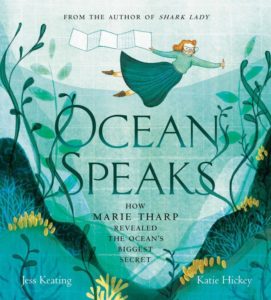
Good morning, and welcome back to Teachers Write! This week’s mini-lesson is from guest author Jess Keating, whose newest title is OCEAN SPEAKS, a picture book biography of ocean cartographer Marie Tharp.

Capturing the Tide:Three Tips from Writing Real Women
Feeling daunted at the thought of distilling someone’s entire life into a picture book biography in a way that feels responsible, meaningful, and entertaining? Jess Keating here — and I’ve been there!
Here are a few tips I’ve learned from writing real women.
- Ask yourself: Am I the one to tell this story?
Unfortunately, there’s no easy quiz you can take online to help you here. But you want to read widely and reflect deeply. I can’t tell you how many times I’ve started to scribble notes about someone’s life in the margins of my notebook, only to realize with utter certainty: this is not my story to tell. Be mindful. Be aware. Is your voice the best one to share this story? If yes, keep going!
- You can’t capture the tide.
It’s too deep. Too vast. Too strong. The same goes for trying to capture every remarkable, poignant, and meaningful moment in someone’s life. Once you accept that you can’t do the impossible, your options open up. Limits serve creativity. Do you want to present a ‘slice of life’ of your subject? A chronological narrative? Something else entirely? What’s best for your subject?
- Find the beating heart and watch the magic happen.
To date, I’ve written three picture book biographies, each about women in science who did their work in the ocean. For each, I make myself answer one central question before I submit anything to an editor: How did their passions and challenges mirror the broader picture of their life’s work?
Eugenie Clark was a female shark scientist working in a time when women were largely unheard of in marine biology. Both she and her sharks were underestimated, judged, and misrepresented. There were several beating hearts to Eugenie’s rich life, but narratively, the parallel between Eugenie and her sharks was my North Star throughout.
Marie Tharp was an oceanographic cartographer who mapped the ocean floor, thereby revealing the truth behind plate tectonics. Time and time again, she was told her work was “girl talk”. (Literally.) But her brilliant mind was as solid as the ocean ridges she mapped. She didn’t just map history — she made history.
Jeanne Villepreux-Power was seamstress-turned- scientist who built the world’s first aquarium, in turn discovering the truth behind one of the ocean’s biggest mysteries: argonauts make their shells! The gorgeous parallel behind both Jeanne and her argonauts using what they have to create space to thrive was strongest narrative thread I could have asked for!
So how do you find this narrative heart? Make two columns for your subject. Put the specifics of their life in one. Then, let your mind and heart wander into a wider space. What metaphors do you see? What themes? What constants? What mirrors? They are there! Your job as a writer is to find these threads in the tapestry and create a cohesive narrative for the world to see them too. Remember: you can’t capture the tide, but you can capture one beating heart!
I wish you luck, brave writers! You got this.
Want to grow your creativity and make your best work yet? I’ve got a special gift just for you. Visit www.jesskeatingbooks.com/10secrets for a free copy of my guide, ACTIVATE: Ten Secrets to Being Wildly Creative, and give your creative career a jumpstart. I can’t wait to see how you change the world!
-Jess Keating
This Week’s Revision Tip from Kate
Revision can feel like an overwhelming job, even for professional authors. Mention revision to a beginner, especially a young writer, and they often don’t knwo where to start. So it helps to break revision down into bite-sized, manageable jobs. This is something I do with my own work. When I get editorial notes from an editor, outlining all the revisions that need to be done on a project, that letter is often ten pages long (single spaced!) so I take time to read it and think about it, and then I underline the most important things and distill those into a one-page revision to-do list. Here’s what that looked like for my MG novel, CHIRP, a mystery set on a cricket farm!
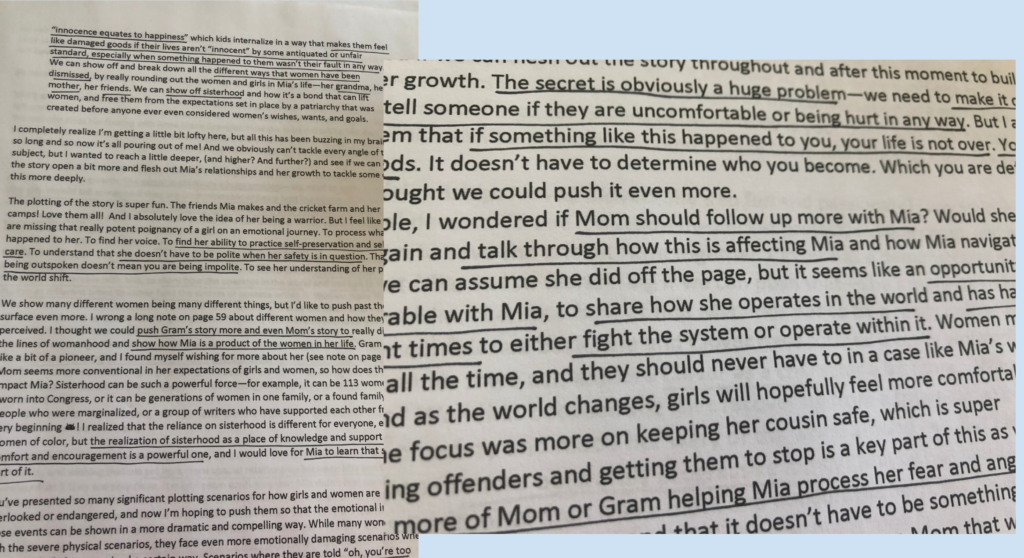
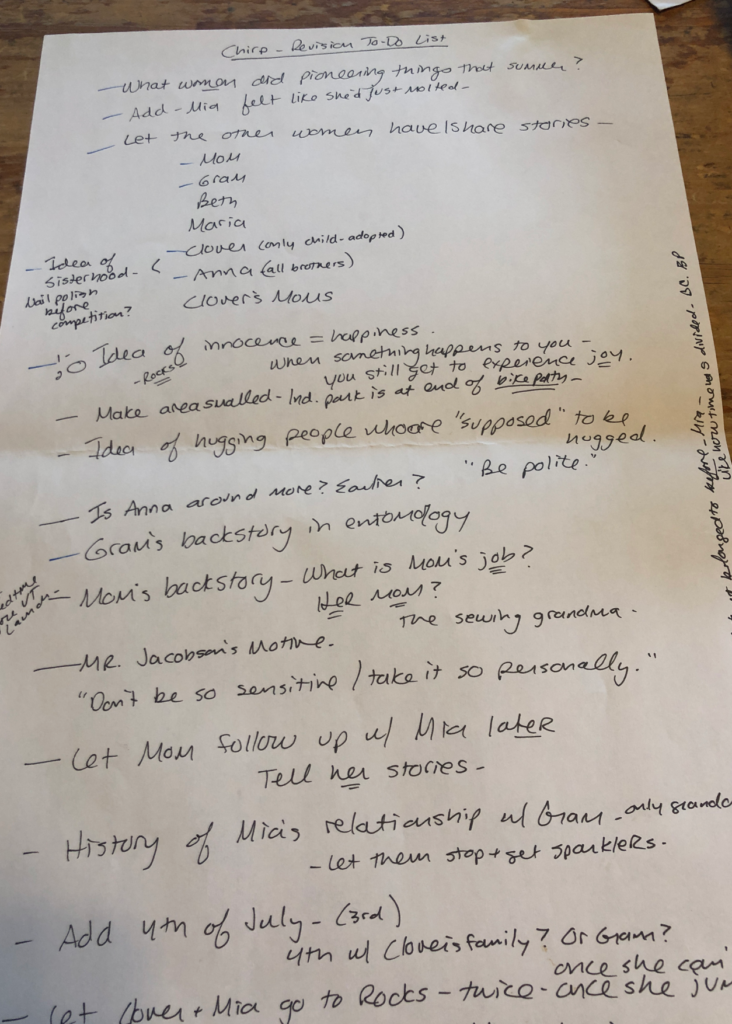
You can make your own list for revision, and so can students! Theirs might include things like:
- Add sensory details – SOUNDS
- Add sensory details – SMELLS
- Add dialogue
- Check for repetition/boring parts
- Read aloud to catch awkward writing & missing words
- Check on characters – are ACTIONS showing who they are?
Ready to make your own list? What might be some good revision jobs for the project you’re working on right now?
This Week’s Writing Prompt
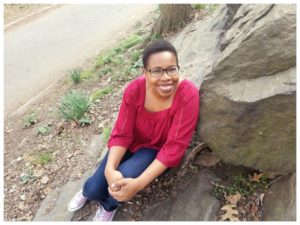
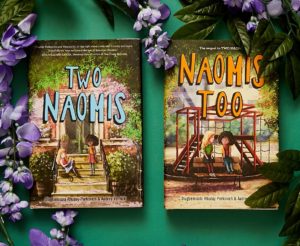
This week’s writing prompt is courtesy of author Olugbemisola Rhuday-Perkovich. If you haven’t read her novels TWO NAOMIS and NAOMIS TOO, cowritten with Audrey Vernick, ask for them at your bookstore or library!
Create two characters, and list 5 character traits (eg impulsive, vain, thoughtful, etc) for each. Write a short scene involving the two characters preparing for a surprise party, first from one’s POV, then the other’s. What changes? What details does each character “see” differently? What do they zoom in on?
And now it’s time to write! Enjoy the journey, and try to spend at least fifteen minutes writing a few days this week. And don’t forget that Jen Vincent will be hosting a Teachers Write check-in on her blog each Sunday.It’s a chance to chat with other campers, ask questions, and share snippets of your writing for the week.
We’ll be back next week with another week’s worth of inspiration and writing!
Teachers Write 7/6/20 – Welcome, a Creative Kickstart, Writing about History, and Tips for Revising
Good morning, and welcome to Teachers Write! I’m so excited that you’ll be writing with us this summer. This year’s format is a little different; I’m sharing a mini-lesson, writing prompt, and revision tip each Monday, and then you’ll have the week to explore those on your own schedule (and in a notebook, away from the screen if that’s your preference!) If you’re not already getting our weekly emails, you can sign up to do that here.
Before we start today’s lesson, would you celebrate with me for a minute? I have three new books out this Tuesday!
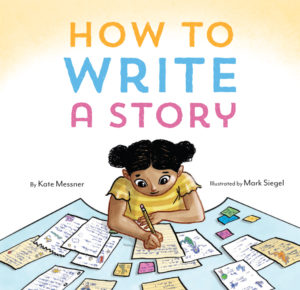
HOW TO WRITE A STORY (illustrated by Mark Siegel & published by Chronicle Books) is a follow-up to HOW TO READ A STORY and celebrates the writing process, from brainstorming and drafting to revision, editing, and publication, or sharing with friends! I hope you’ll share it with your young writers. You buy it anywhere books are sold, and personalized, signed copies can be ordered via my local independent bookstore. Just call 518-523-2950, or you can order online.
I’m also launching a brand new nonfiction series called HISTORY SMASHERS this week, with two books to start and four more on the way over the next year and a half. The series is aimed at undoing some of the lies and myths we teach kids about history and sharing the untold truths.
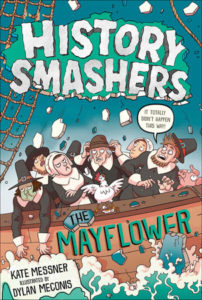
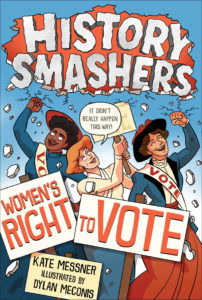
HISTORY SMASHERS: MAYFLOWER tells what really happened with the Pilgrims and Wampanoag people (and dismantles the myth of the First Thanksgiving) while HISTORY SMASHERS: WOMEN’S RIGHT TO VOTE takes a more honest look at the women’s suffrage movement. (It was a LONG journey and some of America’s most beloved suffragists were openly racist.) I know that many of you are working to dismantle white supremacy through your teaching, and sharing more honest stories about history is an essential part of that work, so I hope these books will be helpful to you. Again, if you’d like signed copies, I’m happy to personalize for you or your kids – just order through my local bookstore & they’ll get books out to you this week!
Writing History, Questioning, and Evaluating Primary Sources
Now…let’s talk about writing history. Authors & researchers are always emphasizing the importance of primary source documents like letters, diaries, and journals. But it’s so important to remember that those documents have biases. Much of the Pilgrims’ writing about the Wampanoag people, for example, downplays their culture. Some of this may have been due to ignorance on the part of the Pilgrims, but it’s also easier to justify stealing someone’s land if you look at them as inferior people. When we look at writings like Mourt’s Relation, one of the only two English primary sources from this era, that’s important to keep in mind.
When I write about history, I often start by making a list of things I think I know about a topic, and that’s a great starting place for young writers, too. For example, when you think of a Pilgrim, there’s a good chance you picture something like this guy on one of our History Smashers pages.
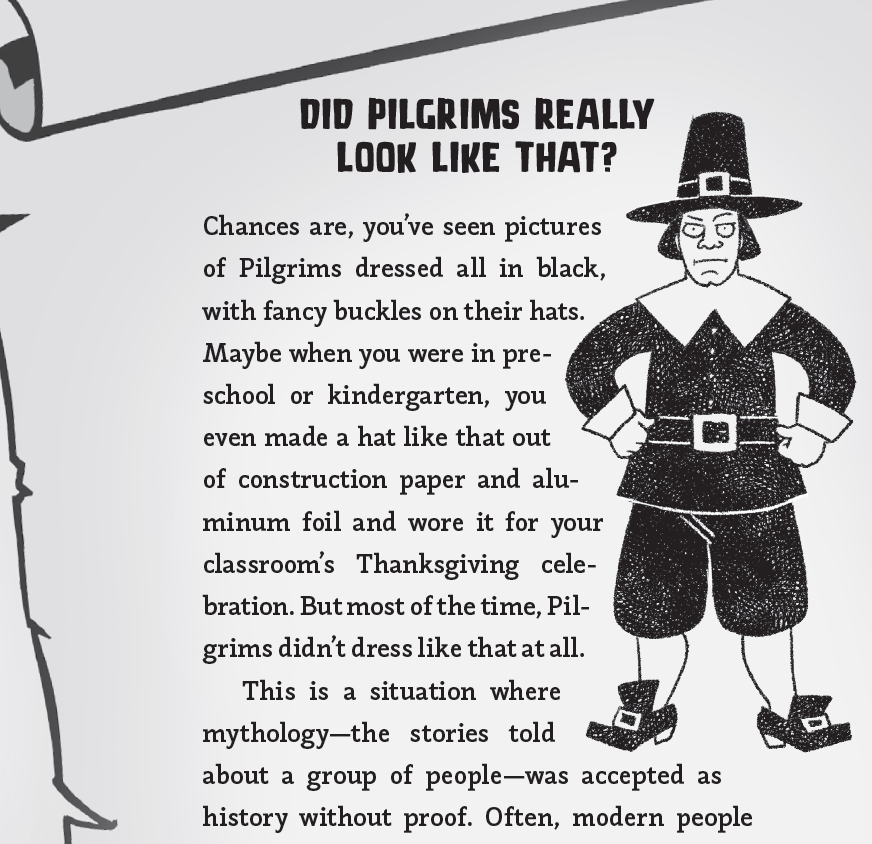
But how can check to find out if that’s what Pilgrims really looked like? We can look at portraits painted during their lifetimes, but even that gives an incomplete picture. People typically wore their best, most formal clothes to have their portraits painted, and at that time, one’s best outfit was usually black. But primary sources can help us out. When I was working on HISTORY SMASHERS: MAYFLOWER, I found that estate inventories from Plymouth (listings of what people owned) include clothing in all kinds of bright colors — red, yellow, orange, green, and violet, in addition to brown and black. That’s how we know that the classic Pilgrim-in-Black is a bit of a myth.
Revision Tip of the Week
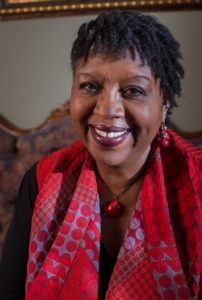
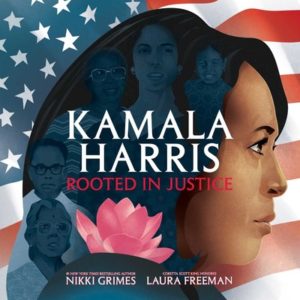
Maybe you’re in the middle of a writing project right now and looking for ideas for how to revise. Or maybe you’re just collecting strategies to use on your own and share with students later on. Author Nikki Grimes joins us this week with some thoughts. Nikki has a new picture book biography of Kamala Harris coming out soon!
The revision process can be daunting, whether you're working on a 32-page picture book, or a 300-page novel. Where do you even begin?
Tip #1: Start by addressing the easiest element, and slowly work your way up to the element you find most challenging. That way, you won’t lose precious time stuck in neutral. As you solve your manuscript”s small problems, your confidence will grow allowing you to more easily dive into the bigger issues.
Tip #2: Work on your revision in segments. On one pass, concentrate on dialogue or voice. On another pass, tackle pacing or word economy. On another pass, focus on descriptive language, replacing trite phrases—I call them placeholders—with original metaphors/similes, etc. You may need to work on tense consistency, added back-story, deeper character development, or you may need to reconsider POV. Whatever fine-tuning your manuscript may require,
the work will seem less daunting if you tackle each element separately. At least, this is the approach that gets me from first to final draft! I hope this helps.
Writing Prompt of the Week
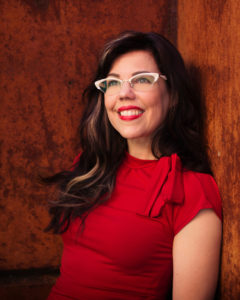
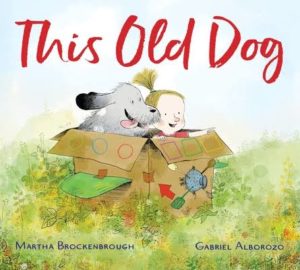
This week’s creativity kick-starter comes from author Martha Brockenbrough, whose new picture book THIS OLD DOG releases this fall.
One of the best writing prompts I’ve ever given students is a letter inviting them to attend a supernatural school.
1) I come up with a list of supernatural abilities PLUS some sort of quality that characterizes the school and let students pick: The school for evil mermaids. The school for inventors of magical objects. The school for vampires with loose teeth.The school for lost flying sheep.
I do it like this because when you pair a type of supernatural with another quality, you have both physical conditions and a state of mind. This gives a writer a lot to work with.
All right…roll up your sleeves because it’s time to get writing. Try out this week’s writing prompt to get warmed up. Think of a topic in history you *think* you know about, and then see what primary sources you can find to support (or blow apart!) that preconceived notion. Then choose a piece of writing you’d like to work on, and give Nikki’s revision strategies a try!
And don’t forget that Jen Vincent will be hosting a Teachers Write check-in on her blog each Sunday.It’s a chance to chat with other campers, ask questions, and share snippets of your writing for the week.
We’ll be back next week with another week’s worth of inspiration and writing!
Announcing Teachers Write 2020: July 6-31
Hello, teacher/librarian/writer friends! It’s almost time for Teachers Write, my free online summer writing camp for teachers & librarians. Have you signed up yet? If not, you can do that here.
But before I share details about this summer, I want to take a minute to celebrate all of you. Really.
The work that you’ve been doing as teachers and librarians these past few months has been nothing short of heroic – pivoting to teach kids online, making sure they have stories to read, all while dealing with your own lives and families. I cannot imagine how kids and families would have gotten through this without you. Not everyone understands that not being at school was actually more work for you — a lot more. So I want you to know that some of us do realize that. We know how much you’ve given your kids this spring, and how much you’ve given up. So thank you. I hope you’ll take some time this summer to recharge and take care of yourself.
That’s one reason I’m so excited about offering Teacher Write again. This summer will look a little different from years past. Instead of daily posts, which many of you said were hard to keep up with, there will be an email at the beginning of each week with writing lessons, prompts, and revision tips for you to work through on your own time, away from the screen if you’d like. Many will be lessons you can try out yourself and then bookmark to share with your kids later on – like this one. (It’s my favorite brainstorming strategy and works for writers of all ages!)
I’ll have more lessons, writing prompts, and revision strategies to share over the next four weeks, and I’ll be joined by some absolutely amazing guest authors!
Jess Keating will share a mini-lesson on writing picture book biographies! Her latest is about Marie Tharp.
Nikki Grimes will join us for some helpful revision tips! (And yes, that’s a Kamala Harris picture book biography you’re looking at! It comes out in August.)
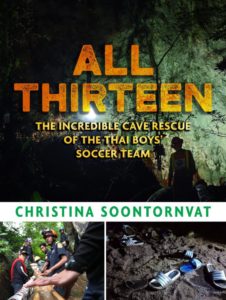
Christina Soontornvat will join us with some great tips for writing nonfiction! Christina’s amazing book about the Thai soccer team’s cave rescue comes out this fall.
Adrianna Cuevas will share strategies for revising a novel! Her debut (below) comes out this month!
Martha Brockenbrough will share a writing prompt to jump-start your creativity. Her new picture book THIS OLD DOG is out in September.
Every Sunday, teacher-writer Jen Vincent will host a weekly check-in on her blog, where you can chat, ask questions, share some of the writing you did that week, and ask other campers for feedback.
And then there’s me – I’ll be talking about all kinds of writing this summer, but I’m going to have a special focus on researching and writing history. My new nonfiction series HISTORY SMASHERS launched July 7th and is aimed at undoing the lies & myths we teach kids about history. It’s illustrated by Dylan Meconis in a multimedia format that includes lots of illustrations, photographs, and graphic storytelling pages.
Teaching honest history — what really happened in America’s past and not just the sugar-coated myths — is essential to dismantling white supremacy and working toward a better, more equitable future. That’s a huge goal of this series, and I hope you’ll share it with your kids, challenge them to think critically about history, and engage them in lots of great conversations.
I also have a new picture book launching next week! HOW TO WRITE A STORY is a follow-up to HOW TO READ A STORY, which I know many of you use in your classrooms. It’s a celebration of the writing process and a great book for introducing writing workshop to kids.
If you’d like personalized, signed copies of these new titles – or any of my books – you can order through my local indie bookseller, The Bookstore Plus. I’m happy to sign books to you or your kids or your school or library. And if you leave a comment to let the bookstore know you’re a Teachers Write camper, I’ll include an extra special inscription!
I’m so excited for all of our contributing authors, and we’ll have some surprise guests along the way this summer, too! Are you ready to get writing?
To join us, just sign up here.
Camp starts on July 6th, so sharpen your pencils, charge your laptop, and get your notebook ready. I’ll see you on Monday!