Teachers Write 7/25/13 Thursday Quick-Write with Anne Marie Pace

Good morning! Our guest author for today’s quick-write is the lovely & talented Anne Marie Pace!

Anne Marie  is the author of VAMPIRINA BALLERINA and its just-released sequel, VAMPIRINA BALLERINA HOSTS A SLEEPOVER, both illustrated by LeUyen Pham and published by Disney-Hyperion.  She has also written A TEACHER FOR BEAR and NEVER EVER TALK TO STRANGERS for Scholastic Book Clubs.  You can find a wonderful teachers’ guide for VAMPIRINA BALLERINA at Anne Marie’s website, http://www.annemariepace.com.

You’ll have to forgive me if I seem dreamy; as I write this, I’m physically at home, jotting notes down between driving kids to activities and doing laundry, but my head and heart are still walking along the shore of Folly Beach, South Carolina, searching for a perfect shell.  For a variety of reasons, it was our first family vacation in four years.  My vacation week has inspired this quick-write exercise for you today.

Choose a character, either one from your work-in-progress or a character you create just for this exercise.  Don’t feel you need to answer these questions one at a time.  Read them through with this character in mind, and then write something in response:  a letter, a poem, a journal entry, a descriptive paragraph–whatever flows.

First: Has this character ever gone on a vacation?  If your character is from the type of family that takes yearly trips, what was the favorite?  Why?  Does she go on the same trip every year?  Who is there?  What does she like to do there?  Is it boring or comforting to go to the same place?  How does she feel if that trip changes?  Or is it a different trip every year?  If so, how does she feel about changing it up all the time?  Does she like exploring new places or does she regret being unable to return?

At the other end of the spectrum, perhaps your character has never been on vacation.  Why has she been unable to vacation?  Is it financial or is there another reason?  How far has she been from home?  Are there any events she looks forward to during summer?  Does she have friends who are able to vacation with their families? Is she jealous?  Is she happy for them?  Would she be scared to leave home?  Does she have a dream place to vacation?  Is there something she could do to make a vacation possible (win a contest, win the lottery, convince a neighbor or friend to do something that relieves parental stress)?

Note:  These questions are somewhat slanted towards contemporary fiction.  If you are writing in another genre, feel free to replace “vacation” (in our contemporary sense) with “travel.”  If the setting of your story is a world you have built, how does that world deal with a desire to travel and/or rest?  How does your character feel about those societal customs or expectations

Now:  Think about what you have discovered about your character.  What part of that person is illuminated? Is there a parallel between your character’s experiences on vacation and what she is facing today? How might this revelation develop or connect to your plans for your work?

Teachers Write 7/24/13 Q and A Wednesday

Good morning! It’s Q and A Wednesday – a chance to ask your questions about writing to an all-star cast of author volunteers.  This week’s guests are Erin Dionne, Diane Zahler, Sarah Darer-Littman, and D. Dina Friedman. Please take a few minutes to check out their websites if you’re not already familiar with their great books, and then you can fire away with your questions!

Teachers & librarians – Feel free to ask your questions in the comments.  It’s fine to ask a general question or to direct one directly to a specific guest author. Our published author guests have volunteered to drop in and respond when they can.

Guest authors – Even if today isn’t a day you specifically signed up to help out, feel free to answer any questions you’d like to talk about.  Just reply directly to the comment.

Got questions? Fire away!

Teachers Write 7/23/13 Tuesday Quick-Write with Joanne Levy

Today’s guest author is Joanne Levy, whose funny and sweet book for tweens, SMALL MEDIUM AT LARGE, was released from Bloomsbury in 2012. A survivor of the corporate world, Joanne is also a virtual assistant, providing admin services to busy authors via www.jlauthorservices.com. Joanne lives in Ontario, Canada with her husband and a lot of pets, one of whom vomited during the writing of this bio. For more about Joanne, the author, check out  www.joannelevy.com.

What’s the worst that could happen?

Back when I was dipping my toe into the writing pond, I took some writing courses at my local college to see about getting some info on the basics. I’d always loved to write, but I knew nothing about craft and how to make an okay story into a GREAT story; I needed help. I learned a lot in those courses, especially as they were workshop based and I could get feedback from my peers (one of the great things about Teachers Write!) but a couple of pointed lessons really stuck with me.

One is that you have to kick the crap out of your main character. Repeatedly.

“Noooooo,” you say. “I love my character! I want only the best for her. Sunshine and light and all things rose-smelling.” But if you’re writing a story, no matter if it’s a short or an epic tome, you need to kick your character a few times. You need her to grow, thrive and shine* and it’s only through overcoming high-stakes obstacles that she’s going to triumph.

So think of the worst that can happen to your character. And then make it happen.

My very favorite example of this is the movie Cast Away with Tom Hanks. Give it a watch (you can call it research!) and see how many times poor Tom gets kicked. Hard. And the way he gets kicked is brilliant, too, in that good news/bad news way:

Good news: You survived a plane crash, bad news: you’re stuck on a deserted island, by yourself.

Good news: You found new shoes that you desperately need, bad news: you have to take them off the corpse of your buddy.

Good news: You get the shoes off, bad news: they’re too small (some kicks are big, some are small, but they all still count).

And it goes on and on. But through hardships we grow and show our true colors—these are life’s pivotal moments. These are the kinds of things that make your character human and sympathetic. You love them more for what they have overcome, right? It’s hard to love a character who has everything handed to her (and makes for a boring story). Where’s the grit? The strength, the stuff that makes you root for her?

So today for your quick write, take your character, thinking about her most debilitating fears or faults, and make the worst possible thing happen.

Is your character a terribly shy introvert? Force her to do a speech in front of 1000 people.

Is your character deathly afraid of snakes? Put him in a pit full of them (remember Indiana Jones?).

You get what I mean. Kick the crap out of your character and see what happens. I bet you’ll learn a little something more about her that you didn’t know before—maybe she fails miserably or maybe she can succeed and come out the other side stronger.

And when that happens, you know what to do–kick her again.

Good luck! Feel free to paste some of your writing below; I’ll be hanging out as much as I can today.

*Some characters don’t grow, thrive and shine, but fail and come apart when faced with hardship. But I’m going to assume that many of us are writing for kids where there is a positive or hopeful, if not happy, ending. If that’s not the case, for a character to fail and fall apart, they still have to face hardship, so this exercise is still valid, you’ll just have a less than positive outcome.

We’ll be giving away a signed copy of Joanne’s SMALL MEDIUM AT LARGE to one lucky commenter today!

Teachers Write 7/22/13 Mini-Lesson Monday with David Lubar

Good morning! Guest author David Lubar is here with your Monday morning mini-lesson. David is the author of about twenty book s for young readers as well as a game designer. You can read lots more about him on his website, but for now, he’s joining us with today’s mini-lesson.

Double Duty by David Lubar

         There’s a scene in My Rotten Life where the main character accidentally ruins dinner. In the first draft, this moment is followed with:

            Dad grabbed the phone and ordered a pizza.

            That’s a perfectly fine line. It lets the reader know what happened, and shows that the father isn’t annoyed. But during one of my revision passes, I realized I could do a lot more with that line. I changed it to:

            “I’ll order a pizza,” Dad said, hitting number 2 on the speed dial.

            There are several things to notice, here. First, I preserved all the information from the original version. Dad is ordering a pizza. He’s not visibly upset. But I also used the line as an opportunity to reveal information about the family. Obviously, they order pizza a lot. Going even deeper, some readers will catch the joke that not only is the pizzeria on speed dial, it is in the crucial #2 spot, usually reserved for friends or family.

            The thrust of this essay is that you, as a writer, should always look for opportunities to get extra work out of what you write. But, as a side note, I want to point out that “number 2 on the speed dial” is a great example of the reason why it is often better to show than tell. By giving the reader something to think about, I have inspired him or her to solve a problem, draw a conclusion, and experience a small “aha!” moment. Essentially, I’ve tossed out a small puzzle. The reader has interacted with my story. The reader has moved from passive to active. This is one way to get your reader immersed in your story. Immersion is good.

            But, back to the topic at hand, always look for ways that you can get extra mileage out of your prose. Let’s start, right off the top, with titles. It’s great when a title has more than one meaning, or when it foreshadows something about the story (without giving away enough to spoil any surprises). Since I write a lot of short stories, I have the pleasure of inventing titles a lot more often than novelists. (Not counting those novelists who write a book a week.) In the next Weenies collection (a series of short-story collections currently comprising seven books), I have a story about a boy trapped in a butcher shop. The meat in the case pulls together to form a monster. The working title was “The Butcher Shop.” In the end, I called it “Dead Meat.” Deliciously, this title carries a variety of meanings.

            In Extremities: Stories of Death, Murder, and Revenge (I feel compelled to point out that I’m a much nicer guy than my writing might indicate), the story about a boy who is deciding which city to run away to is called “Split Decision.” There’s an added irony to this word choice that I hope resonates with the reader once the full meaning of the ending sinks in. (Given that most author essays on any topic contain some degree of book promotion, I guess I can’t claim it’s a coincidence that I arranged things so this essay appeared the same week Extremities launched.)

            Another great place to look for economy and utility is in dialogue. I will often mingle action and dialogue. This keeps the story moving, and conserves words. For example, consider a scene like this (which I’m writing at this very moment as an example, so it will probably not be deathless prose):

            I got in the passenger side of Jake’s Mustang. He slipped behind the wheel and fired up the engine. We pulled away from the curb and took a left on Baker St.

            “Do you think Angie will be at the party?” I asked.

            “Sure,” he said. “She loves costume parties.”

            “I hope I don’t look stupid,” I said. “I think Robin Hood might have been a bad choice. I’ll have to carry this ridiculous bow all night.”

            “You always look stupid,” Jake said. “You should concentrate on not looking stupider. That would be a win.”

            Okay. That’s not a bad scene. But we can compress it and make it flow by letting the action take over for some of the uses of “said.” (Though “said” is invisible, and nearly always fine to use.) I’ll take a shot at it. Again, I’m doing this in real time, on the fly, so you can see revision in action.

 (1)      I got in the passenger side of Jake’s Mustang. “Do you think Angie will be there?”

            “Sure. She loves costume parties.” He got in and pulled away from the curb.

(2)       “I hope I don’t look stupid,” I said as I went through the contortions necessary to stash the longbow in the back seat. “Maybe Robin Hood was a bad choice.”

“You always look stupid,” Jake said. He turned onto Baker St. “You should concentrate on not looking stupider. That would be a victory.”

            The purest example of what I’m talking about is in #1. Dialogue and action are combined, with no use of “said.” I also eliminated some of Jake’s actions that didn’t need to be stated. (Again, they don’t have to be removed, but if they stay, they should be there for a reason.) Two side notes. I changed “be at the party” to “be there” to avoid the repetion of “party” with “parties.” It also adds a tiny bit of suspense as the reader wonders where “there” is. (Capote fans will know it’s not in Kansas.) Also, “He got in and pulled away…” is awkward. I’d change in on the next revision. I might need to add a sentence, since there are several actions being covered. (Getting in the car, starting it up, pulling away from the curb. Any or all of these might not need to be stated. But we don’t want the reader to think Jake is still on the outside, and then be jolted when he starts driving. Sadly, it’s often possible to make things worse when trying to make them better.)

            In #2, I left in the “said,” to show that this is always an option, and blended it with an action, but I also did something more important. I not only combined the action with the dialogue in the paragraph, but found an opportunity to reveal a bit about the main character, who doesn’t think about stashing the bow until he is in the car. (In the next pass, I’ll have to do research to see whether Mustangs have a back seat. Often, our additions lead to a need to change something else. And I’ll have to decide whether Jake has to duck during the bow stashing.)

            In #3, I used “said,” and then a separate action. There are infinite ways to handle these things. The trick (or art) is to find the version that is most pleasing to your own ear, but to also develop an appreciation for prose that serves more than one function. The other trick is to only do this when it improves the passage.

            Take a careful look at any descriptive passages in your work. These are often great candidates for compression since we tend to describe things as they play out in our linear thoughts. Backstory and other passages communicating essentail information can also be enlisted to carry extra loads. Look for ways to use them to reveal character or solidify setting. Merge them with action when it makes sense. Combine minor characters, too, if you can.

            One final word. I approach all of this as an enjoyable mental task, an art, and a challenging puzzle. How can I do more with this sentence? It’s fun. It’s rewarding. And your readers will appreciate it almost as much as you do. Happy writing. And happy reading. I understand there are some wonderful books hitting the shelves this week.

Note from Kate: Thanks, David! In the comments today, feel free to share a snippet from your work-in-progress that you think illustrates this – or simply reflect/ask questions about today’s lesson. Happy writing!

Teachers Write Friday Bonus: About Critique Groups

Happy Friday, everyone! As always, Gae is hosting Friday Feedback, but we also have a special guest here to talk about critique groups..  Natalie Dias Lorenzi is a teacher, librarian, and author of the middle grade novel Flying the Dragon. She lives outside of Washington, DC during the school year and eats gelato in Trieste, Italy during the summers. Visit her at www.nataliediaslorenzi.com <http://www.nataliediaslorenzi.com>

The Care and Feeding of a Writers’ Critique Group

by Natalie Dias Lorenzi

First of all, let me just say that I agree with Kate who posted this to you all: “So many of you have come here nervous to write and terrified to share, and you’ve taken deep breaths and done just that.”

When we put our thoughts and feelings on paper, it is scary sometimes. But sharing those thoughts and feelings? With strangers?? Now that’s terrifying.

There are some authors who don’t share their writing at all; no one sees their manuscripts except for their editors. And this works well for them. But me? I can’t imagine bringing a story into this world without feedback from my critique group.

Back in 2005, I was a few chapters into a manuscript which would later (seven years later, to be exact) become my first middle grade novel, Flying the Dragon. I had joined SCBWI and perused the message boards trying to learn all I could about the craft of writing. One day I came across a message from another writer, Kip Wilson Rechea, who was looking to fill an open spot in her critique group. I emailed her with my first chapter, as requested, and waited. Would she hate my writing? Would she chortle at my beginner’s prose? Luckily for me, she did neither; instead, she invited me to join her critique group.

During that first year, members came and went, but eventually our group settled into four writers: Kip, Julie Phillipps, and Joan Paquette. A few years ago, we even came up with a name for our group: The Lit Wits. 🙂 Every Wednesday for the past seven years (give or take a Wednesday or two), one of us submits pages to the group via email. The others leave comments within the text itself as well as a paragraph of their overall thoughts and impressions.

Other writers have asked me how we’ve kept our group together for so many years. If any of you are interested in forming a critique group, this is what I’d recommend:

1. Get to know other writers.

There are several forums out there for kid lit writers: Verla Kay’s message boards and SCBWI (these messages boards will actually be merging in the near future). Although I hadn’t met Kip before responding to her call for a new critique group member, I did get to know Joan through an online writing course before she joined the group. You just might find a critique partner or two here at Teachers Write!

 2. Join writers who are at a similar stage of writing.

When my group started out, we were at the beginning of our writing careers. Over the last seven years, our writing has been published in magazines and anthologies, and we have picture books, middle grade and young adult books now out on the shelves. This isn’t to say that a beginning writer and a published writer can’t be in the same group. In larger, in-person critique groups, there’s often a greater mix of writers that swap manuscripts or snippets of stories. But in general, I recommend finding a group with at least one other member who is at a similar point along the writing path as you are.

3. Decide on a method that works for your group.

For us, we sub no more than ten pages per week. We had one critique partner who is such a prolific writer that she left the group because she needed someone for full manuscript-swaps, not 10-page submissions every month or so. She spends a lot of time outlining first, but when she’s ready to write, she cranks out at least 1,000 words a day and finishes a first draft in a few months. Neither method is wrong; just decide which one works for you, and find others who feel the same way.

4. Give constructive feedback.

This seems obvious, but isn’t always easy to do. We tell each other what works, what’s funny, what touched us, and what didn’t make any sense whatsoever. If you were to look at our critiques, you’d see comments like these:

? I stumbled over this line–maybe reword?

? 🙂

? Huh???

? This doesn’t sound like her—would she really say that?

? Lovely!

We had one critique group member years ago who only said positive things about our writing. She is a lovely person, but she wasn’t helping anyone grow as a writer. She ended up amicably parting ways with the group, which was a good thing in the end. If I want to hear all good things about my writing, I’ll share it with my mom. 😉 If you want to grow as a writer, you’ll need to hear what works and what doesn’t work from your readers.

Being a part of the Lit Wits has definitely informed my teaching. When it’s time for one of my students to share his or her writing, I understand—really understand—how intimidating that experience can be. As a writer, I also understand what kinds of comments help me to become a better writer. We need to hear what we do well, and we need to hear, in a constructive and supportive way, what isn’t working.

If you flip to the acknowledgements page in any children’s novel, you’ll almost always read the names of those who have helped shape a manuscript into a story. Joan (who writes as A.J. Paquette) sums it up perfectly in the end pages of her just-released middle grade novel RULES FOR GHOSTING, when she says:

 “… to the many others who have had a hand in critiquing, guiding, shaping, idea-brainstorming, and otherwise helping make this story what it is, I couldn’t have done it without you.”

Joan goes on to name the members of the Lit Wits and other critique partners, including Kate Messner.

Best of luck to you all in finding whatever type of feedback works best for you. I look forward to one day peeking at the acknowledgements section of your books!

I’ll be around today to answer any questions you may have about critique groups. We’re in Italy for the summer, which is six hours ahead of EST in the US, so any questions I miss after bedtime here I’ll answer in the wee hours tomorrow morning.

Happy Writing!

Teachers Write 7/18/13 Thursday Quick-Write with Erin Dionne

Good morning, writers!

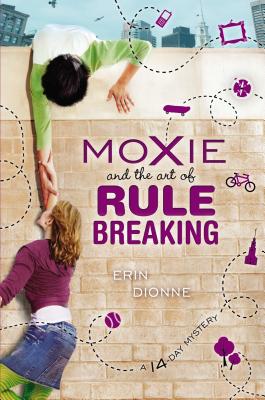
Your Thursday Quick-Write today is courtesy of my friend & fellow mystery lover, Erin Dionne. Erin lives outside of Boston, where she writes, reads, teaches, and juggles family life. Her latest book, Moxie and the Art of Rule Breaking (Dial Books) is a race-against-the-clock adventure set in Boston.

Erin has two young kids, so she writes most of her books in her local coffee shop or local library. She’s also an associate professor of Liberal Arts at Montserrat College of Art in Beverly, Massachusetts. When she’s not writing or teaching, she’s having dance parties with her kids, spending time with her husband, or managing the expectations of their disgruntled family dog.

Setting

 Often, setting gets overlooked when we’re drafting and revising. It becomes a “backdrop” on which our characters perform. In reality, our surroundings influence us in many ways each day—consider everything from the weather, to how comfortable the furniture is where you work or live, to ambient sound (lawn mowers, traffic, etc). In my latest novel, Moxie and the Art of Rule Breaking (Dial Books, 2013), the city of Boston becomes a character that Moxie and her best friend explore.

For this quick write, I am asking you to take away your characters and focus only on setting. Let’s see what you can pull from your setting to influence your story. Here goes:

  1. Choose a significant moment in your story (could be a climactic scene, could be the beginning…whatever feels important to you right now).
  2. Open a fresh page/document/etc, and just describe where this scene is taking place. Really dig into the details: what type of floor is in this space? How clean/dirty is it? What’s on the walls? What’s out the window? What noises do you hear (even in a room devoid of people, there are sounds—hums of electronics, clicking/ticking clocks, whoosh of heating/ac/fans)? If your characters are outside, address similar elements: what is the weather like? Wind conditions? Sun? Is this an industrial area? Woods? Is there litter? Graffiti? What does it say? Do you hear birds? Other animals? Planes? Sounds coming from other houses/teepees/hobbit holes? Don’t forget smells! Fresh cut grass, musky swamps, microwaved burritos or the tuna sandwich in the next cubicle. Your goal is to be as detailed as possible. Write in full sentences, lists, whatever works for you (you can draw a chart for all 5 senses and fill it in, if that helps).
  3. Now, when you’ve gotten every last detail down, review what you have. Identify 3-5 elements of setting that you did not incorporate in your existing scene but might influence your characters. What are they? Is the smell of that sandwich making your pregnant protag nauseous while she talks to her boss about a raise? Does your main character really regret not putting on sunscreen this morning? Is the incessant ticking of the heirloom clock in the living room adding to a character’s insomnia?

Hopefully, you’ve discovered some ways setting can expand and reinforce what’s going on in your story.

Have fun! I can’t wait to see what you come up with!

Note from Kate: Feel free to share in the comments if you’d like!  We’ll draw a random commenter to win a signed hardcover of Moxie and the Art of Rule Breaking (Dial, 2013).

Teachers Write 7/17/13 Q and A Wednesday

Good morning! It’s Q and A Wednesday – a chance to ask your questions about writing to an all-star cast of author volunteers.  This week’s guests are David Lubar, Nancy Castaldo,and Phil Bildner!

Teachers & librarians – Feel free to ask your questions in the comments.  It’s fine to ask a general question or to direct one directly to a specific guest author. Our published author guests have volunteered to drop in and respond when they can.

Guest authors – Even if today isn’t a day you specifically signed up to help out, feel free to answer any questions you’d like to talk about.  Just reply directly to the comment.

Got questions? Fire away!

Teachers Write 7/16/13 Tuesday Quick Write

Hi, everyone! It’s Kate today. (You didn’t think I could sit back and let our guest authors have all the fun, did you?)

A couple weeks ago, I was at the Boston Museum of  Science with my daughter when I saw this quote on the wall in the room that talks about sound…

photo(138)

“The acoustics of the season…”

I like that. Because so often, when we write, we get caught up in our characters and the action, and we forget that every day has weather and a feeling outdoors. Every day has sounds that would let us know, even if we were blindfolded, what season it is.

So today’s quick-write is this: Write about “the acoustics of the season” for your work in progress. You can choose a single day, a single moment if you’d like. Or, if you’d rather, write about the acoustics and sounds of this photograph that I took out on the lake over the weekend.

photo(139)

As always, feel free to share a bit of what you wrote in the comments!

Teachers Write 7/15/13 Mini-Lesson Monday with Linda Urban

Happy Monday, everyone! Our guest author for today’s mini-lesson is the inimitable Linda Urban, whose new book THE CENTER OF EVERYTHING made me laugh and cry both. And on top of that, it made me crave donuts, too. You can read my not-quite-a-review of the book over at the Nerdy Book Club, but for now, Linda’s visiting us to talk about something that’s a part of all of our writing lives — time.

Got minute?  Let’s talk time.

One of the coolest things about writing is that we can become masters of time.  We can speed it up, summarizing entire weeks of a school year in a sentence (By the time my daily writing journal was full, I had come to the conclusion that Dana and I would never see eye to eye on this.) or slow time down so that a second-long gesture takes on weight and importance through its extention. (Dana stared at me, her pencil tapping out a funeral march, and I swear I could see the whole history of our friendship erased in the slow, steady shake of her head.).  We use scenes to allow our readers to participate in the important stuff, to feel crucial emotions, to process information along with our characters, to experience action.  We use summary to say: here’s a bit of info you’ll need to know, but you don’t have to fully engage in.

Time is one of the ways that we signal importance.  We usually spend more time with major characters than minor ones.  More time in scenes that detail key actions or emotions than in scenes with little consequence.  You can use this assumption to your advantage.  Want to hide a clue?  How about sneaking it into a scene where the majority of our attention is spent on something else?  Want readers to understand that a moment in a character’s past shapes their current actions?  Don’t just tell us, take the time to show us in a scene.

And what about those really important parts of our story – the ones that mark crucial decisions or key turning points?  We can use time to help those moments stand out in the mind of the reader.

Here’s an example from my most recent novel The Center of Everything, which has time (our perception of it and our desire to manipulate it) as one of its themes.  In this scene, our main character, Ruby, who has been shielding herself from her emotions after the death of her grandmother Gigi, has just seen the color wheel project of her classmate, Nero DeNiro.  The wheel is creative and funny and Ruby laughs a real, genuine laugh and feels for the first time in a long time.   This is what happens next:

 But when she stops laughing, all the little Nero faces start to blur.  And Ruby has a bunch of thoughts.

 One of them is that there is something wrong with her eyes.

Another is that there is something wrong with her ears, because when Lucy says “Are you okay?” it sounds like she’s using a speaker phone.

And another is that maybe there is something wrong with her hands, because they have dropped her pencil to the floor, and even though it makes sense for her to bend over and pick the pencil up, her hands are not moving.  They are just sitting there on her color wheel, covering up all the complement lines. And there are drops of water landing on her hands and on the painted squares of color too, and the red and the orange are mixing all up into some other color that Ruby doesn’t have a name for and for which there is no complement on her color wheel, and she knows she is going to get a bad grade now.

 “Ruby?”  That’s Mrs. Tomas talking.  “Ruby? Did you hurt yourself?”

 What I hoped to do in this bit of the scene was to both slow time down in terms of the way that Ruby is processing and experiencing information, but also speed up the events around her.  I spent time in the scene to put in the details that show how Ruby is experiencing sound, color and movement, so that the reader can truly feel her struggling to make sense of what is happening.  I cut out the details that she doesn’t process, such as Lucy and Nero calling their teacher Mrs. Tomas over to the table to help.   In playing with time in this way, I hoped to signal that this moment was unlike the ones that had come before – that it was important to Ruby and important to the story.

So, how might this work in the story that you are writing?  Have you come to a crucial scene yet?  Is there a key moment you want your readers to slow down and really experience?  Think about that moment and see if you can find one central action in it – the turning of a door handle, the connection of bat to ball, the touch of a fingertip to the nape of a neck – and slow it down.  Slow it way down.

 As an experiment, let’s overdo.  Let’s see exactly how long we can extend this moment.  Keep it moving forward but detail every sense, every thought, every tiny change along the way.  See how long you can make this moment last.

Not in the middle of a project? You can still give this a whirl.  Take a fairy or folk tale you know well, identify a key moment, and extend that.  Can you make the bite of a poisoned apple last for a paragraph?  Two? A page?

When you’re done writing, take a look at what you’ve got.  Chances are what you’ve written is way longer and more detailed than anything you’d want to put into a novel or short story.  But I’m betting you’re going to find some great details in there, some emotions you hadn’t examined before, and some key words or phrases that you’ll want to keep in the scene – and maybe use again in times when you want your readers to remember that crucial plot moment.

 If you did do the experiment using a moment from your work-in-progress, put it aside for a day or two and then see if you can edit it down to something that works for you.  At the very least, I’m betting that this exercise has you thinking about that moment in a more vivid and dramatic way.

Note from Kate: Feel free to share a few lines of today’s writing in the comments if you’d like! Thanks again, Linda, for joining us! And don’t forget, everyone, that Jo has your Monday Morning Warm-Up today, too!

Teachers Write 7/11/13 Thursday Quick-Write with Megan Miranda

Good morning! Your Thursday Quick-Write today is courtesy of guest author Megan Miranda. My favorite thing about Megan’s YA novels is the way they’re infused with science — total reading candy for geeks like me.

Megan is the author of the young adult novels Fracture and Hysteria, both published by Bloomsbury/Walker Books for Young Readers. She has a degree in Biology from MIT and spent her post-college years working in biotech and, later, teaching high school science. She currently lives near Charlotte, North Carolina with her husband and two young children. Megan is represented by Sarah Davies at The Greenhouse Literary Agency. Today, she’s visiting to talk about point of view.

What We See vs. How We See

On a recent vacation, I found myself at a desk with a view of the ocean—which was coincidentally the perfect backdrop for me to write a very relevant scene of my work in progress. My main character was about to take the plunge—quite literally—into the ocean.

I started writing what I saw: the light catching off the moving water as the sun set on the horizon; the way I could see beneath the surface to a deeper shade of blue; how the world felt suddenly limitless, stretching out before me.

All of which was there and true, but also not at all how my main character would see these details. Because that character about to take the plunge into the water? She can’t swim. This same setting, filtering through me in a calm and peaceful way, would be terrifying for her. Those same details represent uncertainty for her. She’s full of anxiety. That setting sun is a ticking clock, the premonition of darkness coming. The water that seems to turn a deeper shade of blue beneath the surface is bottomless, disorienting, and something to be feared.

Setting the scene is not just what we see, but how we see it.

When describing a scene, ask yourself: What’s my narrator’s perspective?

The details our characters see are important, but how they see them gives the reader an even greater understanding.

Ask yourself:

*Who is setting the scene for us?

*What’s their mood? What are they feeling?

*Why are they there?

This is a picture I took on that vacation. It’s a beach that’s only accessible by water. But this setting can be described in countless different ways depending on who’s behind the camera, what they’re feeling, and why they’ve landed there:

*What is he or she feeling? Is she lonely? Content? Exhausted? Excited?

*Why is he or she there? Did he seek the spot for solitude? Is he hiding from someone? Is he exploring? Is he lost?


Feel free to use your own story setting, your current view out the window, or this picture, if you’d like.

But whatever you choose to describe, think about the perspective of the narrator. What’s his or her mood? Why is he or she there?

And let your narrator tell us how he or she sees the scene.

Feel free to share in the comments if you’d like!