
Kate’s Fall 2013 Skype Visits (and a new book out today!)

As many of you know, I spend a lot of time doing Skype author visits with readers at schools and libraries around the world. I schedule these season by season, after I have my real-life schedule for deadlines, travel, and family commitments. My Fall 2013 Skype visit schedule opens September 10th (that’s today!) which is also release day for my new book, WAKE UP MISSING.
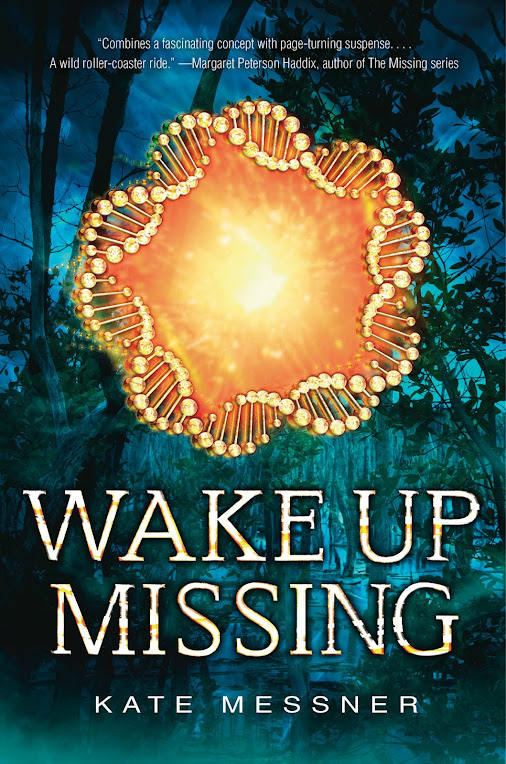
WAKE UP MISSING is one of those books that kind of defies genre. It’s probably best for readers age 10 and older, , and if I had to define it, I’d call it a “concussion-swamp-survival-DNA-science-thriller.” If you’re intrigued, you can learn more about the book and read the first four chapters for free here. If you know you’re going to buy this book for your classroom or library or just for your family, it would be GREAT if you did so this week (first-week sales actually help authors a lot). I support independent bookstores and hope you will consider buying your books at your local bookstore, too.

Now…about those Skype visits. Here’s all the information you’ll need to set one up for your readers. I offer two kinds of Skype visits:
 
SKYPE AUTHOR PRESENTATIONS – 45 minute presentations that include visuals, short readings, discussions of writing, research, and revision, an optional mini writing workshop with kids, and time for Q and A. Students may read one of my books ahead of time; this is optional but does make the experience more meaningful.

Cost: $200

Availability: I offer paid Skype presentations on a flexible basis as my schedule allows  – please email me (kmessner at kate messner dot com) with a few dates/times that would work for you and we’ll figure something out.
 
SKYPE Q AND A SESSIONS
– 15-minute Q and A sessions with groups that have read one or more of my books and prepared questions in advance. Please note that these free sessions are often scheduled back-to-back, so they must be via Skype only and can’t be scheduled with other videoconferencing platforms that would take time to launch & set up.
 
Cost: free – (one per school, per year – additional sessions may be scheduled as paid visits)

Availability: 11:00-2:30 EST on the following days only:

September 25
October 3
October 11
October 24
November 5
November 14
 
Note: If you would like to book a Q and A session for a different date/time or using a videoconferencing tool other than Skype, it may be scheduled as a paid visit (see above).
 

With both kinds of Skype visits, I’ll be offering the opportunity for students & teachers to order signed, personalized books through The Bookstore Plus in Lake Placid, with books for fall visits to be delivered in late November. If this is something that your group chooses to do, I’ll send an order form for you to distribute. I’ve worked with The Bookstore Plus for Skype author visits in the past. They do a great job taking orders and offer free shipping anywhere in the U.S. for orders over $50.

Here’s how to schedule your Skype visit:
(Sorry to be picky, but I’ve found that having a strict format for these emails saves loads of time, which leaves me more hours to write books and chat with your students, too!)

Please email me (kmessner at kate messner dot com) answering ALL of the following questions in a numbered list:

1.     What’s your name, and where do you teach/work? Please include your city, state, AND time zone.
 
2.     Which type of visit (free 15-minute Q and A or longer paid presentation) would you like to book?  (If you need more than one Q and A session, the first is free, and the second may be scheduled as a paid visit.)
3.     What are a few dates/times that would work well for a Skype chat?  Please list your TOP THREE choices for days/times, based on the available dates listed above.  If your first choice is available when you email, it’s all yours. I’ll get back to you within a few days to confirm.  Note: My life runs on Eastern Standard Time – if you’re in a different time zone, please remember to account for that.
 
4.     About how many students will be in the group, and what grade(s) will be included?

5.     What book(s) will the students have read prior to our Skype chat? (required for free chats, optional but recommended for paid visits)

6.     What is your username on Skype? (If you don’t have one yet, let me know. You can do this part later.)

7.     Please provide a classroom/library or cell phone number where I can reach you on the day of the visit in case there are any technical/weather issues. This needs to be a phone that is with you and turned on, on the day of our visit. It is the number I will call at the time of our chat if there’s any trouble connecting via Skype.

8.     Do you plan to distribute a book order form to offer students the opportunity to order signed books through The Bookstore Plus after our Skype visit?  This isn’t required, but it’s appreciated and helps add to student excitement.
 

Note: Right now, I’m booking free visits through November 14th and paid visits through December. I’ll begin booking winter/spring visits in early January. Let me know via email if you’d like to be on the list to be notified when those dates open up.

Good news – and a Sneak Preview of WAKE UP MISSING

MissingMy new science thriller for kids, WAKE UP MISSING, comes out on Tuesday.Here’s what it’s about…

Meet Quentin, a middle school football star from Chicago…
Sarah, an Upstate New York girls’ hockey team stand-out…
Ben, a horse lover from the Pacific Northwest…
And Cat, an artistic bird watcher from California.

The four have nothing in common except for the head injuries that land them in an elite brain-science center in the Florida Everglades. It’s known as the best in the world, but as days pass, the kids begin to suspect that they are subjects in an experiment that goes far beyond treating concussions….and threatens their very identities. They’ll have to overcome their injuries – and their differences – to escape, or risk losing themselves forever.

WAKE UP MISSING is a Junior Library Guild selection and has been showing up on blogs and in industry reviews lately.

Publishers Weekly called it “an exciting middle-grade thriller inspired by cutting-edge science and historical events.

Kirkus offered this mathematical analysis: “Six middle schoolers + mad scientists + Everglades = adventure.”

My favorite reviews so far, though, have been from teachers. This book grew out of my fascination with cutting edge science (how far is too far?) and my love of the Florida Everglades, a place I find both stunningly beautiful and terrifying, and it’s my biggest hope that the book will find readers who love adventure and science the way I do. Teachers, librarians, and independent booksellers are most often the people who put those “just right” books into readers’ hands, so I was thrilled to see these reviews:

Maria Selke featured WAKE UP MISSING on her Science Friday post with some great ideas for how teachers might use the book in the classroom, making nonfiction connections with the author’s note.

And Jennifer Vincent talks about the book on her blog, Teach Mentor Texts. One of the things I love about this blog is that it packs so many classroom-friendly ideas into a single post – especially specific examples for how each book might be used as a mentor text to teach kids about their own writing.

Sneak Preview of WAKE UP MISSING

Ready to start reading right now? You can download the first four chapters of WAKE UP MISSING as a free pdf file right now. Just click here. If you want to read more, I hope you’ll pre-order WAKE UP MISSING from your favorite bookseller today. I support independent bookstores and would love it if you asked for it at your local indie.

If you’d like to order a personalized, signed copy, I’ll be signing at one of my local indies, The Bookstore Plus in Lake Placid, on Saturday, September 21st. To order signed copies of WAKE UP MISSING or any of my other books for kids, just give them a call at 518-523-2950 and let them know how you’d like it signed. They’ll ship it out the following week (free shipping on orders over $50, too!)

Back to School & Back to Work

Confession: Even though I’ve been writing full time for a couple years, it still feels a little strange not going back to school on the first day. Instead of smelling new pencils and seeing nervous middle school faces now, the start of school means a return to longer writing days for me. That’s most welcome after a summer that was full of busy days and wonder. Here’s a sampling of the July & August memories I’m bringing back to my quiet writing room…

Magical glass

 We spent a day in Montreal and checked out this amazing Dale Chihuly exhibit at the Montreal Museum of Fine Arts.

If you live near Montreal or visiting any time soon, don’t miss it – it’s there through October 20th.

Secret stone houses

Camping on Lake Champlain’s Valcour Island was on my daughter’s summer wish list, and we’re so glad we found the perfect weekend for it. This island saw a pivotal Revolutionary War naval battle in 1776  and was the site of a short-lived utopian community in the late 1880s. These days, its bays are full of Canadian sailboats, but the island itself is riddle with hiking trails that still hold some surprises, including this abandoned stone house that we came upon in a clearing.

Ambitious snakes

Just as we were gathering our camping supplies on the rocky beach, getting ready to return to the mainland, we spotted this garter snake, struggling to eat a toad that was many times the size of its head.

Nature is pretty amazing sometimes.

Ancient Rome

This was the view from my home-office-away-from-home for a week in  August…

That’s the Roman Colosseum you see in the distance, the Flavian Amphitheater as it was known at the time, and it’s an important site in one of my upcoming books. It’s too early to say much more about the new project, other than that I have many pages of notes and many, many photos for inspiration now that I’m home writing again. More to come soon…

So happy back to school, everyone! If you’re a teacher or school library media specialist or student, I hope you’re having a great start to your new school year!

Behind the Scenes with Bossy Fish: Interview with Editor Melissa Manlove

As an author, it’s always magical for me to see a finished picture book after months and months of back and forth emails with my editor over everything from text revisions to illustration sketches. SEA MONSTER AND THE BOSSY FISH, editor Melissa Manlove was instrumental in making this latest Sea Monster adventure a book that teachers, kids, and families will all appreciate, so I asked her if she’d take a little time out from editing to visit my blog today and talk about the process behind the picture book.

Hi, Melissa!  First of all, thanks for stopping by to talk about Sea Monster. As you (and a lot of my blog readers) know, this is Ernest the Sea Monster’s second adventure. Signing up a sequel or companion book must be a big decision for an editor. What made you feel like Ernest the Sea Monster should have another story?

Sea Monster’s First Day went out in strong numbers–that’s always part of it. Publishers are also always on the lookout for characters that can build a line of books, and we have a soft spot for Ernest’s brand of silly sweetness.

As an editor, how do you approach a new manuscript that arrives in your in-box? Obviously, because we worked together on SEA MONSTER’S FIRST DAY, Ernest was no stranger to you, but I’m curious what your process looks like from the moment that file arrives. Do you start thinking about suggestions right away or read through a few times and let the thoughts marinate for a while?

It varies from book to book. Usually I need some time to think/process, if only to be sure I’m in touch with what the book’s heart is and what feedback is going to help the book become the truest version of itself.

One of things I most appreciate about your editing is the way you prompt changes by asking thoughtful questions. Here are a couple highlights from the first feedback I received from you on BOSSY FISH:

Could there be more fishy humor in the first half of the manuscript? Sea Monster’s first day was wall-to-wall fish jokes–something funny on each spread– as well as having a heart. Your humor is just right, too–accessible to these young kids, and still tickling to the parent-aged, readers-aloud-type people like me and you.

Could there be a little more set-up at the beginning? I worry you’re assuming your reader knows Ernest already from the previous book, but many people will discover this Sea Monster book first and then backtrack to First Day. We need a sense at the start of the story of who Ernest is and that he is the main character.

Could there be a touch more in the way of character arc? Ernest is not as hard-hit by these developments as he was in First Day; I’d like to see more clearly how and why he is emotionally invested in finding this resolution. A bit more of a black moment? However (!) I love that you didn’t go the clichéd route of making Ernest an immediate target for the bully. How can we keep that and still develop just a bit more of a crisis for Ernest?

So often, your feedback comes in the form of questions. Why do you feel like that’s the best way to prompt revision? (I have my own feelings on this as an author, but I’m curious about your thoughts from an editor’s perspective!)

I think that questions are among the editor’s most powerful tools–the use of questions emphasizes that the editor is open to discussion and disagreement. The questions I ask most often in the process of feedback are ‘Does that make sense?’ and ‘What do you think?’ because I am trying to help the writer achieve THEIR vision and reach THEIR audience. I want to make sure the author knows I don’t come to the editing process in a dictatorial frame of mind–I am here to assist in creation, but I am not one of the creators of the book. When an author communicates to me that I have really helped them to make their book into the book they wanted it to be–that’s when I am happiest in my job and proudest of my work.

What advice would you give others who want to help a writer to grow? I’m thinking of both teachers and writers in critique groups. What are your best tips for helping an author of any age to reconsider and improve his or her work?

Critique is useless when it is vague. I want to pinch people in critique groups when I hear ‘this is so cute’. Critique is also useless if it is entirely positive OR entirely negative. Neither kind will help a writer move forward and improve their work. Critique should always begin with specific, positive feedback. This is important for several reasons. I’m attaching the sheet I wrote for our interns about giving editorial feedback:

How to write an editorial letter

1. Start with the best. Identify the strengths of the book, the things to which the book’s audience will most connect. All of them. Be specific.

            a. Because these qualities will be your pole star as you guide the book through the publishing process. Books change as they are developed. Having iterated to yourself at the beginning what the point and value of the book is will help you ask yourself whether each change along the way serves the true nature of the book.

            b. Because when you iterate those things to the author, you gain the author’s trust. Authors are absolutely right to distrust anyone who does not see why the book is valuable, yet who wants to suggest changes. And authors are facing the difficult and sometimes painful process of revision. The admiration and excitement of a knowledgeable stranger—you—gives them fortitude and faith in the face of that process.

            c. Because if you don’t iterate those things to the author, the author might change them during revision. Never assume the author sees the brilliance of their book, no matter how obvious it is to you. This is no criticism of authors—it is their job to see the trees. It is our job to see the forest.

2. Remind the author to argue with you. Remind the author that you want to hear her point of view, and to help her make this the book she wants it to be. This also builds trust, because it communicates that the author is in this process with a respectful partner—not with a general who will command or with a surgeon who will cut. Neither war nor medicine is a creative process. And this openness to disagreement builds trust because it communicates that you are not in this to make it the book you want it to be, but simply the best book it can be. There is no ownership in editing.

3. Ask questions. Editorial confidence opens pathways and facilitates decision-making, but editorial inflexibility is the enemy of creativity.

4. Point out problems, and explain specifically why you believe they are problems. But suggest solutions as questions. A suggested solution can help the author to understand better how you perceive the problem. But remember that the best solutions usually come from the author. Specifically communicate that if the author has different ideas for how to approach each issue, they are very welcome.

5. Think of each book as a thing of its own, with a soul and identity apart from any of the people involved in it. What does the book want to be?

6. Be grateful. We are each of us absurdly lucky to be working in this field.

I love this so much – thanks for sharing it, Melissa!  One last question…  Readers may not realize this, but editing a picture book involves working with so many people — the author, the illustrator, the design team… Could you talk a little about how you balance that as an editor and how your role helps the process along?

In terms of communication, the editor is the center of a wheel of people–the author is one spoke of the wheel. The illustrator, the designer, the production manager, the publisher, the managing editorial team (copyeditor, proofreader, factchecker), the publicist and marketing manager are all other spokes. Except for communication between the designer and artist, which is often direct, the editor receives, filters, and shares communication between all of these people. What we call the ‘make team’ are the people who have the most impact on the book itself–author, artist, editor, designer, production manager. But all the others have important roles to play, too, and we could not effectively make books without their contributions.

All the same, Melissa, I’m happy to have you at the spoke of our wheel. Thanks for this interview, and more than that, thanks for all of your work on SEA MONSTER AND THE BOSSY FISH!

Rose O’Neill: The Girl Who Loved to Draw by Linda Brewster

 I’m happy to have been involved in the KidLit Cares auction for Superstorm Sandy relief for so many reasons. First, of course, is the money we raised for the Red Cross relief effort. But beyond that, my own contribution – the school and library planning and publicity packages – have led me to discover some really amazing titles that I might otherwise have missed.

One of them is ROSE O’NEILL: THE GIRL WHO LOVED TO DRAW by Linda Brewster.

It’s a gem of an artist biography but a tough one to peg when it comes to readers’ ages. It’s the kind of title you might pick up at an art museum bookshop as an adult, reading to gain an appreciation for the history of the artist behind the work. But it’s also just the kind of book that young artists and readers will love, since it really focuses on the girl who grew into America’s first woman cartoonist.  And it’s a title that school librarians and teachers in grades 4-8 should know about, too, especially with the invitation to explore more creative nonfiction under the Common Core Standards. This book would be a great model for kids working on their own biographies of famous artists or musicians, or really any public figures.

This is Rose’s story, and it begins when she is small – a child about to start out on a covered wagon journey across the country to live in a sod house.  Rose’s journey with her parents and siblings includes long days in a Conestoga wagon. It includes financial troubles and evictions, happiness and heartbreak, but most of all, it includes art and love. No matter how tough things were for Rose’s family, her parents managed to surround her with books, take her to the theater occasionally, and support her talents in both theater and art.

Rose grew up to be not only a gifted illustrator, inspired by her life stories and the baby brothers and sisters she helped to raise, but also an advocate for women. She was a part of the suffrage movement, using her popular Kewpie characters to help spread the message. And this book does an amazing job of telling and showing Rose’s story.  There are great, vivid examples of her drawings here that lend themselves to conversations about the connections between an artist’s history and her work. Kids will be excited to study the illustrations and make those connections to the biographical text.

As part of the planning and publicity package, I took a look at how this title might help to meet the Common Core Standards. Here are a couple of the reflection/writing questions that’s part of the new study guide:

While Rose O’Neill may be best known for her Kewpies, her artistic talents span a wider range of styles. Her “Sweet Monsters” drawings drew controversy when she shared them. View some of these and read about them here:

http://www.stateoftheozarks.net/Cultural/Craftsmanship/Painting/RoseONeill/SweetMonsters.ht

 Does it surprise you that this work was done by the cartoonist you read about in THE GIRL WHO LOVED TO DRAW? Why or why not?

Read Rose’s poem “The New Baby” on page 13. How does this poem written by Rose herself compare to Linda Brewster’s narrative account of the birth of Rose’s little sister?  How are the two accounts similar? How are they different?

  • CCSS.ELA-Literacy.RH.6-8.1 Cite specific textual evidence to support analysis of primary and secondary sources.
  • CCSS.ELA-Literacy.RH.6-8.2 Determine the central ideas or information of a primary or secondary source; provide an accurate summary of the source distinct from prior knowledge or opinions.
  • CCSS.ELA-Literacy.RL.6.9 Compare and contrast texts in different forms or genres (e.g., stories and poems; historical novels and fantasy stories) in terms of their approaches to similar themes and topics.

To read more about this great illustrated biography, check out Linda Brewster’s website: www.lindabrewster.com. 

This book is with a smaller press, so it’s one that lots of teachers and librarians might have missed, so I’m giving away a copy today to help spread the word. To enter the drawing, just leave a comment that includes your email, and I’ll drop you a note to get your address if you win (U.S. entries only, please!)

Teachers Write Wrap-Up – Sharing a Secret

I’m a little weepy today… I know you all need to get back to your classrooms and libraries if you’re not already there, but it’s tough to say goodbye after such an amazing six weeks of writing and sharing together. The good news is that your Teachers Write buddies are never far away, though. Our Facebook community lives on through the school year, and we’ll be back with another online workshop next summer!  A HUGE thank you to Jennifer, Gae, and Jo for making these six weeks so great.

If you’ll be at NCTE in Boston in November, you can meet up with Gae, Jennifer, Jo, and me in person (and participant Brian Wyzlic, too!) Please make plans to attend our session on Sunday morning.  “Teachers Write!: How Teachers Writing Now Can Build Student Writers of the Future” is officially session L-32 and it’s being held at the Sheraton, Beacon E from 8:30-9:45 on Sunday, November 24th. Also…if you know you can be there and might want to help us out with a special secret project, please let me know.

I know that I won’t get to meet many of you in person any time soon, but if you’d like personalized, signed copies of any of my books, The Bookstore Plus, a great indie in Lake Placid, NY, is hosting my WAKE UP MISSING launch on September 21st. If you give them a call at 518-523-2950, they’ll happily take your order over the phone and send your books (free for orders over $50) after I sign them in September. They carry all of my books, including my new picture book, SEA MONSTER AND THE BOSSY FISH, and you can also pre-order my fall science thriller WAKE UP MISSING. (If you do order personalized books for yourself, please let them know you’re part of Teachers Write and I’ll write a special inscription! I’m also happy to sign holiday gifts or books to your classroom.)

And now the secret I promised… Teachers Write is going to be a book! The folks at Stenhouse who published REAL REVISION: AUTHORS’ STRATEGIES TO SHARE WITH STUDENT WRITERS have been after me to work on a new book, and I told them that I’d really love to write something that celebrates what we’ve been doing at Teachers Write these past two summers…something that empowers educators to facilitate this kind of supportive writing community in their own districts. So that’s what we’re doing! I’ll be looking for a little help from some of you.  I’d love to include some of your writing from the past two summers as well as some quotes about how being part of a writing community has impacted your teaching. I won’t be able to include quotes from everyone – I wish I could – but I’d love a sampling. If  you’re game to help out with that, there’s a place in the final survey where you can let me know.

If you enjoyed Teachers Write this summer, please remember to show your support for all of our organizers and guest authors by ordering books for yourself or your classrooms or libraries. Want to do more? If you read one of our organizer or guest author books and love it, please consider nominating it for your state children’s choice award list. My writer-friend Lisa Schroeder has a creative blog post called “Supporting Authors When Your Heart Is Bigger Than Your Wallet” with even more great ideas.

And finally – please share your feedback from this summer by taking our survey here.  It’s just ten questions, asking you to reflect on what worked for you and what you’d suggest for next year, among other things. If you have a few minutes to complete it, it will be a great help. Many thanks for that – and for the gift of your words this summer. Have a great school year, and we’ll see you in June!

xoxo~Kate

katewriting

P.S. You are all so talented. Please keep writing and never forget what Jo told everyone yesterday… That thing you are writing is awesome!

Teachers Write 8/15/13 Thursday Quick-Write & Reflections

I can’t believe the summer’s flown by so quickly! How could we already be at the end of six weeks of writing together?? I hope that this is really just the beginning, though. I hope that you’ve met some friends — some like-minded teachers who want to be brave and write and show their students that writing matters — and I hope so much that you’ll all keep writing.  What you’ve shared here this summer has been beautiful and full of talent. It’s been funny sometimes, and sometimes sad. But always, it’s been brave. Thank you so much for beign part of this community.

Now…you didn’t think you’d get away without one last writing prompt, did you?  Take a few minutes to reflect on the experience of participating in Teachers Write this summer. If you’d like, you can use the following three sentence beginnings to get started thinking about how you felt when you first got here, how you feel now, and what you hope for tomorrow.

Back in June…

Now, after six weeks of Teachers Write…

When the new school year starts, I hope…

As always, I’d love it if you’d share some of these thoughts in the comments. And please stop by tomorrow for one last get-together. We’ll be sharing a pretty cool secret as well as a link to the post-Teachers-Write survey that will help me to plan for next summer.

Teachers Write 8/14/13 Q and A Wednesday

Good morning!  It’s hard to believe, but today is our last Q and A Wednesday of Teachers Write 2013. Our official guest authors are no strangers – Margo Sorenson and Erin Dealey have promised to come by to answer questions – and I’m sure we’ll have plenty of other folks coming by as well.

Got any last questions you’d like to ask our team of volunteer authors?  Fire away!

Teachers & librarians – Feel free to ask your questions in the comments.  It’s fine to ask a general question or to direct one directly to a specific guest author. Our published author guests have volunteered to drop in and respond when they can.

Guest authors – Even if today isn’t a day you specifically signed up to help out, feel free to answer any questions you’d like to talk about.  Just reply directly to the comment.

Teachers Write 8/13/13 Tuesday Quick-Write with Erin Dealey

Guest author Erin Dealey wasn’t quite finished talking about VOICE in yesterday’s mini-lesson. Today, she joins us with a visual Quick-Write to follow up!

Here’s another exercise in Voice.

Choose one of the doors pictured below…


Imagine the world behind this door. Who is talking? Shhh…..tiptoe closer and put your ear to the surface. Take yourself to this place and eavesdrop–and write it down…

I can’t wait to read what you’ve HEARD!

Happy Writing!

And as always, feel free to share a few lines of what you wrote (what you heard behind that door!) in the comments today!

Teachers Write 8/12/13 Mini-Lesson Monday with Erin Dealey

It’s time for your Thursday Quick-Write with guest author Erin Dealey. Erin writes board books, picture books, mg, YA–and raps.  : ) Her picture book, DECK THE WALLS (Sleeping Bear Press), a kid’s-eye view of holiday dinners, will release Sept. 21st. Erin is an English/ theater teacher, Area 3 Writing Project presenter (UCDavis), and heads the theater department at Sugarloaf Fine Arts Camp each summer. Former co-Regional Advisor for SCBWI CA North/Central, Erin has presented at conferences, reading association PDIs, and LOVES school visits.  Today, she joins us to talk about…

Voice

Good Morning! Since it’s almost Back-to-School for all, I thought it would be a good time to share a lesson I have used in my classes–at many grade levels–so you can take it back with you. (Warning–it’s a bit longer than a “Mini” lesson–but it has truly resonated with my students.)

If you’ve been doing the quick-writes (and posting them) and/or keeping a Writer’s Notebook, as Kate suggested in June, chances are your own voice has evolved this summer.  In fact, take a look at your first entries  & posts and compare them to recent ones. (Go ahead–I’ll wait. Just don’t forget to come back…)

Notice any differences between your earlier entries and now? (Other than the luxurious feeling that summer stretched endlessly before you.) When I participated in my first Writer’s Project summer seminar, I remember making sure my writing was grammatically correct. After all, I taught English, right? The result was a textbook tone that had me zoning off by the end of the opening paragraph, a stark contrast to the plays and skits I’d written for my drama students.

Which brings us to voice.

I’ve heard many editors say voice is what hooks the reader. Even non-fiction needs an engaging voice. Some editors say you can teach form and plot, but you can’t teach voice. I disagree. The breakthrough for me came when I realized a big part of teaching theater is voice. Voice comes from learning who you are, and not being afraid to share that honesty with others. As you’ve grown more comfortable with your writing this summer, your own voice has emerged or grown stronger. However–as you’ve also experienced this summer, this sharing takes courage, even in this supportive community of TeachersWrite!

“To gain your own voice, you have to forget about having it heard.”
—Allen Ginsberg

If your students are like mine, voice takes tremendous courage. It emerges first in journals and quick-writes, and I always make a point to comment when a student’s voice shows up on the page. Like this acrostic I got from Darin A. , one of my seniors who bristled at any assignment from an authority figure…

Darin

Ain’t

Really

Into

No

Acrostics.

The day I used it as an excellent example of voice, Darin’s writing took off. Voice freed him to see writing and words as power–not just a means to complete his assignment.

But it’s scary. Even for adults.

When my writing pal, debut author Scott Blagden wrote the first drafts of his YA novel, DEAR LIFE YOU SUCK, he was afraid publishers would reject it because of the profanity used by his main character, Cricket, so Blagden tried to make his character’s voice softer.

“I toned down a lot of the language, the swear words,” Scott explains; “I toned down some of the jokes and this and that, and then I read the whole book and I had lost the character. I had lost the voice.”

Voice and vocabulary, sentence structure & pace (long sentences or short choppy ones &/or fragments) grow from your character–or the character of your narrator.

One way to release student voices is by warming up with a stream-of-consciousness format I call  Clearing out the Cobwebs. (The following is what I tell my students. Try it!)

Clearing the Cobwebs.
When I say “Go”,
write 3 words
per line (stream
of consciousness—not
laundry or grocery list…)
until your are
told to stop. 
(usually 3-5 minutes)
If your mind
is blank, start
with I don’t
know what to
write, or a
line from your
favorite song.  If
you get stuck
on a word,
DON’T STOP WRITING
Write your last
word word word
over and over
until something clicks.
Don’t think—WRITE !
 

The cool thing about this Cobweb pre-write exercise is that students think it’s so ridiculous, they let go of trying to write, and their authentic voice emerges.

Another way to approach voice is to refer to it as eavesdropping.  Creating the voice of a character is easier if you think of it like acting in the theater:  Being someone else for a while. If you ask my students, they’ll probably tell you my Best Rule Ever is:  Stop thinking–and listen.

In DEAR LIFE, Blagden learned to listen, by “getting into character,” along the same lines as actors do. “When I would sit down at the computer,” he says, “I would get into character, and  start writing in his voice. I wasn’t just writing about the character, I was [the] character.”

The voice of my latest picture book, DECK THE WALLS, came easily since I originally wrote it for my high school theater students to perform at a holiday assembly, and I could hear their voices.

Read the first 2 pages of any of the following books aloud and LISTEN to each voice. {Some of the books are on your summer Suggested Reading list. If you don’t have copies of these yet, you can find their first pages on Amazon –after which I bet you’ll want to read the whole book!}

Note that it’s not just the tone of the reader that distinguishes each voice. Patterns, pace, word choice, pet phrases, and content/topics make each voice different.  Each first page is like meeting a different person. What makes each voice stand out?

First person:

The Adventures of  Huckleberry Finn, Mark Twain (Remember when we used to call “voice” = “writing in the vernacular” ?)

Locomotion, Jacqueline Woodson http://www.jacquelinewoodson.com/

The One and Only Ivan, Katherine Applegate http://theoneandonlyivan.com/

Percy Jackson & the Olympians: the Lightening Thief , Rick Riordan http://www.rickriordan.com/home.aspx

Geronimo Stilton, The Curse of the Cheese Pyramid  http://geronimostilton.com/portal/US/en/home/

Pickle, Kim Baker  http://www.kimberlycbaker.com/KCB/Home.html

Pull of Gravity, Gae Polisner  http://gaepolisner.com/html/ya.html

Dear Life You Suck, Scott Blagden http://scottblagden.com/

How does the tone of the YA’s differ from the middle grades novels above? What tips you off to the age of the protagonist/narrator?

Third person:

Hide and Seek, Kate Messner,  http://katemessner.com/hide-and-seek/  How does the narrator set the tone? How does the grandmother’s voice (especially pg. 2) differ from the narrator?

Capture the Flag,  Kate Messner http://katemessner.com/capture-the-flag/

“It ain’t whatcha write, it’s the way atcha write it.”
—Jack Kerouac

Now, do some eavesdropping of your own….

This lesson actually evolved when my husband asked why I have such a collection of “rusty, dusty” antiques. Now I use these treasures as writing prompts. : )

VOICES

In advance: select an object –anything will do–an antique, a child’s toy, family memento, etc.

Variation for your classroom: If you’re introducing a book or even a history unit to your class, gather some objects that might represent that story or era. I once used a few river rocks (the Acropolis) and my husband’s “Greek” sandals to intro a mythology unit.

What I tell my students: Each object, like a seashell which whispers of the ocean’s roar, has a unique story to tell.  All you have to do is eavesdrop, and write it down.

The stories have been left on the object by all who have come in contact with it:  The person who made it, the one who sold it, the one who purchased it, or trades for it, or received it as a gift;  the person who tossed it in the attic,  and the one who found it again… All of these people have left their stories for you to find.

No two individuals will hear the same story, because the object knows which one you want to hear.

DON’T  THINK !!! (Students love this rule.)  LISTEN !!!!!

(And write down what you hear…)

I can’t wait to read what you’ve HEARD!

Note from Kate: Me too! So please share a sample of today’s writing in the comments if you’d like.