Thankfulness, #NCTE10, and #ALAN10

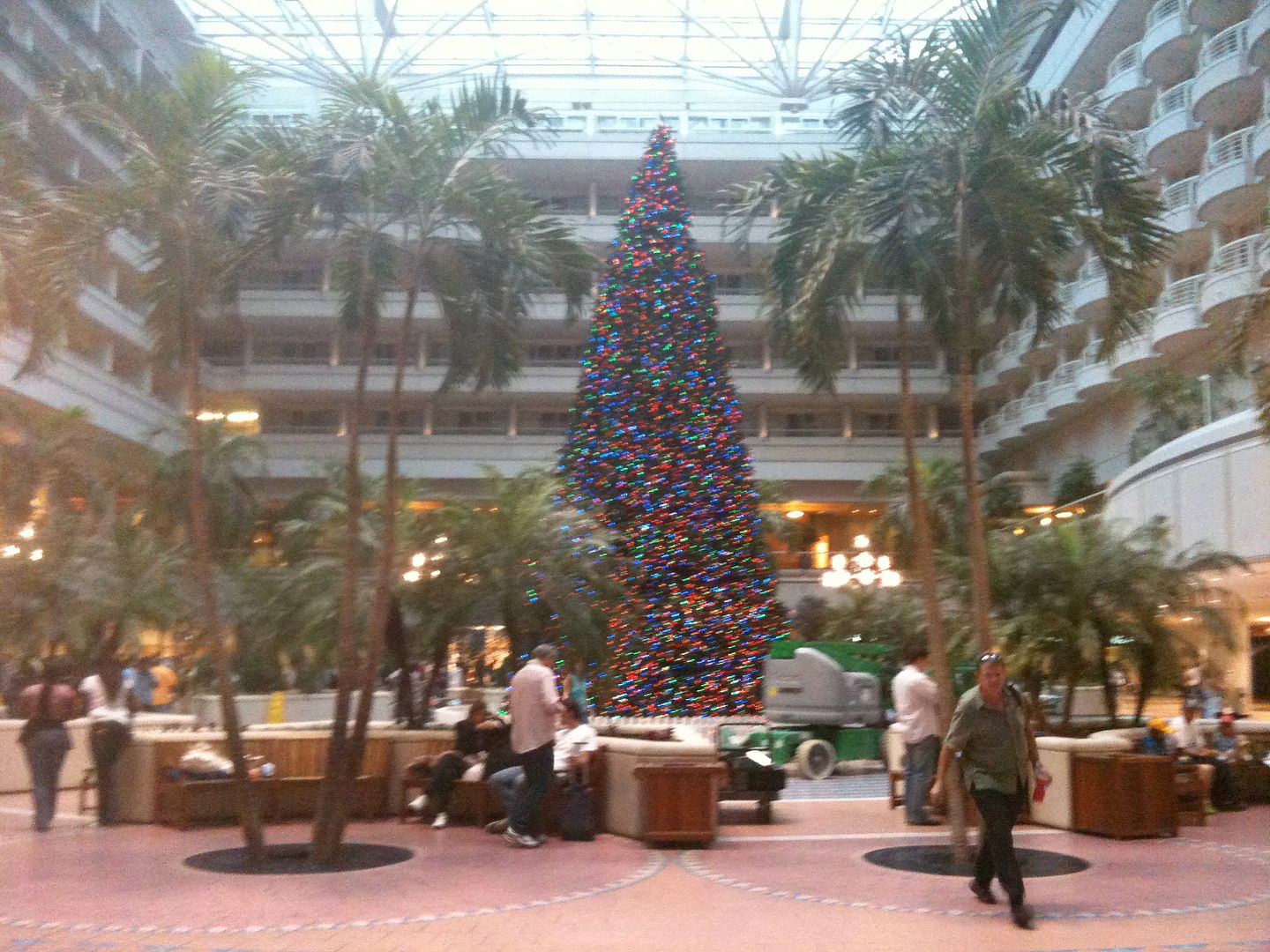
I am home from the NCTE and ALAN conferences and pretty much bubbling over with thankfulness all around — for safe travels, new friends and old friends I had a chance to see in Orlando, new books for my classroom, and great ideas.

To top it all off, I got two great bits of book news today!
My soon-to-be-released novel SUGAR AND ICE, which comes out December 7th, is on the Winter Kids IndieNext List of recommendations from independent booksellers. My editor also emailed an amazing review that will be in the December issue of School Library Journal. So, so exciting!

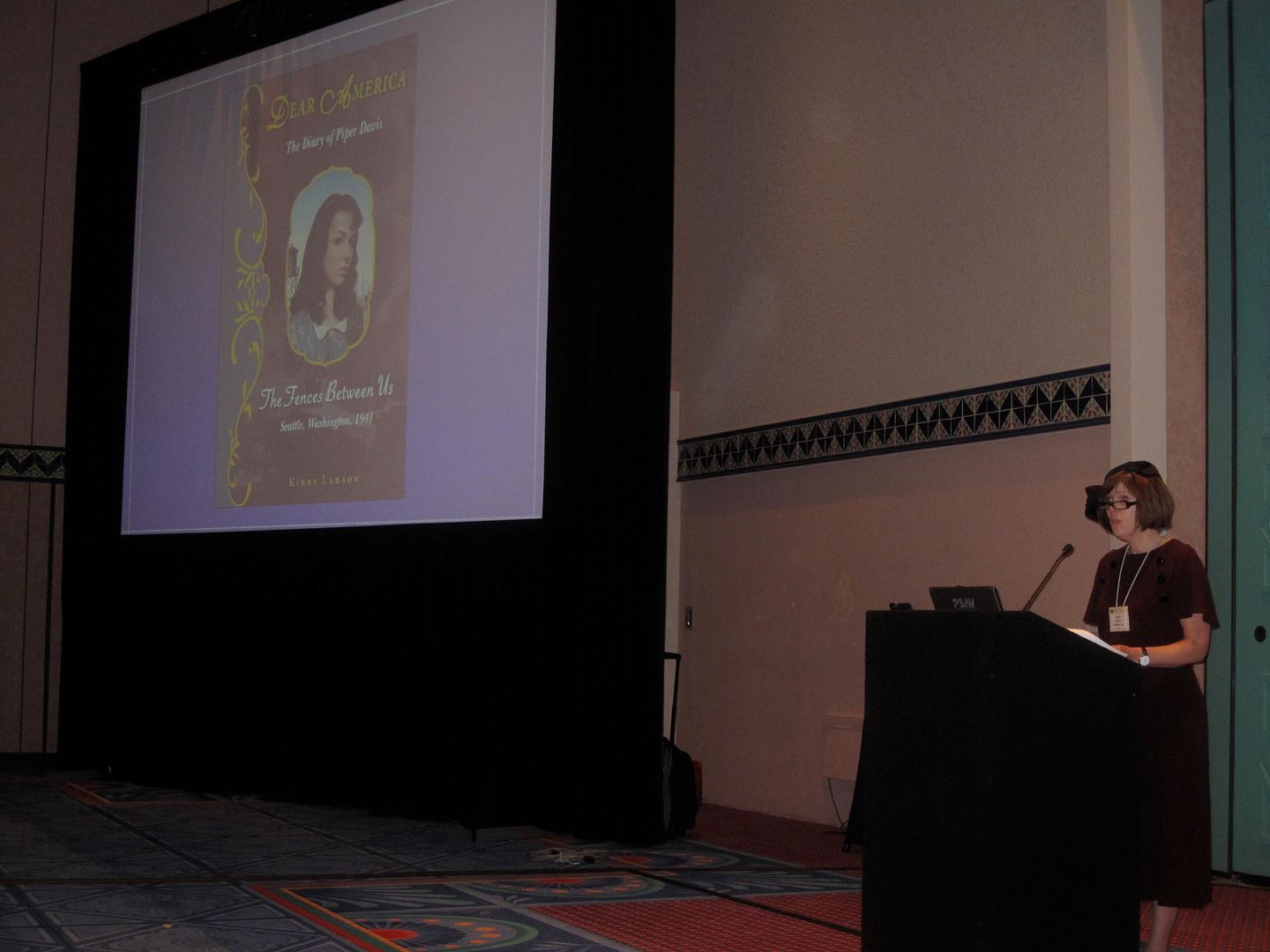
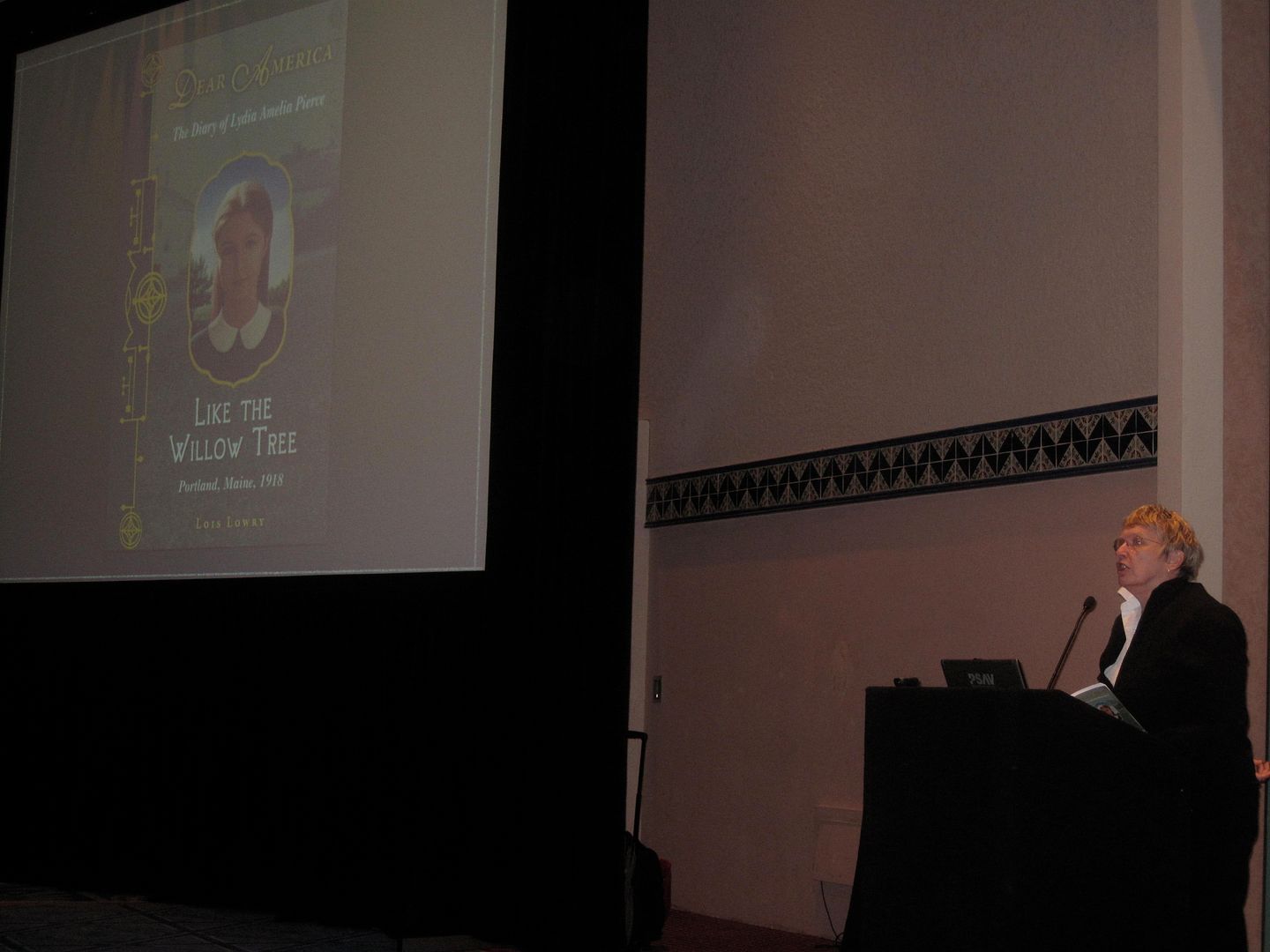
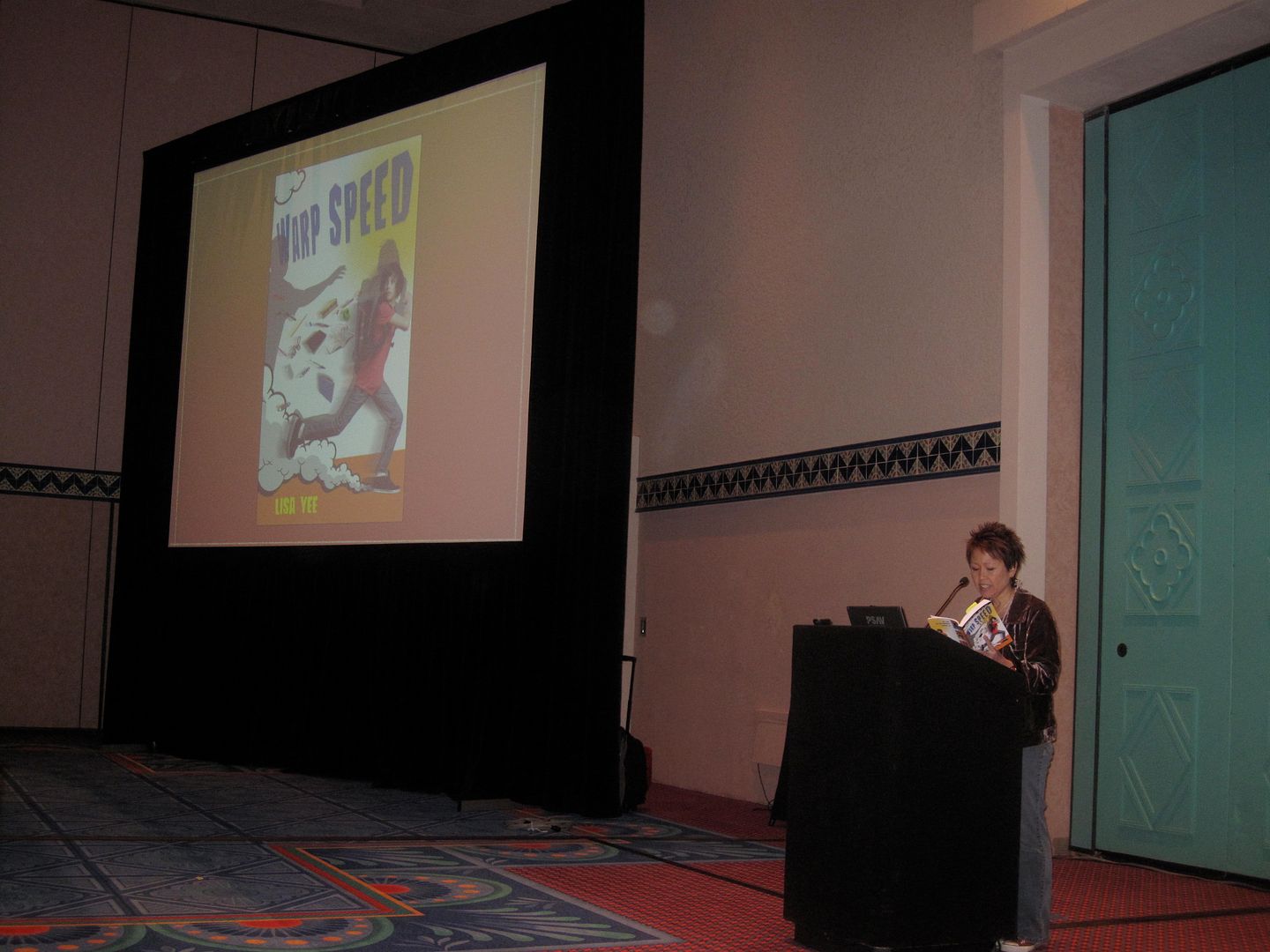
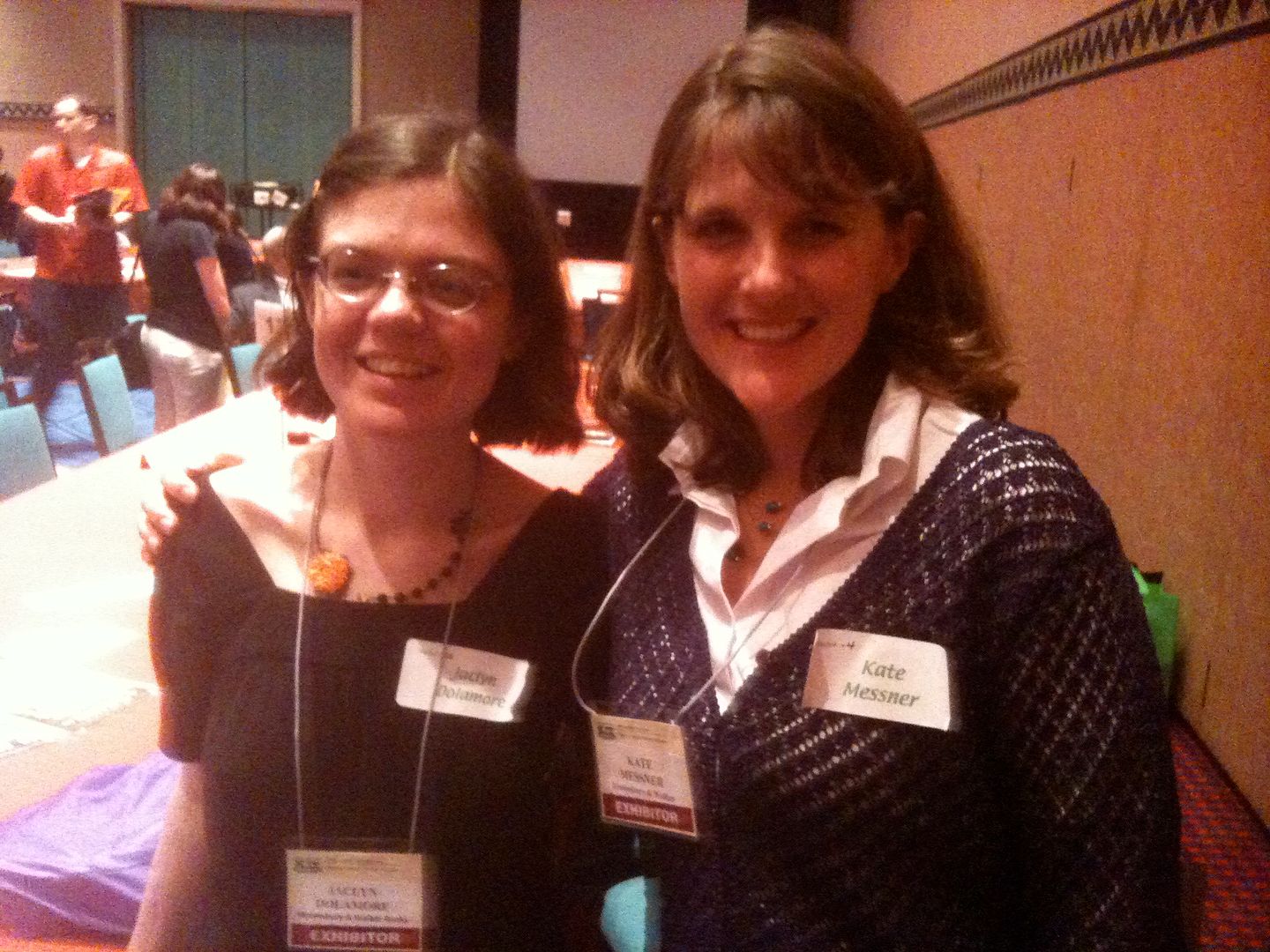
On to the NCTE and ALAN magic now. (And note that when I say "magic," I’m talking about teachers, authors, and books — not Disney!)  The four day trip was such a whirlwind, I decided a photo essay was the best way to give a snapshot of my conference.

First, leaving home… and it was snowing Friday morning.

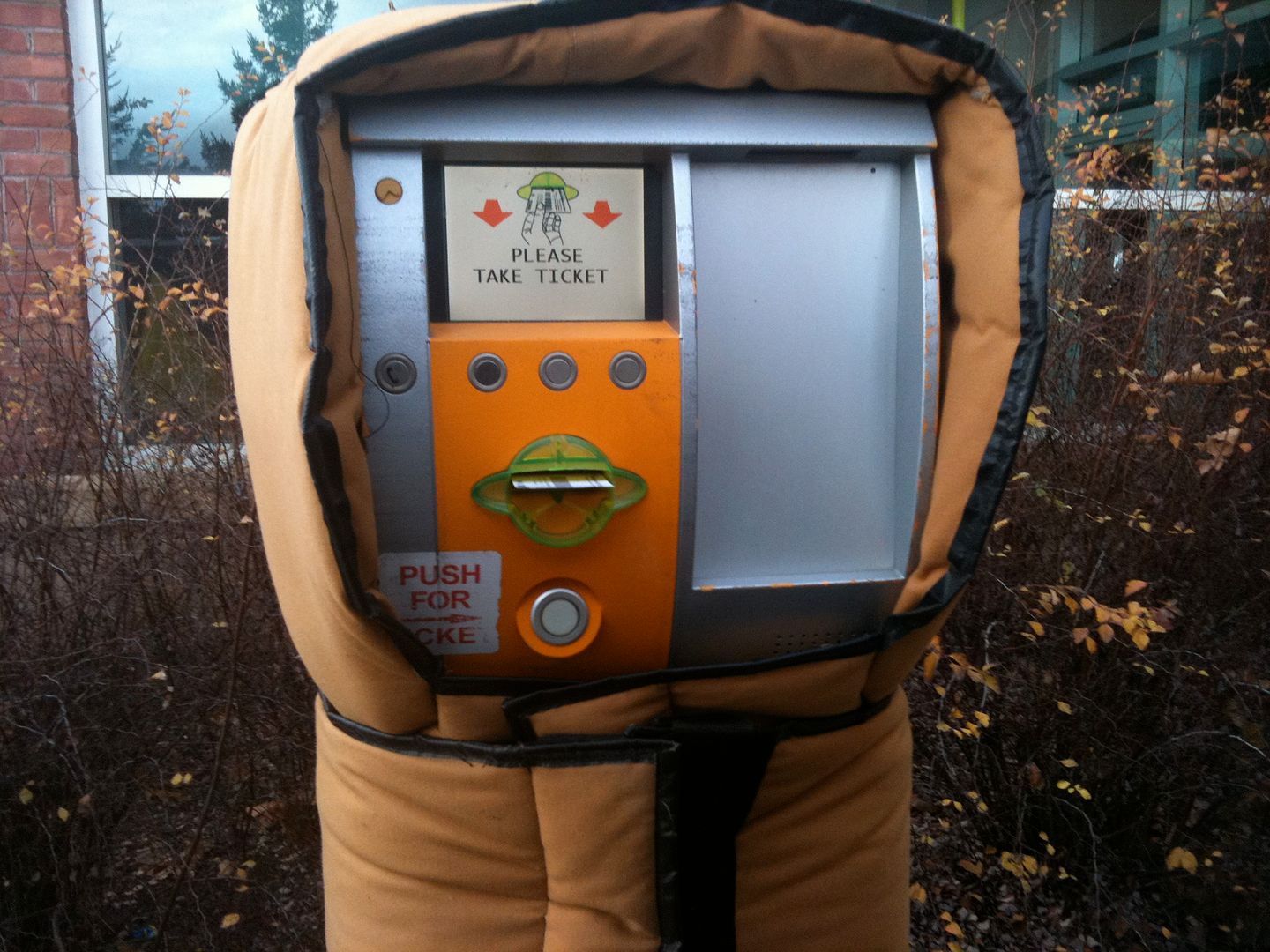
This is the machine that gives you your parking ticket at the Burlington Airport. Yes, it is wearing a coat. I went from that…

…to this.

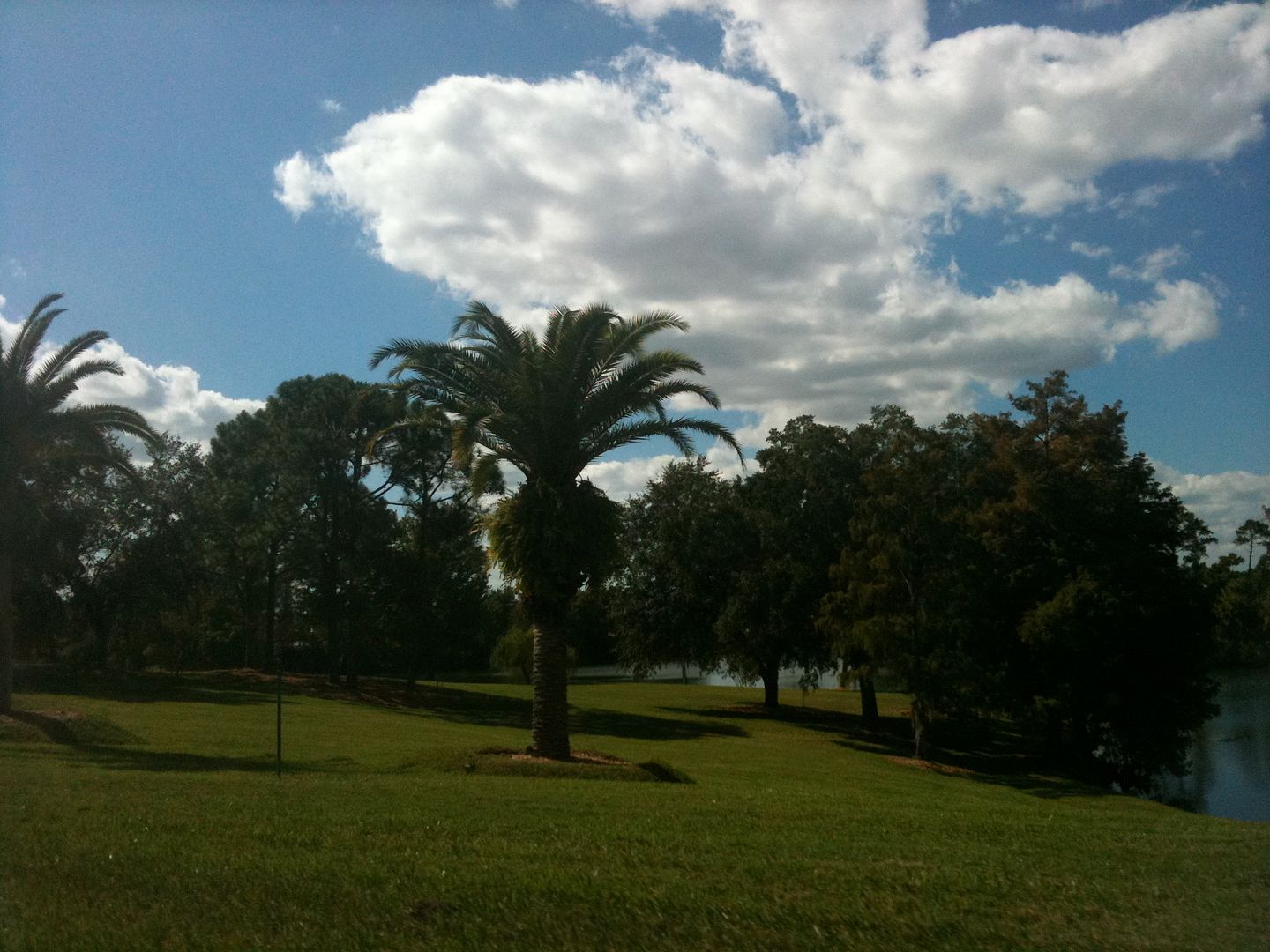
Okay…so this view from the cab was about the only time I saw the outside of a convention center. But it was still pretty.

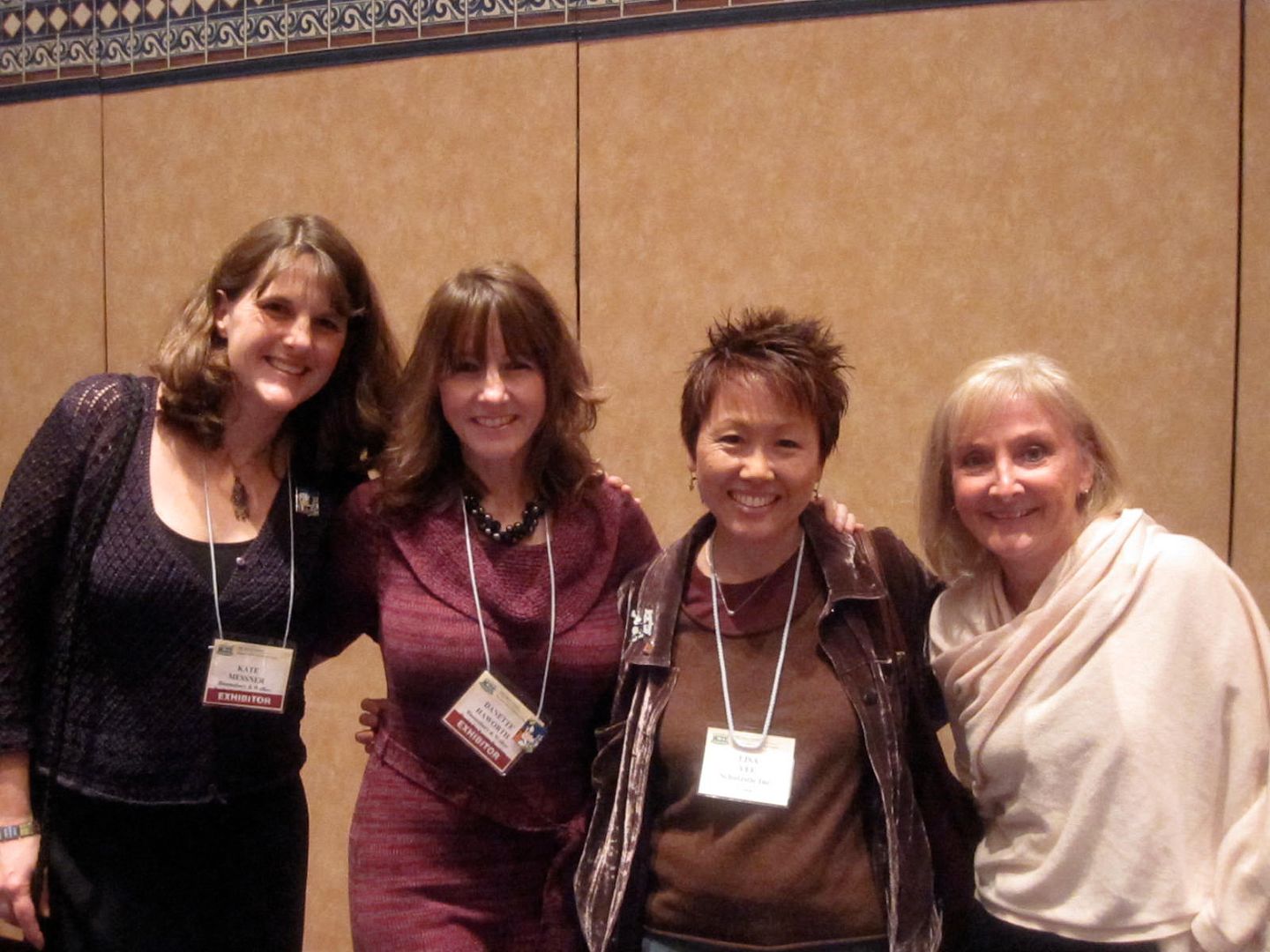
Friday afternoon, I had a chance to wander the exhibit hall for a little while before introducing a session with Wendy Mass & Danette Haworth. I was delighted to see so many friends — and friends’ books!


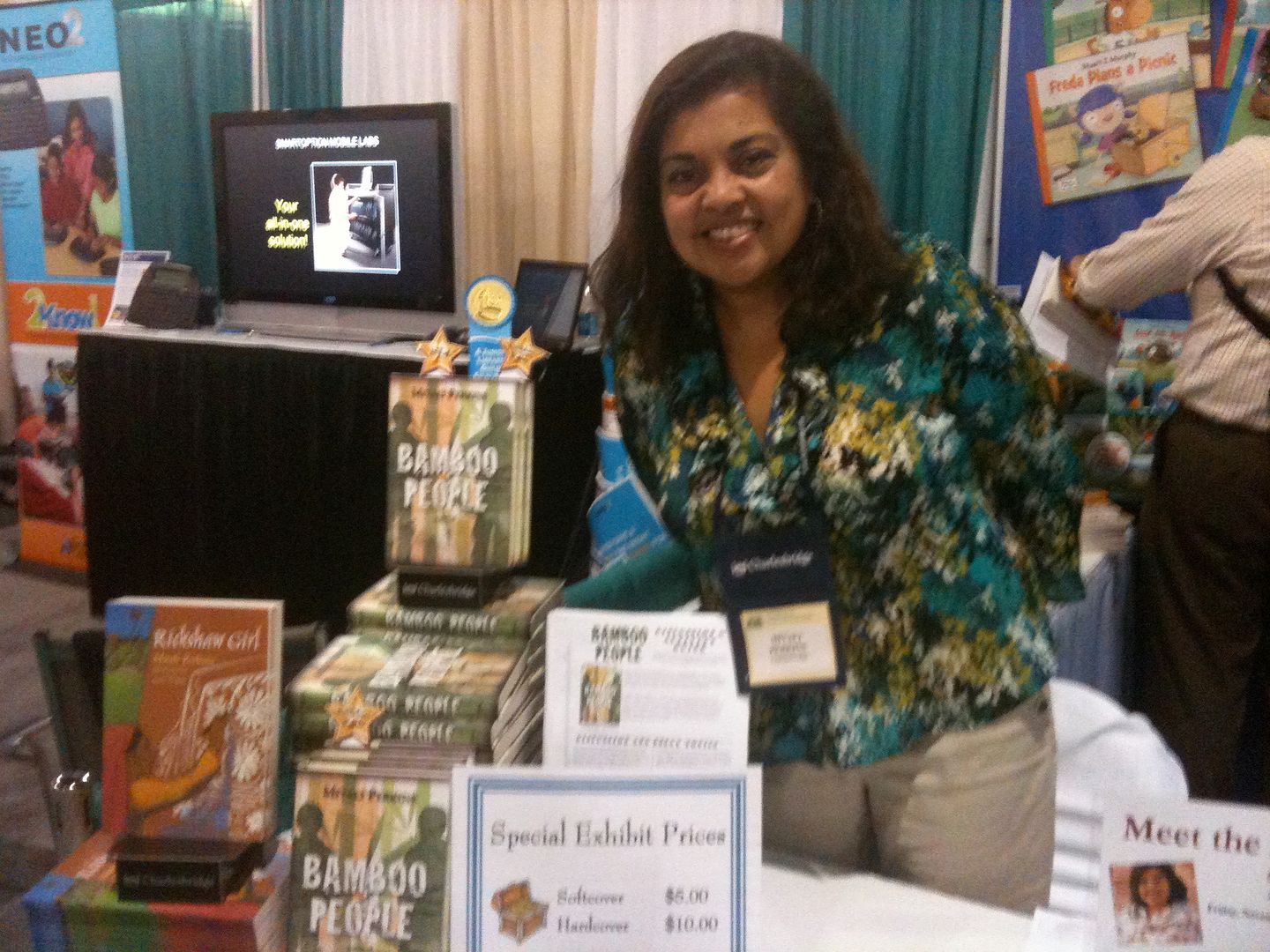
Here’s Mitali Perkins signing BAMBOO PEOPLE and RICKSHAW GIRL at Charlesbridge.


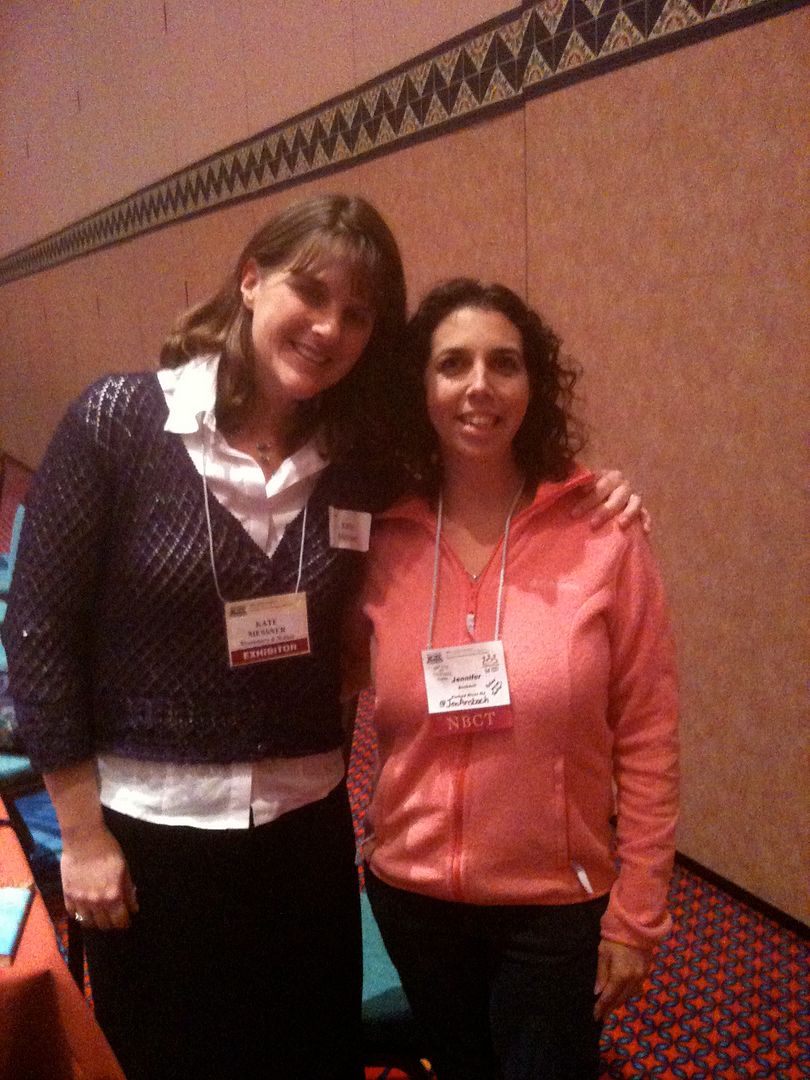
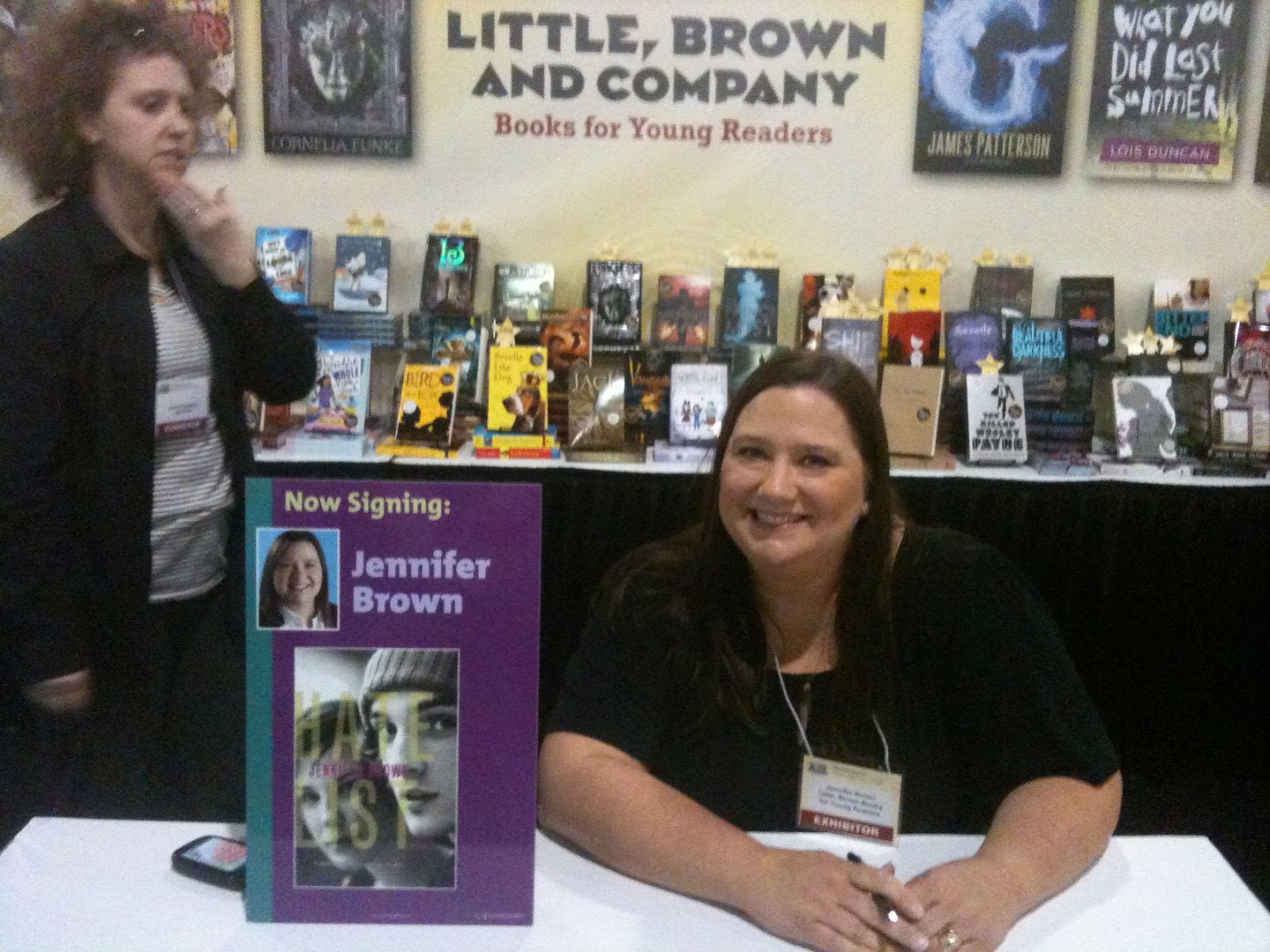
I found Jennifer Brown signing HATE LIST at Little, Brown. I’m looking forward to her new book, THE BITTER END.


And look~ Tammi Sauer’s good friend Bernadette was there!


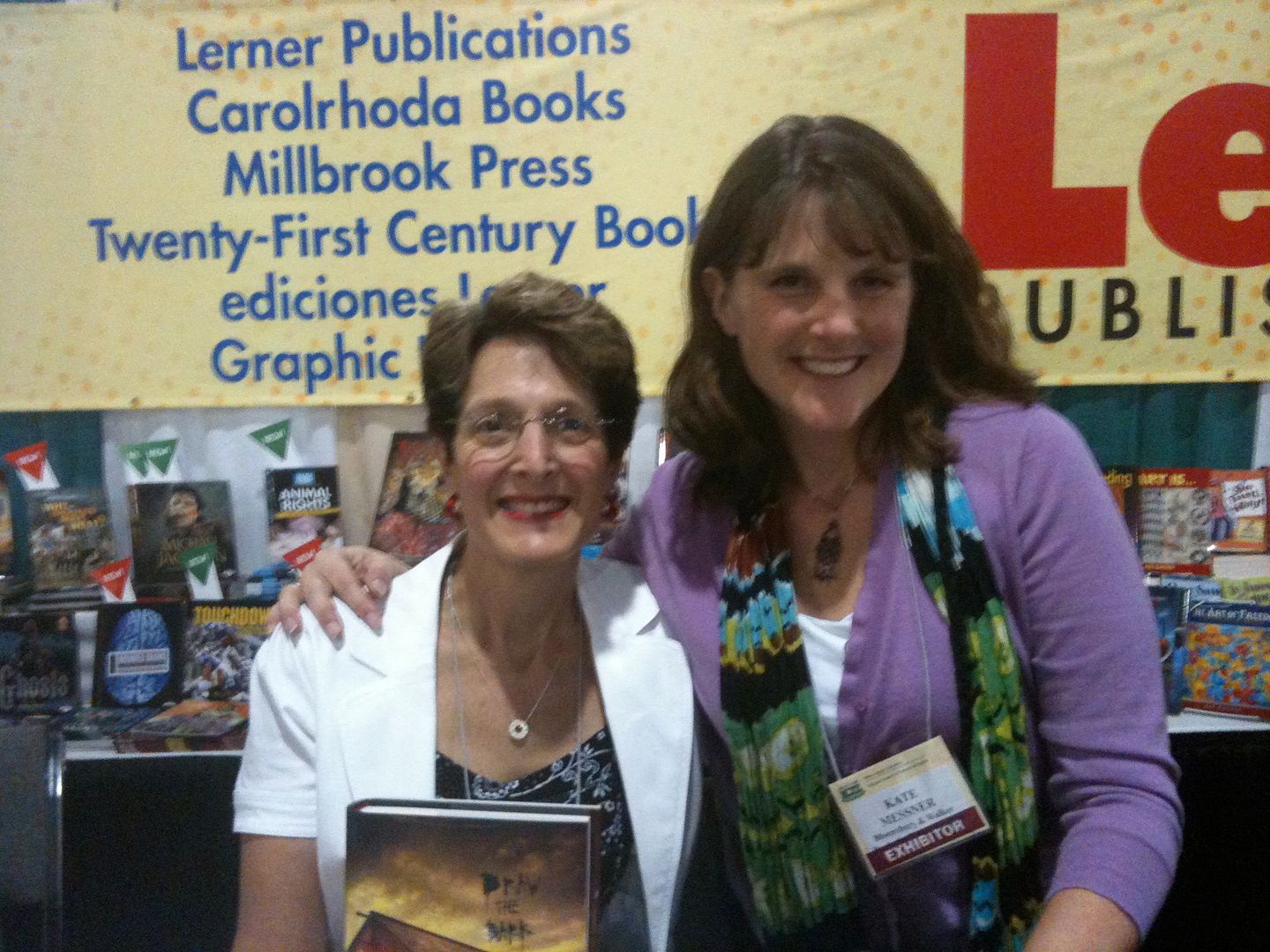
Here’s Ilsa Bick and me. I’m smiling because I have a signed copy of her new book, DRAW THE DARK, which I fear I shall need to read with ALL the lights on!

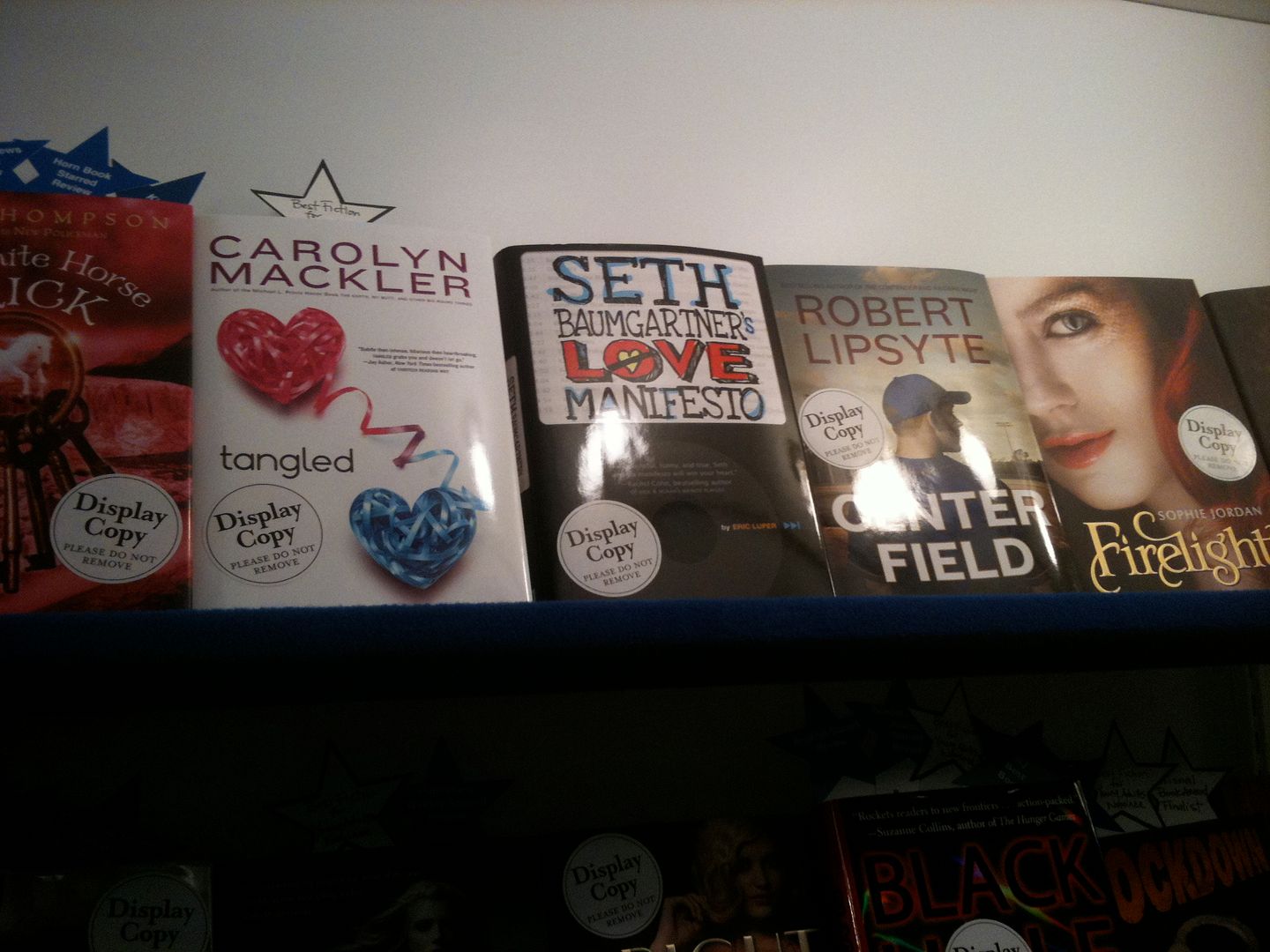
I spotted books from two of my critique partners – Eric Luper’s SETH BAUMGARTNER’S LOVE MANIFESTO at the Harper Collins booth…

…and Loree Griffin Burns’ THE HIVE DETECTIVES at HMH.

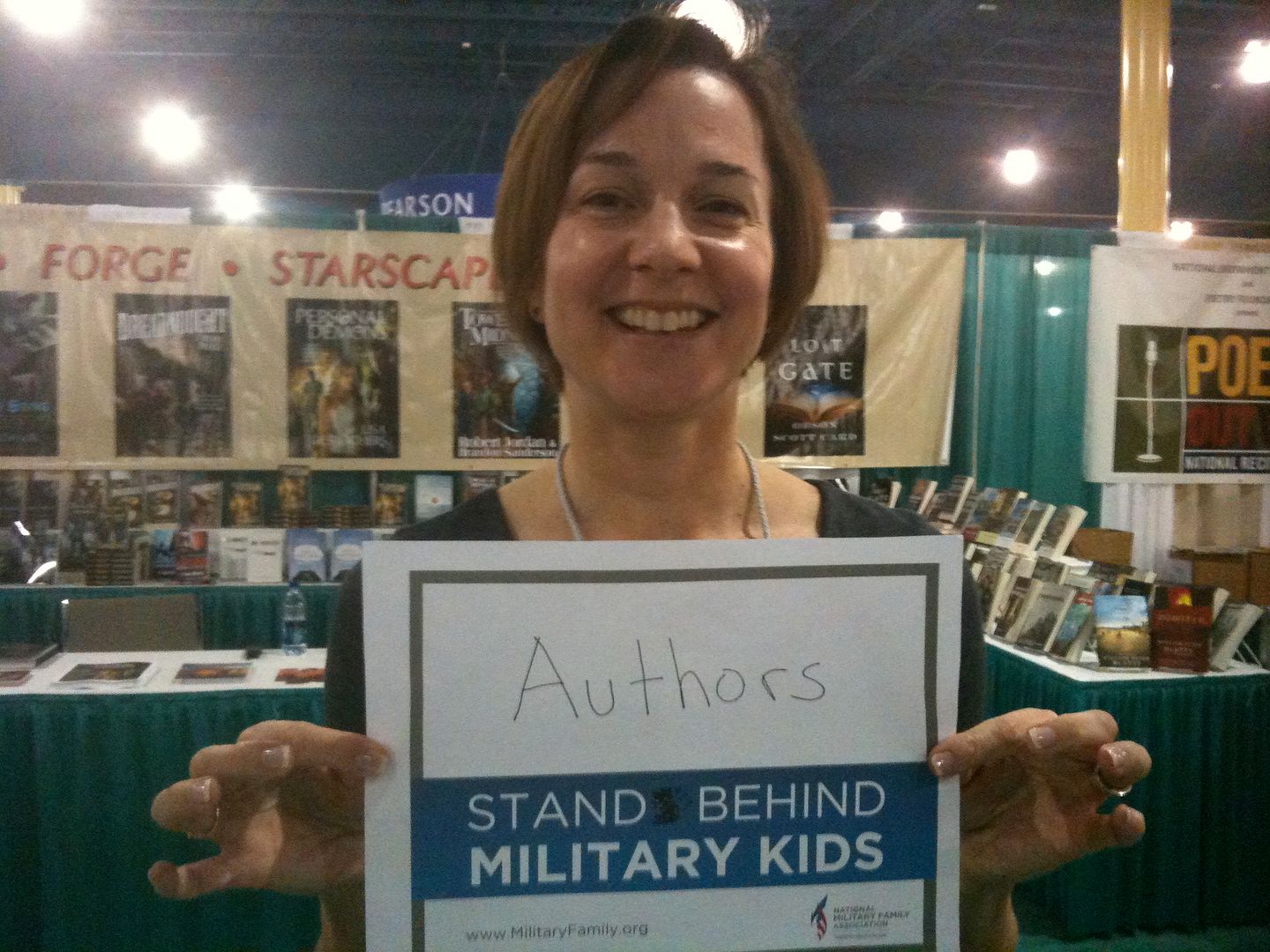
Sara Lewis Holmes, the author of OPERATION YES, had a great idea at the conference.

She took photos of authors with this sign, to be uploaded to militaryfamily.org to show military kids that the nation supports them. You can go to the site and upload your picture if you’d like, too!

I also tracked down   – aka Teri Lesesne.  She signed my copy of READING LADDERS and gave me this:

SpeakLoudly.org is a website and group of people speaking up against book challenges. They’re good people, doing important work for kids’ right to read – and I’m wearing my pin proudly.

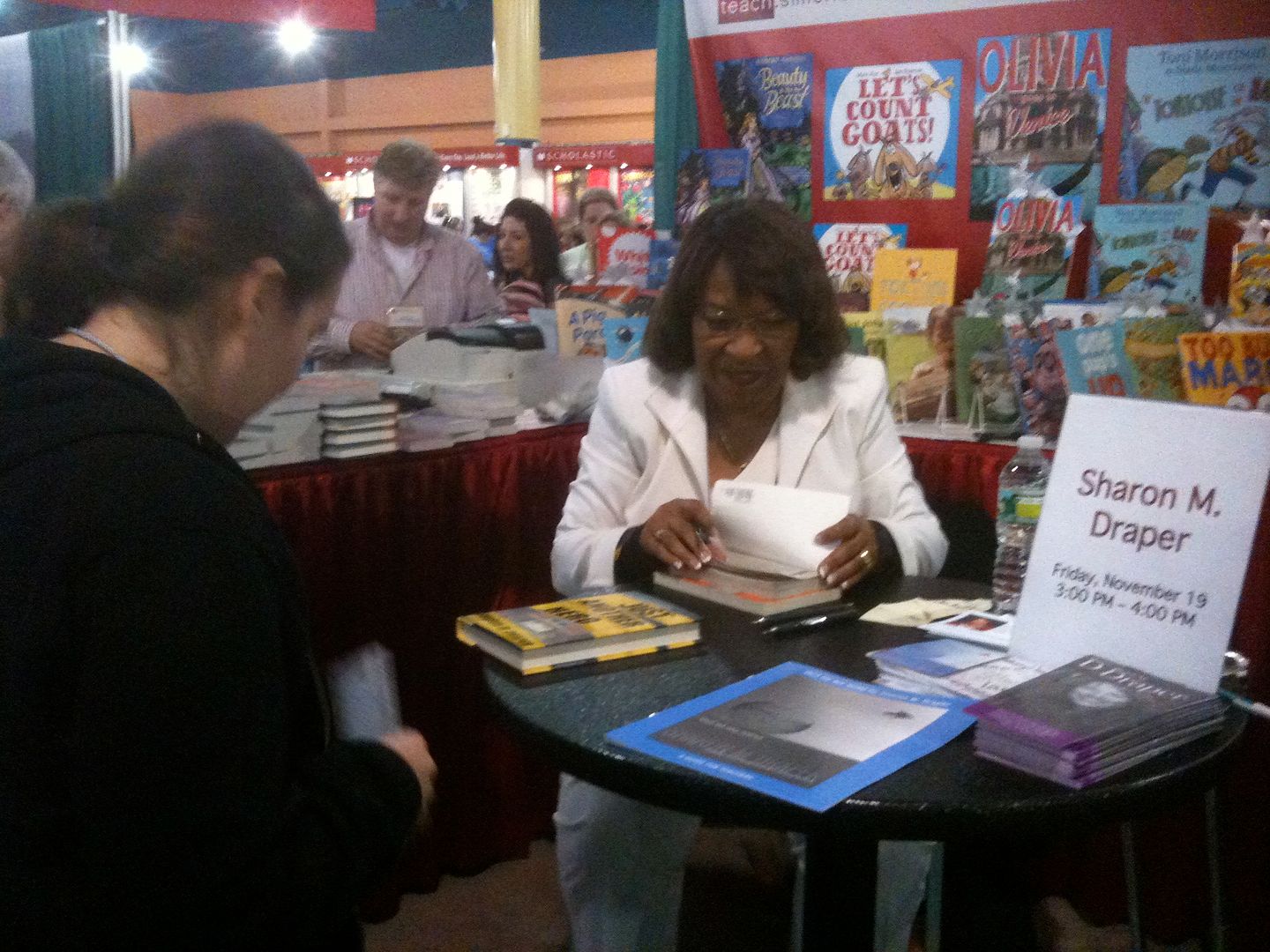
Here’s Sharon Draper, signing one of my favorite 2010 books, OUT OF MY MIND.

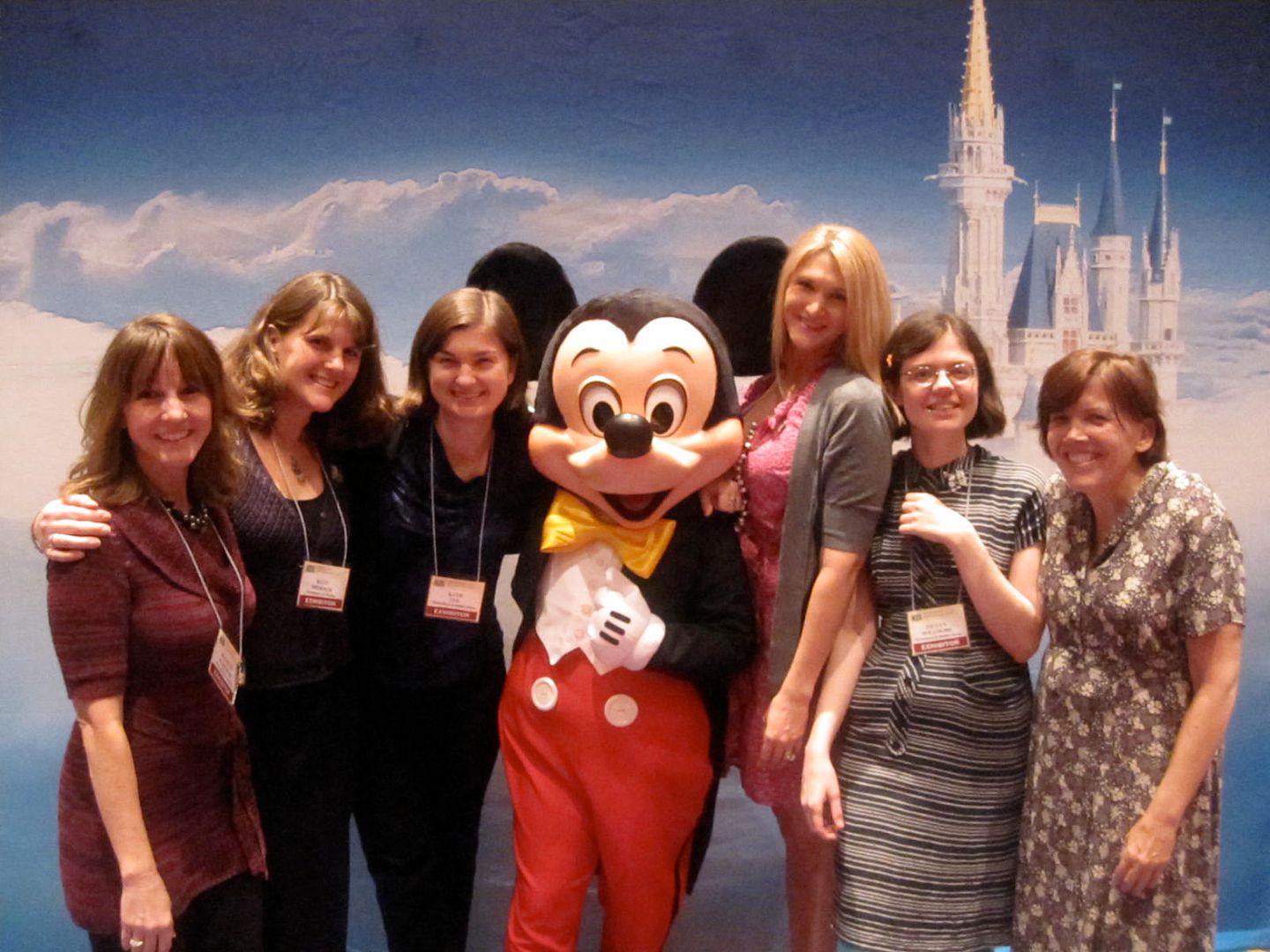
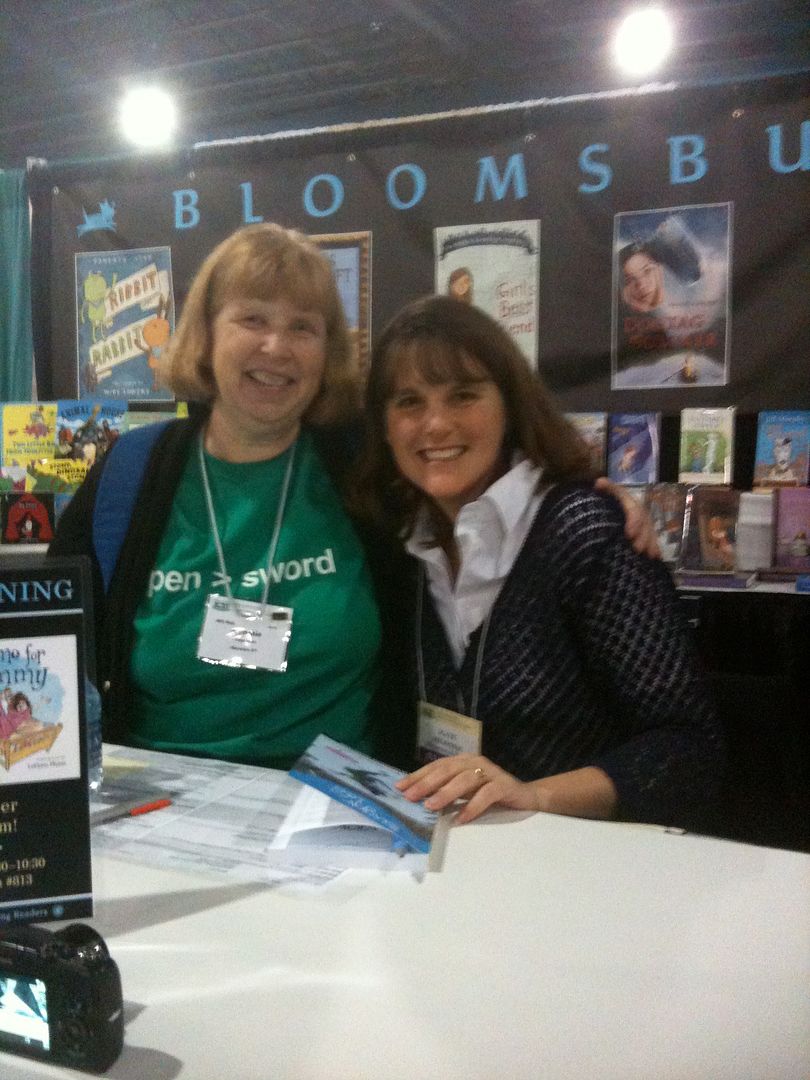
This is the dauntless Beth Eller, Bloomsbury/Walker school & library publicist and one of my heroes, along with Katie Fee. They set up the booth, ran the signings, shuttled authors to events, and fed me when I was hungry. (Thank you, Beth & Katie! I am waving & throwing kisses.)

They also arranged a lovely authors & educators dinner that ended with this…

…as if I’d needed a reason to love them more.

On Saturday morning, I spoke on a panel about Skype author visits and then hustled back to the exhibit hall. Some friends stopped by my SUGAR AND ICE and GIANNA Z. signing at the booth, including one who was a big surprise!

This is Betsy Lynch, the teacher with whom I did my student teaching 15 years ago!  She lives and works in Florida now and came by to say hi.  Fellow teaching writer Cindy Faughnan came to give me a hug, too –

And so did my Twitter-teaching-book-recommending-writing friends Donalyn Miller and Paul Hankins.

Donalyn is the author of THE BOOK WHISPERER, an amazing teacher resource about getting kids excited to read.

And Paul is the Indiana teacher who runs the groundbreaking Raw Ink Online – a Ning where his high school students talk books among themselves and with YA authors.

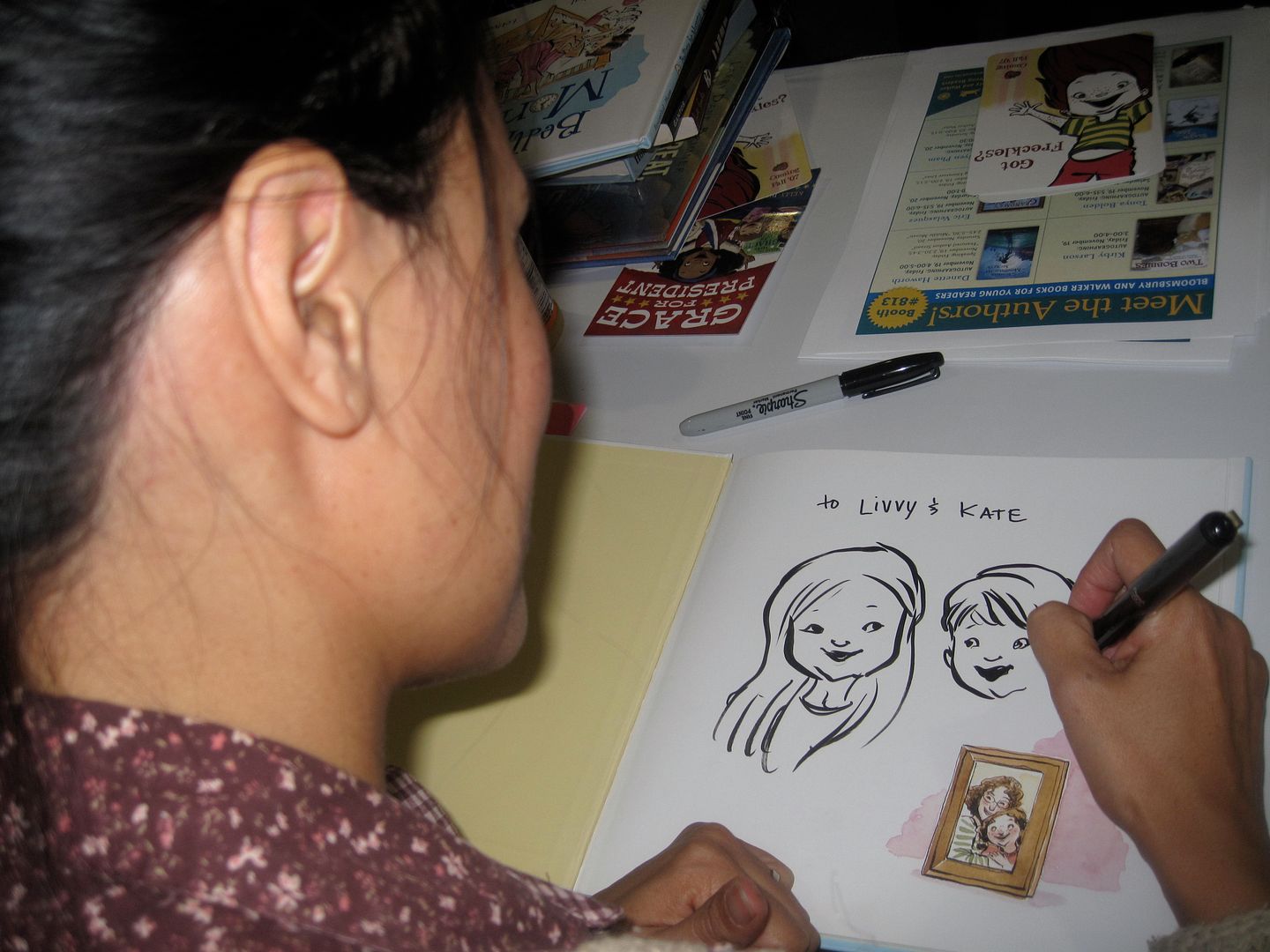
When it was time to sign books, I got to sign with talented illustrator Leuyen Pham, who actually sketched each child for whom a book was being signed if there was a photograph available.  I could have sat there watching her draw with her Japanese brush pen for hours.

Isn’t she amazing?

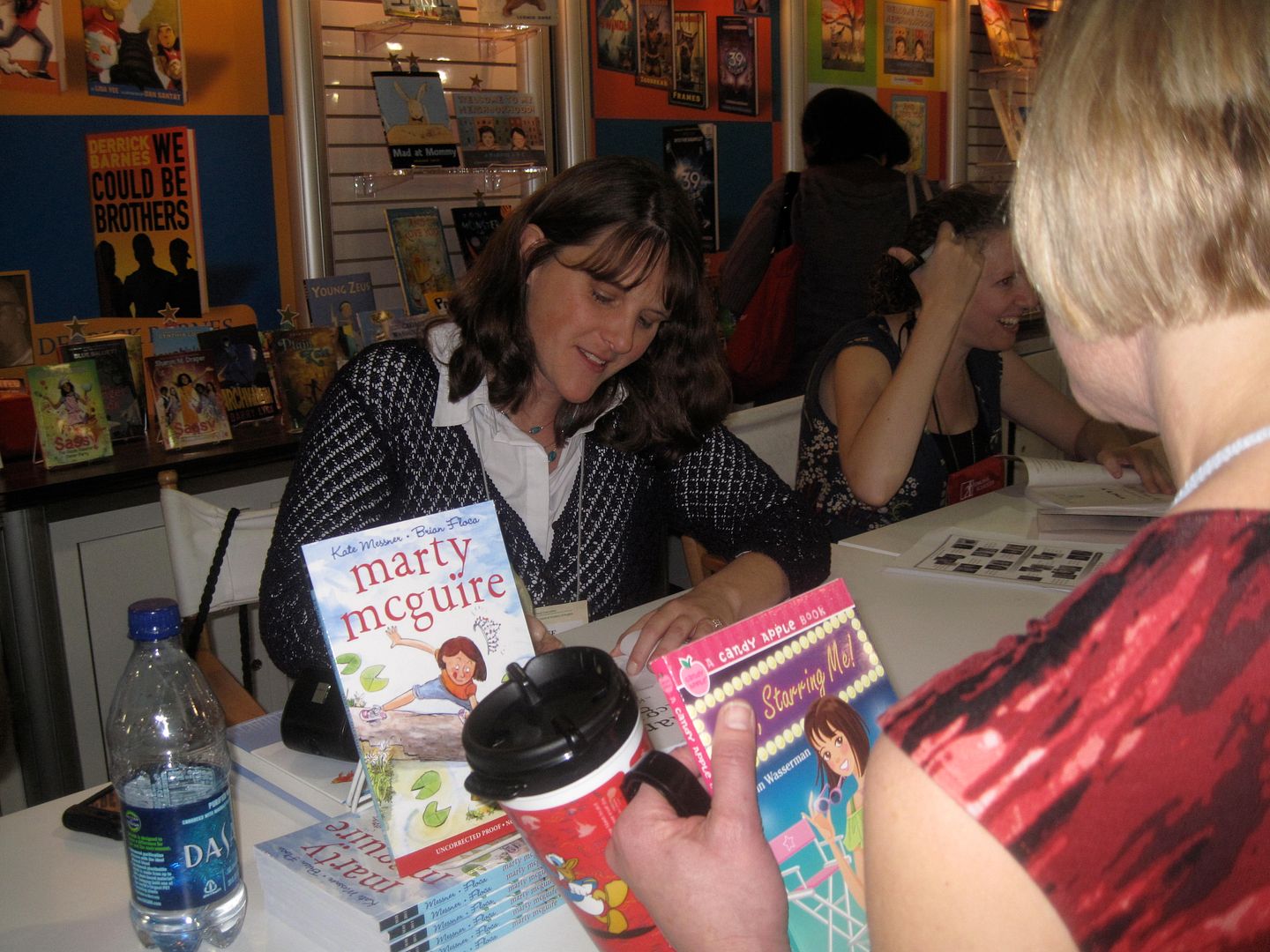
I also got to spend some time at the Scholastic booth, signing advance reader copies of my new MARTY MCGUIRE chapter book, illustrated by Brian Floca and coming in May.

Sunday brought the Scholastic Literary Brunch, some terrific teacher time when I attended sessions and learned a ton, and the ALAN evening get-together.   I’ll share some more photos from the rest of the conference soon!

It’s a Fibonacci Day!!

I am just (literally minutes ago) back from NCTE and ALAN, which were amazing and inspiring, and I promise to post lots of pictures once I find my camera and sleep a bit.  But this post absolutely could not wait…because it’s about Fibonacci.  And as of midnight, today is 11/23 (1 1 2 3) — an official Fibonacci day!  If you’re confused, read on…

My main character in SUGAR AND ICE (coming Dec. 7, 2010)  is a math lover as well as a figure skater, and she’s working on a project on Fibonacci numbers in nature and life.  They fascinate her. They fascinate me, too (coincidentally enough), and they also fascinate Greg Pincus, a social media guy and author who has a Fibonacci book coming out with Arthur A. Levine Books down the road. Greg thought it might be fun for us to visit one another’s blogs and chat a little about Fibonacci.  Why today?  Here’s the explanation of Fibonacci numbers Claire gives her friend Tasanee in SUGAR AND ICE.

"Fibonacci. He was an old math guy who wrote about this sequence of numbers." Claire pulled a notebook out of her bag and flipped to her first page of notes. "Look."

0, 1, 1, 2, 3, 5, 8, 13, 21, 34, 55, 89, 144, 233, 377…

"You start with zero and one, and then each number in the sequence is the sum of the two numbers before it. So zero plus one is one. Then one plus one is two. Two plus three is five. Then eight. Then twenty one. And so on."

(Claire goes on to explain that these numbers have special properties when you add them, and that they show up in nature and art.)

See why 11-23 was a good day for Greg and I to talk Fibonacci? I’ll let him pick up the story now…

I’ve always loved numbers and patterns much more than I loved hardcore, computational math, so when I first encountered the Fibonacci sequence in school, it stuck with me. It’s not that I used the sequence in my day-to-day student life, but for me there was an elegance… a simplicity… dare I say a poetry in the way the numbers worked together.

The Fibonacci sequence rarely factored into my adult life or my writing career as a screenwriter/poet either. But I never forget about it… and a few years back I had what I’d call a Reese’s moment: I combined the sequence with poetry and thought they tasted great together.

Many people had made that combo before me, I know, but I ended up focusing on a simple combination of the two: six line poems where the syllable count follows the Fibonacci sequence (lines of 1, 1, 2, 3, 5, and 8 syllables for a total of 20 syllable poems). I called the poems Fibs and would often begin my writing day by creating a few.

The form is definitely not easy, but the restrictions helped me focus on the importance of word choice. Eventually, I decided to share the admittedly geeky form with folks via my blog (http://gottabook.blogspot.com/2006/04/fib.html) to celebrate National Poetry Month. I invited others to create Fibs… and something entirely unexpected happened.

It turns out that the Fibonacci sequence and the golden ratio derived from it have stuck in a lot of people’s heads. Some people use Fibonacci often: musicians, actuaries, stock traders, and knitters among them. A lot of other people enjoyed mixing poetry with something else that sparked them. Fibs spread far and wide and fast.

Within two weeks of my original post, nearly 1,000 poems had been left in the comments of my blog, hundreds and hundreds of people worldwide were writing Fibs and posting them on their own sites, and the story of the viral spread of this odd poetic form had landed me in the New York Times (http://www.nytimes.com/2006/04/14/books/14fibo.html).

A second unexpected thing happened, too: in large part because of the excitement, I got a book deal. I’m currently working on a novel – a novel!!!! – called The 14 Fabulous Fibs of Gregory K. for Arthur A. Levine Books (an imprint of Scholastic) that includes Fibonacci, Fibs, and much more.

Despite my own excitement when I first discovered the sequence, I had never realized that if you look around, Fibonacci is everywhere. Not just visible in nature or in, say, the Twitter design (http://mashable.com/2010/09/29/new-twitter-golden-ratio/) but invisibly lurking somewhere in the back of a whole slew of brains, planted there by a teacher or a book or a random encounter with the sequence.  And frankly, I think that’s poetic, too.

Isn’t that awesome? I love Greg’s enthusiasm for this topic & can’t wait for his 14 FABULOUS FIBS book!

If you want to chat more about Fibonacci numbers (and read a short related excerpt of SUGAR AND ICE) head on over to Greg’s blog, GottaBook, later on for my guest post there.

Where to find me at #NCTE10

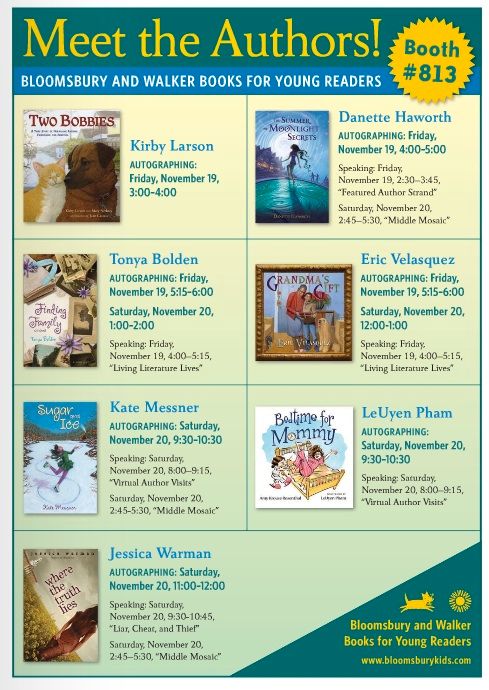
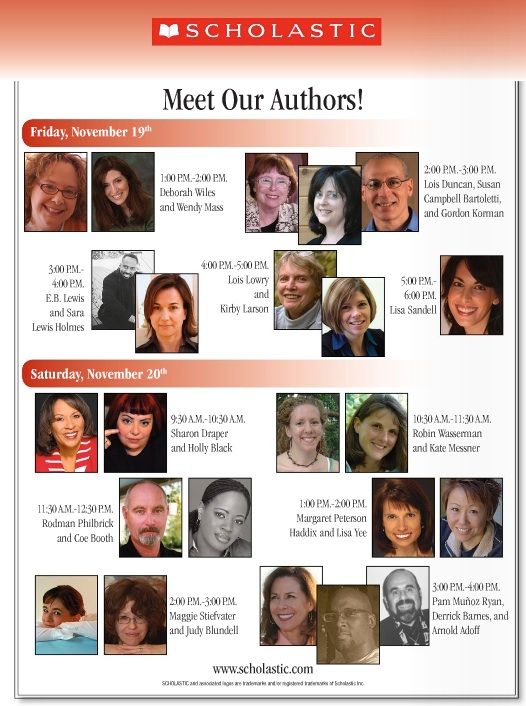
I’ll be leaving bright and early Friday morning for the National Council of Teachers of English conference, where I’ll be through Monday.  Here’s my schedule, in case you’ll be there, too, and would like to see one of my presentations, have a book signed, share your chocolate, or just say hello.

I’m wearing my teacher-hat on Friday, and I’ll be introducing two author friends who are speaking at 2:30 in the Acapulco Room — Wendy Mass and Danette Haworth. Both are brilliant writers and witty, wonderful people – I can’t wait to hear their talks.

On Saturday, I change gears and wear my author hat for a full day of presentations & book signing.

Saturday:

8:00-9:15
Virtual Author Visits Presentation
Coronado Ballroom S

9:30-10:30
Signing THE BRILLIANT FALL OF GIANNA Z. and SUGAR AND ICE at Bloomsbury/Walker – Booth #813

10:30-11:30
Signing ARCs of MARTY MCGUIRE (my chapter book illustrated by Brian Floca!) at Scholastic – Booth #312

(Note: My agent noted that my first signing ends at 10:30, the same time the second one begins.  She suggested I wear roller skates.  I am hoping that NCTE has teleporting capabilities in the convention center. Or fireplaces with floo powder in each publisher’s booth.)

2:45-5:30
Middle Level Mosaic – Presentations & Author Speed Dating event
Coronado Ballroom L

Sunday:

5:30-7
ALAN cocktail party
Fiesta 6 Ballroom
(How could this not be fun? It is full of authors and teachers and is in the Fiesta  ballroom?!)

Monday:

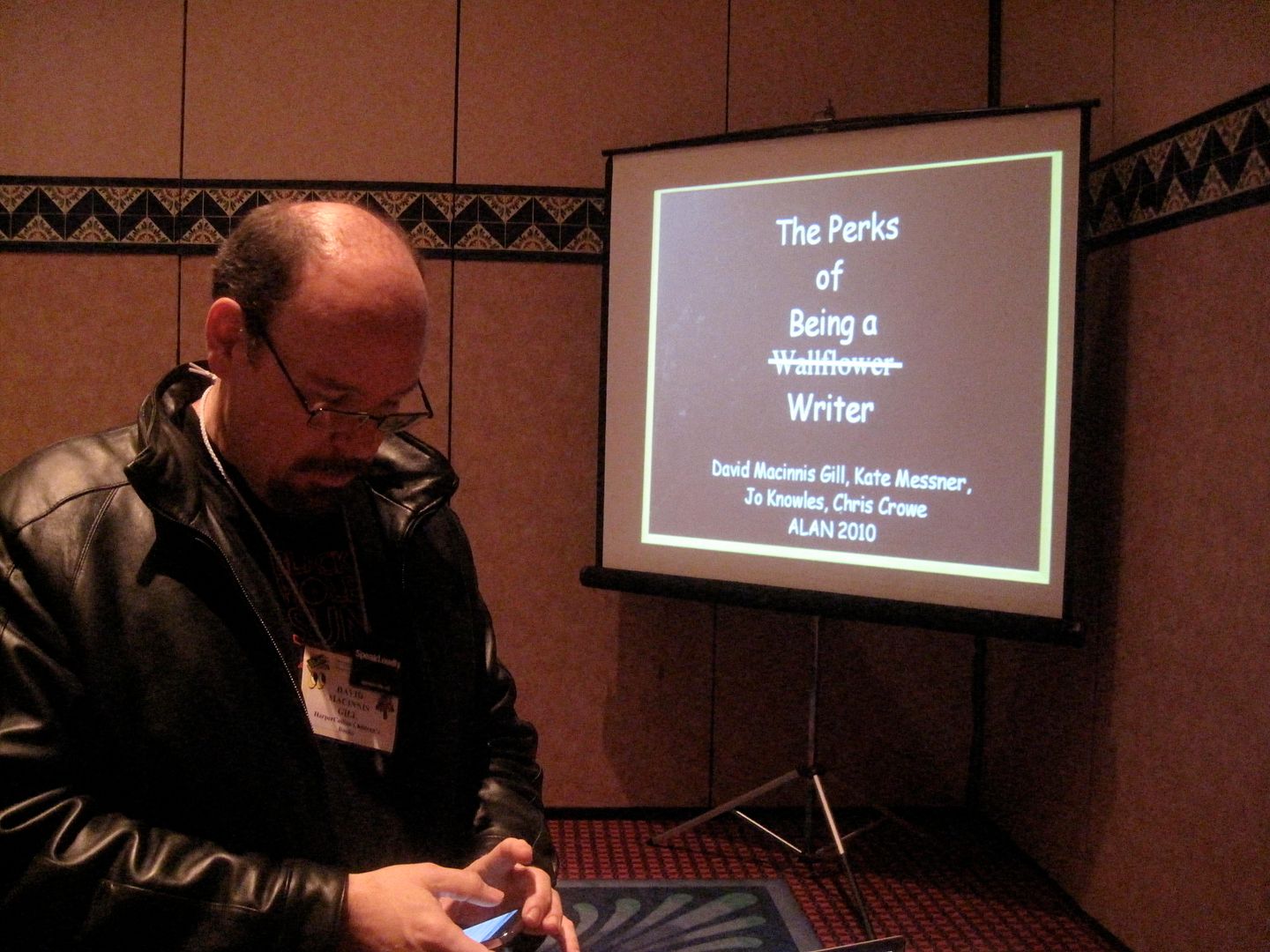
ALAN Breakout Session: The Perks of Being a Wallflower Writer
I’m on a panel with David Macinnis Gill, Jo Knowles, & Chris Crowe
12:30-1:10

Hope to see some of you in Orlando!

How To Make a Really Good Outline (for Jay)

Dear Jay-who-commented-on-my-blog-post-about-outlines-today,

I am guessing, based on your slightly frantic tone when you asked how to make a really good outline, that you have a homework assignment due soon that involves an outline. But you didn’t mention what the outline is for.  Is it for a short story? A persuasive essay? A book review?  What kind of outline you need kind of depends on what you’re writing.  For some projects like traditional research papers, a traditional outline might work best. Something like this:

I. Really Big Idea
     A. One idea about that big idea
           1. Detail or example to support idea A.
           2. Another one…   and so on.

Or it might be that some kind of a web would be better.  When I was working on one of my mysteries, I put the Star Spangled Banner in the  middle of an idea web and then created bubbles branching out from it, showing who was interested in the flag, who the suspects were, who the investigators were, what the clues were, etc. It gave me a visual picture of relationships to the flag that a traditional outline might have missed.

For other projects, I might not use an outline at all. 

But you probably have to use one, right?  Otherwise, you would have been writing instead of googling outlines.  Since I don’t know what you’re trying to write, I’m going to toss a bunch of planning tools at you in the hopes that you find the right one in the pile.  Fair enough?

These are all from the Read-Write-Think website from NCTE and IRA. It’s full of resources and is a great place to go when you need help with this kind of thing.

BioCube Organizer – For when you’re summarizing or writing a biography
Circle Plot Diagram – For when you’re writing or talking about a story with a circular structure
Compare & Contrast Map – Great for those compare-contrast essays
Essay Map – This one can be used for almost any essay.
Story Map – To get you thinking about & planning elements of a narrative – also good when you have to analyze a story.
Interactive Venn Diagram – Another tool for compare-contrast kinds of essays.
Persuasion Map – Great for persuasive essays.  Or when you want to convince your parents to let you have a friend over.
Note Taker – Helps you take notes for a research project & then organize them.

Good luck!

COUNTDOWN by Deborah Wiles

Another book we’ve enjoyed in the Messner house lately…

I absolutely loved COUNTDOWN by Deborah Wiles. Franny’s coming-of-age story, set against the backdrop of the Cuban Missile Crisis, is the best kind of historical fiction — firmly rooted in the feelings and details of a time period but with young characters that feel as real and modern as any kid next door. Mixed in with the novel’s main plot line are many images, cartoons, quotes, and sidebars that provide a greater context for the story, and these are fascinating.

I read COUNTDOWN as a before-bedtime read-aloud with my nine-year-old daughter, and we both found the documentary elements to be interesting (though if pressed, I’ll have to admit that we skipped a few of them when Franny’s story was getting really good!) I suspect we’ll return to those later on. In addition to being a great snapshot of that time in October 1962, COUNTDOWN is also a touching, funny story about changes and family, fear and friendship. Highly recommended – and I hope the documentary elements won’t cause people to overlook it as a read-aloud. It’s a great one!

Editing to add…   interviewed Deborah Wiles in her Author’s Tent blog series recently.  Here’s the link! (Thanks, Melodye!)

SUGAR CHANGED THE WORLD by Marc Aronson and Marina Budhos

One of my teaching goals this year has been to promote nonfiction more actively to my classroom of 7th grade readers.  Last summer at ALA, I made it a point to have more nonfiction signed to my students for our classroom library, and I’ve been book-talking those titles more frequently as well. The latest book I’ll be recommending is just out this week from Clarion Books…

SUGAR CHANGED THE WORLD by Marc Aronson and Marina Budhos is a fascinating and compelling work of narrative nonfiction that looks at the history of sugar, or rather, the history of the world as it was shaped by sugar. This work of narrative nonfiction starts out with two personal stories about the authors’ ancestors and the way sugar shaped their families’ journeys, but then the camera pulls back to reveal the truly remarkable impact the sweet stuff has had on the world, the spread of slavery, and the exchange of ideas about freedom that would ultimately put an end to it. Fascinating sidebars tell stories that don’t make it into history textbooks — like the one about Palmares, the 17th century Brazilian community of escaped sugar plantation slaves that flourished in the mountains beyond the fields of cane. Extensive back matter includes a timeline and an essay on the research & writing process that the authors used in creating this beautifully crafted book.

PLAIN KATE by Erin Bow

I am woefully behind in my book-blogging, but I finished this book over the weekend with a cup of tea clutched in my hand and the best kind of character-worry in my heart…dying to find out how it would all end.

I was lucky enough to hear Erin Bow read from PLAIN KATE at the Scholastic Literary Brunch last summer, and I was immediately hooked. Full of eerie fogs, bloodthirsty villagers, pale-faced witches, and powerful ghosts, this YA title lives on the dark side of fairy tale style novels. The main character, talented wood carver Plain Kate, is orphaned early on in the story and must find her way in the world, despite a witch who has stolen her shadow and thrown her under suspicion for witchcraft herself. Add to that mix the most charming talking cat you’ve ever met, and you’ve got a harrowing tale with a magical mix of laughter, tears, intrigue, and suspense. Highly recommended, especially for readers who are fans of magical YA fare like Julie Berry’s AMARANTH ENCHANTMENT, Elizabeth Bunce’s A CURSE DARK AS GOLD, and RJ Anderson’s FAIRY REBELS: SPELL HUNTER.

Note for my students… Before you ask, yes. I’ll bring my copy in for the classroom library tomorrow. 🙂

Thank you, Alburgh and Isle La Motte Schools!

I spent an amazing day with the students of Alburgh and Isle La Motte Schools today – thank you, thank you, thank you for such a wonderful welcome to your classrooms!

Ms. Dobson’s class at Alburgh Elementary greeted me with smiles, their own amazing leaf journals, and one of the loveliest homemade gifts I’ve ever seen – I couldn’t get a photo to do it justice, but it’s a walking stick with small areas carved away to make little frames for student drawings of different kinds of leaves from THE BRILLIANT FALL OF GIANNA Z.  The school purchased copies of GIANNA Z. for every student, so they were all familiar with the book and had great, thoughtful questions for me after the presentation.  Then there was lots and lots of book signing! 

Then it was down the hall to meet with middle school students who had read GIANNA Z.  Many of these students are also writers and nodded knowingly when I talked about things like revision and finding time to write with homework and other obligations. They made a beautiful, colorful leaf decoration that I’m using as a paperweight for my manuscript tonight.  Then it was off to Isle La Motte, a tiny school on an island in Lake Champlain. 

I’ve been here before in summertime when the roads are busy with tourists and bike riders, and it felt so different today in the cool, quiet of November. 

I knew when I stepped out of my car at Isle La Motte and heard a little voice shout from the playground "KATE MESSNER is here!!"  that it was going to be a special afternoon.  Moments later, on my way into the building, I was greeted and tackled hugged enthusiastically by several excited readers.

This school visit brought another first — I was served lunch made by the third and fourth graders, and guess what they cooked up? 

Eggplant Parmigiana!  If you read THE BRILLIANT FALL OF GIANNA Z. you know that’s a specialty of Gianna’s grandmother, Nonna, so they thought it would be appropriate for our visit.  (And it was delicious!)

After lunch, we talked about books and writing, and because this group included some younger students, too, I read a tiny bit of my upcoming picture book SEAMONSTER’S FIRST DAY.  The kids laughed and laughed at Andy Rash’s great illustrations and made me excited for this new book to be born. (We all have to wait a few more months, though…it’ll be released this summer.)  

I was told I needed to end my presentation just a bit early because the students had a surprise for me.  They’d collaborated on a special project in art class…

A bright, beautiful sugar maple plaque! This weekend, I’ll be hanging it up on the wall in my writing room — inspiration for stories yet to come and a reminder of the amazing readers I met today.  Thanks, Alburgh and Isle La Motte students and teachers, for a wonderful day at your schools!

A Tuesday Poem: Revolution for the Tested

Revolution for the Tested

by Kate Messner (Copyright 2010)


Write.

But don’t write what they tell you to.
Don’t write formulaic paragraphs
Counting sentences as you go
Three-four-five-Done.
Put your pencil down.

Don’t write to fill in lines.
For a weary scorer earning minimum wage
Handing out points for main ideas
Supported by examples
From the carefully selected text.

Write for yourself.
Write because until you do,
You will never understand
What it is you mean to say
Or who you want to be.
Write because it makes you whole.

And write for the world.
Because your voice is important.
Write because people are hurting
Because animals are dying
Because there is injustice
That will never change if you don’t.
Write because it matters.

And know this.
They’ll tell you it won’t make a difference,
Not to trouble over grownup things,
Just fill in the lines
And leave it at that.
Tell them you know the truth.
That writing is powerful.
Just one voice on the page
Speaks loudly.
And not only can a chorus of those united change the world.
It is the only thing that ever has.

Read.

But don’t read what they tell you to.
Don’t read excerpts, half-poems,
Carefully selected for lexile content,
Or articles written for the sole purpose
Of testing your comprehension.

Don’t read for trinkets,
For pencils or fast food coupons.
Don’t even read for M&M’s.
And don’t read for points.

Read for yourself.
Read because it will show you who you are,
Who you want to be some day,
And who you need to understand.
Read because it will open doors
To college and opportunity, yes,
And better places still…
Doors to barns where pigs and spiders speak,
To lands where anything is possible.
To Hogwarts and Teribithia,
To Narnia and to Hope.

Read for the world.
Read to solve its problems.
Read to separate reality from ranting,
Possibility from false promise.
And leaders from snake oil peddlers.
Read so you can tell the difference.
Because an educated person is so much harder
To control.

And know this.
They’ll say they want what’s best for you,
That data doesn’t lie.
Tell them you know the truth.
Ideas can’t be trapped in tiny bubbles.
It’s not about points
On a chart or a test or points anywhere.
And it never will be.

Copyright 2010 ~ Kate Messner

I shared this poem as part of my 2011 NCTE/ALAN presentations, and I’ve had many teachers write to ask if it’s okay to share with students and colleagues in the classroom. The answer is absolutely yes.  Share away!

But please do not republish it online without permission. The best way to share a copyright protected poem (or story, or article) with blog readers is to share a short quote from the piece and then link to the original post. Thanks!
SUGAR AND ICE Book Launch (and how to get a signed copy if you can’t make it!)

SUGAR AND ICE doesn’t actually come out until December 7th, but a few people have asked about getting signed copies in time for holiday gifts, so I figured I’d share the launch plans a little early. Considered yourself invited!

SUGAR AND ICE Book Launch!
When: Saturday, December 11th from 3-5pm
Where: The Bookstore Plus – 2492 Main St. in Lake Placid

I’ll be signing books, visiting with readers, and sharing some cookies as part of Lake Placid’s Holiday Stroll. The Bookstore Plus felt like the perfect place to launch this book because a) it’s one of our family’s favorite indies and b) it’s right up the street from the Olympic Center where much of SUGAR AND ICE takes place.

If you can’t make it…I can’t mail cookies (they’d be too crumbly) but you can still get a personalized, signed book.

SUGAR AND ICE Virtual Book Launch through The Bookstore Plus!
Call 518-523-2950 by Dec. 10th to order a personalized, signed copy.


The bookstore has a special order form for our SUGAR AND ICE launch and will take down all your information about how you’d like the book signed. When I come for the launch party on the 11th, I’ll personalize and sign your copy, and they’ll mail it out that week so it arrives in plenty of time for the holidays.