Hi there! Happy Summer! And welcome to writing camp!
Teachers Write! is a free virtual summer writing camp for teachers and librarians. Please click here to sign up if you’d like to join us and haven’t already registered. If you’re on Facebook & want to also join our group there – here’s the link. Then click “Join Group.” And please click here to sign up for my email newsletter so that you’ll get updates throughout the year.
A quick note about blogging your Teachers Write experience: There will be daily opportunities for you to share and interact with one another in the comments section of each post. Often, our guest authors will stop by to be part of the conversation, too (though not always – some will be on deadline or traveling for research). In addition to commenting, it’s great if you also want to set up a blog where you share all of your writing from this summer. One important request: Our guest authors have given permission for their lessons & prompts to be shared on the Teachers Write blog only. Please do not copy and paste any mini-lessons or writing prompts – publish only your own writing on your blog. If you’d like to reference the ideas shared here, providing a link is the best way to do that. Thanks!
Four quick things before we get started…
1. Teachers Write is an online summer writing camp with published author-mentors who donate their time to work with us. It’s free. There’s no charge to participate, but we do ask that you buy a few books over the summer as a way to support the authors who are supporting you. Our request: choose one book from each of our three main “all summer long” authors – Kate, Gae, and Jo – and at least one book from one of our daily guest authors. If you truly aren’t able to do this financially, we understand that and still want you to write with us. We’d love it if you requested these books at your local libraries & signed them out.
2. Our weekly schedule will look like this:
Monday Mini-lesson, and a Monday Morning Warm-Up on Jo’s blog
Tuesday Quick-Write
Wednesday is Q and A day – authors will be here to answer your questions! We’ll have some other Wednesday features, too.
Thursday Quick-Write
Friday Feedback on Gae’s blog, and an occasional Friday feature here, too
Sunday Check-In on Jen Vincent’s blog as well as an occasional weekend essay here.
3. I’ll be popping in to comment, and I know many of our guest authors will, too, but since this community has grown so much (we’re more than 1400 teacher-writers strong now!) you’ll also need to commit to supporting one another. When someone decides to be brave and share a bit of writing in the comments, or when someone asks for advice or feedback, please know that you are welcome (and encouraged!) to be mentors to one another as well. Watching this writing community grow is one of the best things about being part of Teachers Write.
4. The first time you comment, I will have to “approve” your comment before it appears. This is to prevent us all from being besieged by unpleasant rogue comments. So when you comment, it will not show up right away – sometimes, it may be later in the day when your comment appears. THIS IS OKAY. Please don’t post more than once.
Now…let’s get started!

Today, I’m inviting you to wonder. Because that’s where authentic writing starts – at least for me. I’ve written books because I wondered what goes on under the snow in winter, because I wondered what it would be like to have a magic pencil that answers questions, because when a rainforest guide told me that a thousand different organisms depend on one species of tree that grows in Costa Rica, I wondered what those animals were and how they needed it. You get the idea. Wonder is essential for writers, but sometimes, we don’t leave time for it in our daily task-finishing, dinner-making, laundry-sorting lives.
So today, your assignment is to wonder for a while. Take 15 or 20 minutes and make a list of things you wonder about. Here’s mine for today:
I wonder what would happen if a kid stole his mom’s notebook & changed stuff.
I wonder what role women and girls played in Viking Iceland.
I wonder how the California earthquake of 1906 affected Chinatown and the people who lived there.
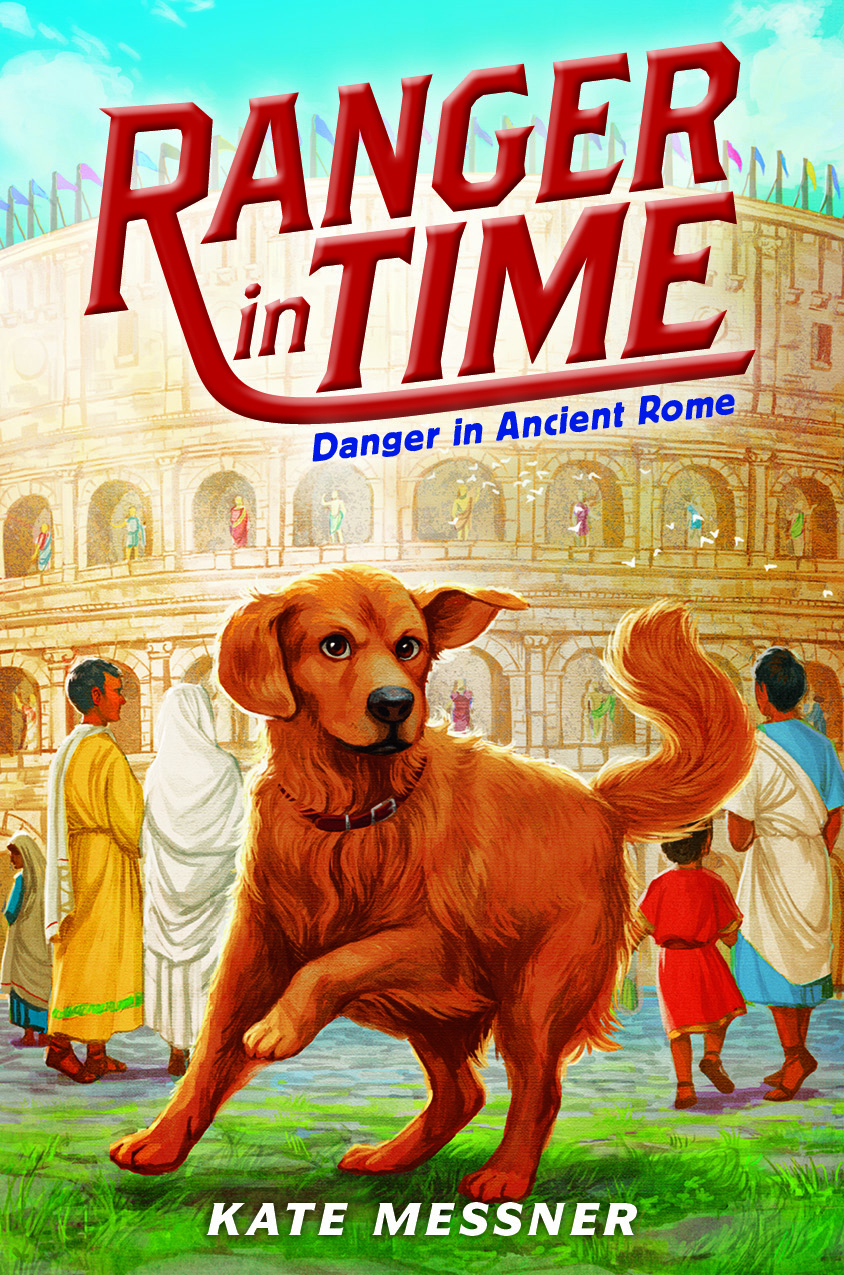
(Those last two are questions I’ll be researching soon for future books in my Ranger in Time series.)
I wonder about water bears.
I wonder about women mathematicians in history – how come we usually hear about men?
I wonder how we can channel anger for good.
I wonder how much we can control what we dream.
There are a dozen story possibilities here, but I won’t know for sure if any of them can grow until I take some time to explore those wonderings. I’m going to start with the women mathematicians and do a little reading tonight…
What about you?
Your assignment: Spend some time daydreaming. Think about the things that fascinate you, the things that scare you, the things that are important to you. Make a list of things you wonder. And choose one or two of those that you’d like to explore a little more in the days and weeks to come. If you’d like to share some of your list in the comments, please feel free to do that and please feel free to leave a short introduction today, too. We’re all going to be writing buddies this summer, and it will be nice to get to know people.
Also, remember that Jo Knowles always kicks off our week with a Monday Morning Warm-Up, so you can drop by her blog for another writing prompt.
More for our historical fiction study folks…
If you’re reading the Ranger in Time books & want to participate in my focus on historical fiction this summer, you may be interested to know how that idea of “wonder” plays out in author research once a topic has been selected (or assigned!). When I first sold the Ranger in Time series to Scholastic, I’d given the team there a list of possible stories. They responded with a list of suggestions for the first four books — two that came from my list and another two they added based on teacher and library requests for those topics. One of those titles – RANGER IN TIME: RESCUE ON THE OREGON TRAIL – ended up being our very first book in the series. When Scholastic asked for this topic, I had to ask myself, “Are you interested enough in the Oregon Trail to spend months researching and writing about it?” The answer was yes – I wondered about a lot of things during that time period!
I read stacks of books and visited websites, but the best part of my research came during a field trip to the National Frontier Trails Museum in Independence, Missouri, which was one of the jumping off points for the Oregon Trail. There’s a whole library here, filled entirely with books about the Oregon Trail (research geek heaven!!), and I was excited to spend time there, reading and researching.
I knew there were many diaries here – some of them never published, so they were original manuscripts, scrawled in dusty leather journals. And I wondered if any of those diaries had belonged to children, since I hoped for a glimpse into the mind of a kid my character’s age who made that journey. When I asked the library director about this, he said, “No, we don’t really have any from kids.”
“None?” I said.
“No,” he answered. Then he paused. “I mean, there’s Lizzie, but…” I could hear the dismissal in his voice, even over the phone. He did not care for Lizzie. When I pressed him, he explained more. “We have Lizzie Charleton. She was a teenager, but her diary’s terrible.”
“Terrible how?” I asked..
“She just complained the whole time. Lizzie didn’t want to go.”
Think about that for a minute. Lizzie didn’t want to go. If you’ve ever taken a long car ride with a kid, you understand why this diary is a perfect source. I knew I needed to see it.
Here are some excerpts from Lizzie’s diary, shared with permission from the museum library:
April the 19th last night it rained & made the roads so muddy that we did not start until noon we travailed 14 miles to day & it rained all day & is so cold we like to freeze to death
April the 20th This morning it is still cold enough for winter we travailed until 2 o clock today & it was so disagreeable & cold we had to stop the rest of the day
May the 14th Camped for to night on the bank of Platte River it looks verry much like we might have a storm to night came 18 miles to day through sand & mud holes till there is no name for it & I am vary tired a walking
May the 16th Camped again this eavening on Platte came over bad roads to day & are verry tired came up too Hills half mile long & sand there was no end to it & was so warm we could hardly get up
May the 27th Camped this eavening on Labonte creek came 24 miles to day it rained & snowed a bout 4 hours it was 3 inches deep.
Monday May the 28th Camped this eavening out on a hill & cold enough to freeze us came 20 m
Tuesday May the 29th Camped again this eavening out on a hill & still cold enough for winter came 32 miles today & killed one Antelope
Tuesday June 5th Camped this eavening out in the Bluffs our stock stampeded last night we did not get started till 10 oclock we came 15 miles in the fore noon we Started at noon took the rong road travailed a bout 5 miles out of our road then started a cross the Bluffs came a bout 4 miles a cross came to the road a bout 7 oclock in the eavening went back a bout a mile after water so we did not get but 18 miles to day Charley Killed an Antelope we will have a mess of Antelope for supper then we will be all right again if we dont freeze to death the snow was a bout 2 inches deep this morning.
When I read Lizzie’s diary, I have to confess that I fell in love with this grumpy teenager right away. I appreciate the much more detailed and descriptive diaries that other women travelers left behind, but Lizzie’s voice rang true to me. She’s cold, she’s tired, and she probably didn’t want to come in the first place. The whole time I was reading, I half expected the next line to be “Aren’t we there yet?” To those of us reading Lizzie’s diary more than a century later, it’s easy to appreciate the overland journey as a grand adventure. But to Lizzie, it was long, cold, and kind of boring, too. Stepping into her shoes, it’s easy to see why she’d use the same lines over and over and complain about the cold. Her voice struck a chord with me because it felt real. I ended up using Lizzie Charleton as the model for Sam Abbott’s older sister.
If you have the first Ranger in Time book, take a look at Chapter 5 (pp. 34-45) and you’ll get a sense for how that initial “wondering,” followed by some research and note taking, ended up developing into one of my favorite characters in the book. We’ll talk more this summer about how to incorporate historical details into a project without losing the sense of story, but this should give you some ideas to start.
I’ll be around today to chat more about our first historical post, as well as to greet people and say hi, so if you have questions, please feel free to fire away in the comments!
~Kate